Sign In
Upcoming Event
 Free Newsletter

LUCHA trains volunteers to be poll observers amid security concerns
Jordan Gerard, Arizona Capitol Times//July 17, 2026//
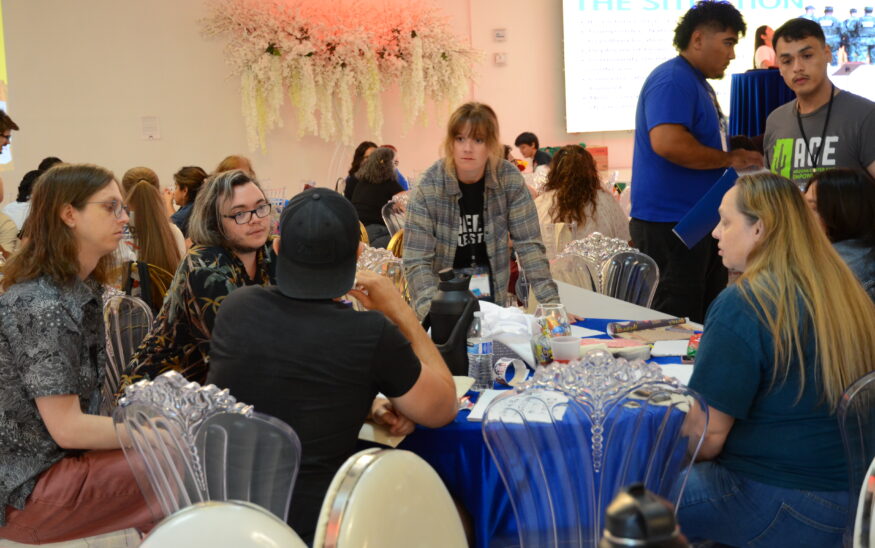
Sarah Jackson, a member of the Arizona Center for Empowerment, leds a table discussion during a hypothetical situation at the LUCHA Congreso event.
LUCHA trains volunteers to be poll observers amid security concerns
Jordan Gerard, Arizona Capitol Times//July 17, 2026//


Key Points:
-
The politically progressive organization, LUCHA, is training hundreds of volunteers to be poll observers during Arizona’s primary and general elections
-
Designated poll monitors can include political parties, congressional monitors and federal election monitors from the Department of Justice
-
LUCHA told its volunteers to remain nonpartisan and stay outside of the 75 ft. boundary line
Arizona’s voting sites will have plenty of eyes on them this election season, including poll monitors from political parties, the U.S. Department of Justice, congressional monitors and perhaps more.
The progressive group, Living United for Change in Arizona (LUCHA), will be among them, with plans to add hundreds of volunteers trained to monitor voter intimidation and other issues outside polling places.
Their effort follows a Department of Justice announcement that it will send federal election monitors to Arizona, adding another layer of oversight to an election that will also include party-appointed monitors and county election officials.
LUCHA leaders said they are also worried about other federal agents, such as Immigration and Customs Enforcement agents or National Guard troops, being sent to the polls.
There have also been increasing concerns about poll worker safety, particularly since the 2020 presidential election.
According to a 2026 Brennan Center for Justice survey of local election officials, nearly one in four officials said they are concerned about being assaulted at home or at work. A total of 32% of officials said they had been threatened, harassed or abused.
The Brennan Center noted that a number of states have enhanced security leading up to the midterms. That includes active-shooter training for workers in Arizona.
Unlike poll workers, who are hired and trained by counties to administer elections, volunteer poll observers are unpaid and have no authority over polling places. Instead, they watch for potential issues and report concerns through established channels.
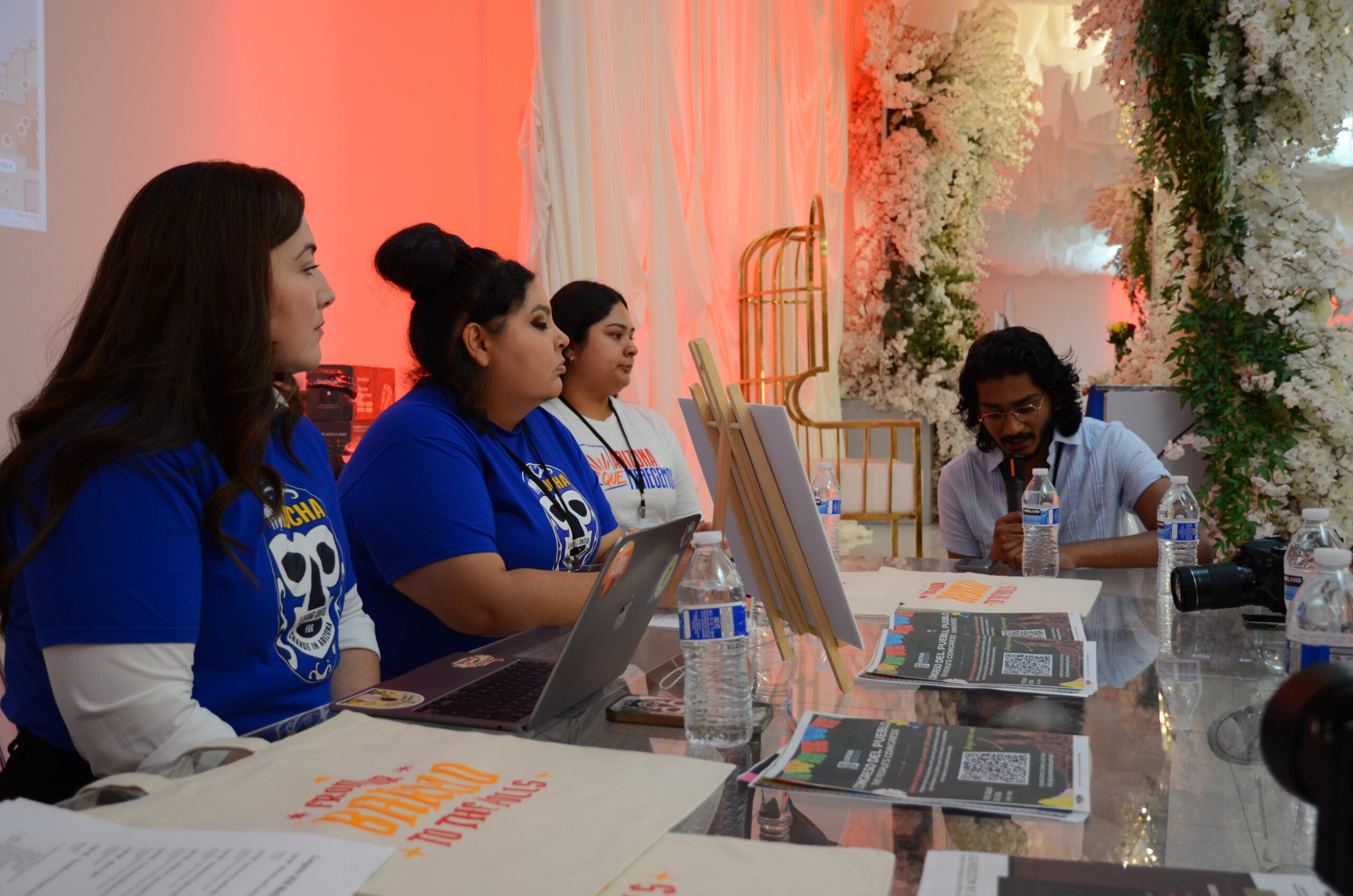
LUCHA held a poll observer training session on July 11 in Phoenix and planned another in Tucson before the primary election. Organizers hope to train 500 volunteers by the November general election, and they’re well on their way, with 253 people attending the Phoenix event.
Organizers simulated a hypothetical situation in English and Spanish in which President Donald Trump ordered the deployment of the National Guard to polling locations in Phoenix and Tucson during early voting.
People discussed strategies they could use to defuse tense situations and respond to confusion. The scenario featured two “breaking news” segments, during which the situation intensified amid social media reports.
The Trump administration has said it is only acting to make sure voting goes smoothly this year.
U.S. Assistant Attorney General for the Department of Justice’s Civil Rights Division, Harmeet Dhillon, said in a video on X that federal election monitors will be going to “places where there have been problems with the integrity of elections.”
“For example, poll workers made mistakes giving people access or didn’t let people come in or they used the wrong poll book or they didn’t have the correct ballots for that jurisdiction so people were denied the right to vote or language access issues that are mandated by federal law,” she said.
‘Feel prepared’
Karime Rodriguez, services manager with the Arizona Center for Empowerment who led the LUCHA training, instructed volunteers to be nonpartisan, stay outside the 75–foot boundary line, and provide only factual information to ensure eligible voters can vote.
They are not allowed to influence voters or wear partisan clothing. Volunteers are also trained to look for common issues such as proper opening and closing times, broken voting equipment, accessibility issues and language assistance, Rodriguez said.
“The purpose of today is to feel prepared … knowing that preparedness helps us avoid panic,” she said. Rodriguez added that she is not an elections expert. “Our three main objectives are to observe, report and activate.”
Area resident Rohith Chandrashaker joined the effort after he said he witnessed Immigration and Customs Enforcement raids in downtown Mesa. He said he is the son of immigrants, and his parents are from India.
“I understand that our path forward comes from uniting to protect our right to vote,” he said. “Making sure that all of us are able to cast our ballot without fear and intimidation means that ordinary people like myself must be trained to be constitutional observers and improve our skills as election protectors.”
LUCHA organizers said they are worried that immigration enforcement activity could discourage some eligible voters from casting ballots. The group maintains a map that it says tracks verified ICE sightings across Arizona and told volunteers to report activity near polling locations if they encounter it.
“They want immigrant families wondering if showing up near a voting center could put them or someone they love at risk. They want chaos because chaos suppresses turnout,” LUCHA Executive Director Alejandra Gomez said. “When we say there are looming threats to election subversion, we are not being dramatic. We are reading the signals.”

No shortage of volunteers
Poll observers and Department of Justice election monitors are not new, former Maricopa County Supervisor Bill Gates said, recalling a federal presence in Navajo County in 2002.
Some have worried that the recent uptick in threats against poll workers might deter people from working at polling stations. But, despite those concerns, Gates and a Maricopa County Elections official said people still want to participate in the election process.
Jennifer Liewer, deputy elections director for communications in Maricopa County, said recruiting poll workers has not become more difficult, but the job itself has. The county has been focused on providing resources poll workers need to adequately manage voting locations, she said.
“They’re your neighbors. They’re your friends. Some of them are retirees. Some people will take off work to go and work a voting location,” she said.
Generally speaking, people have a First Amendment right to gather near polling stations, so long as they are outside of the 75-foot exclusion line.
“This shouldn’t be a problem as long as people respect one another, respect the requests that might be made by the property that might be hosting this,” Gates said. “As long as people are being well-behaved and people are communicating in a civil manner, this doesn’t concern me.”
Maricopa County has been in the spotlight more often, Gates said. But he added that the county has physical security measures in place to ensure poll workers feel safe and appreciated.
The Elections Department swells to about 4,000 extra people during election seasons, well over its off-season size of 60-70 people, and some temporary election workers also find their way into full-time employment with the county, she added. They even increase recruiting staff to 12-15 people to hire the extra people.
Liewer said they work closely with law enforcement during elections. Uniformed officers are not allowed inside the 75-foot boundary line unless there’s an emergency, and poll workers are trained on those situations and who’s allowed inside the boundary line, she said.
“People in the community, the candidates who will be at voting locations, any of the community organizations who are going to be providing people to give information to voters, it’s all part of the bigger system, and we shouldn’t fear it,” she said. “As long as we all just follow those state laws and the rules that are set forth, and we are able to remain respectful of each other. That’s how the system is meant to work.”