Sign In


 Free Newsletter

Arizona seeks California water amid Colorado River cuts
Bob Christie, Capitol Media Services//August 23, 2026//
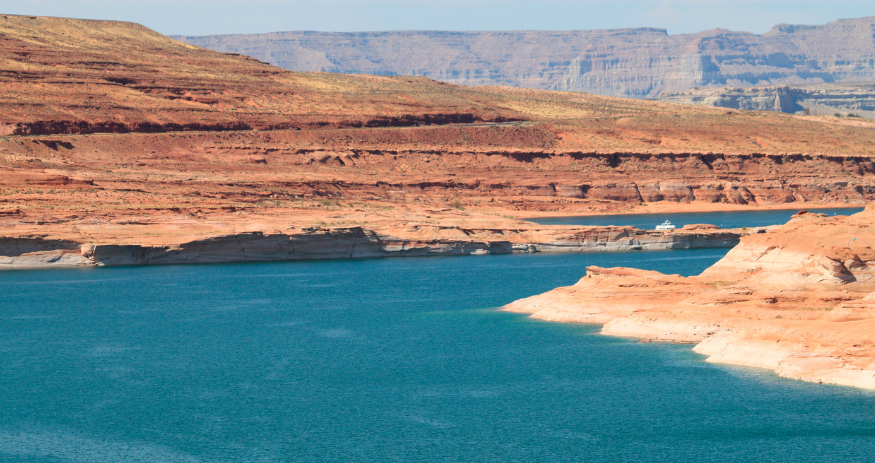
This Aug. 21, 2019 image taken near Page, Arizona shows Lake Powell, a reservoir on the Colorado River that provides water to a number of states, including Arizona. (AP Photo/Susan Montoya Bryan)
Arizona seeks California water amid Colorado River cuts
Bob Christie, Capitol Media Services//August 23, 2026//


Arizona is pursuing two projects to bring up to 200,000 acre-feet of new water into the state by tapping supplies in Mexico and California, which faces its own severe water shortages.
Whether either project can overcome California’s technical, regulatory and political hurdles is far from certain. One environmentalist called one proposal “somewhat delusional,” while the head of a powerful California water agency described the other plan as “creative and doable.”
The efforts come as the state’s groundwater supplies remain overstretched and its Colorado River allocation has been substantially cut. On Friday, the federal government finalized rules that require additional cuts to Arizona’s allocation, although they weren’t as severe as feared.
The first of the two projects, both backed by a subsidiary of Canadian water and infrastructure company EPCOR and its partners, would attempt to capture up to 100,000 acre-feet of water annually from the Sacramento and San Joaquin rivers during flood years.
EPCOR proposes capturing that floodwater, sending it down the California Aqueduct to groundwater storage projects in the southern Central Valley, and then pumping it back into the aqueduct for delivery to Southern California water agencies.
Those agencies will deliver it to homes and businesses in the region. Arizona would end up with some of the Colorado River water supply currently held by the Southern California water agencies.
The second would study a “toilet-to-tap” system to treat wastewater from the San Diego area to drinking-water standards. The treated water, primarily derived from sewage from Tijuana, Mexico, would be sent back to Mexico for municipal use.
In exchange, Arizona would receive rights to as much as 100,000 acre-feet annually of Mexico’s Colorado River water supply.
One acre-foot equals nearly 326,000 gallons, enough to supply at least three average homes, according to the Arizona Department of Water Resources.
The board overseeing the Arizona Water Infrastructure Finance Authority [WIFA] approved spending $7.3 million to develop initial plans for the two water projects. As many as five others, including three desalination plants, could be approved for initial study funding next month.
Eric Averett, who leads the Kern County Water Agency in the southern Central Valley, which is home to several groundwater storage districts and the largest water bank in the state, said he had not heard of the Arizona proposals. That’s surprising, given that his is one of the most powerful water agencies in the state.
Averett, who called the San Diego-Tijuana sewage treatment project “creative and doable,” added that the project “seems like good water management.”
“[T]hey’re taking wastewater effluent, and they’re delivering it into Tijuana, and then they’re taking, by virtue of this exchange, Colorado River [water],” he said. “That is actually what I would define as creative, good water management, and that also may be the low-hanging fruit.”
Depleting water supplies
Arizona is normally entitled to 2.8 million acre-feet of Colorado River water each year but has been taking cuts of about 512,000 MAF in recent years.
The state will now lose 760,000 acre-feet, dropping next year’s allocations to just over 2 million acre-feet. About half is delivered to Phoenix and Tucson areas via the Central Arizona Project canal; the rest is used by farmers and towns along the river.
California, meanwhile, is facing similar groundwater depletion and other shortages, including a smaller cut to its Colorado River supplies. Facing dropping groundwater levels, a state law enacted in 2014 required the creation of local groundwater management agencies and charged them with cutting use or recharging aquifers so that they come into balance within 20 years.
That’s led to a scramble to cut pumping and find ways to recharge depleted aquifers.
Arizona isn’t the first to try to tap any excess flow in the two California rivers: The State Water Board is processing “many pending applications on central and northern California rivers, where a party is working through the requirements to try to obtain a permit,” according to a staff statement provided by a board spokeswoman. No details were immediately available.
California has also set a goal of finding as much as 9 million acre-feet per year of new water supplies. In Arizona, WIFA aims to import between 100,000 and 500,000 acre-feet per year of new water — an amount that may increase.
‘Low-probability, high-cost project’
During a presentation to the WIFA board, an EPCOR representative said the company had had initial talks with state and local officials about its plans, although it did not identify which entities it spoke with.
Staff with both the California State Water Board and the California Department of Water Resources, however, said they were unaware of the proposal.
Averett said tapping the two rivers would be a highly complex effort filled with regulatory and other pitfalls.
They include demonstrating to the State Water Board that there is actually excess water and then getting the rights to it. Such a project would also require environmental reviews and permits, finding partners to ship and store water underground, and locating an entity to take it for eventual use and swap it for Colorado River rights.
“I would never say anything’s laughable because with enough resources and commitment people are able to do some amazing things,” Averett said in an interview Friday. “But you have to acknowledge that the process requires a number of steps that take, in this case, years and maybe even decades to put it in place.”
Averett added that he considers the excess water plan “a very low probability, high cost project.”
Potential ‘political maelstrom’
Technical and legal hurdles aside, tapping California’s water supply would likely be politically difficult.
“I may be completely wrong, but I see the political maelstrom of ‘Oh wait a sec, you’re going to take water off the Sacramento or San Joaquin that is critically needed in the Central Valley for Sustainable Groundwater Management Act, and move it to Arizona?’” Averett said. He added that the response would likely be “Over our dead bodies.”
EPCOR’s proposal says it can tap excess flows during flood years using an expedited permitting system enacted in California after recent flooding and use it for groundwater recharge. In the past 20 years, the proposal said, five years yielded flood levels that could be tapped.
Their proposal said as much as 14.4 million acre-feet of excess water was potentially available from the two rivers during the 2023 high-water year, although not all of it could be diverted.
Two longtime staff members at the Friends of the River, an environmental organization that works to preserve and restore California’s rivers, streams, and watersheds and advocates for sustainable water management, questioned whether there was actually excess water or whether Arizona had the political ability to tap the state’s water supply.
“If you define ‘excess water’ as well, in some years, water flows out of the delta in excess of the minimum salinity control standards and other water quality standards, … then yeah, there’s excess water,” said Ron Stork, a senior policy analyst with the group who has decades of experience working on both river protection and flood safety issues. “The question is, how do you capture the excess water?”
Competition for the excess water is the other big issue, Stork said.
“Arizona is not the only people who are scrambling for water,” he said, noting that the southern San Joaquin Valley alone has a 2 million acre-foot per year overdraft that must be addressed. He also pointed to California’s “utterly unattainable” goal of finding 9 million acre-feet more per year of water.
Gary Bobker, Friends of the River’s lead policy analyst and spokesman, was just as blunt.
“The point is that the state of California considers itself to be facing severe water supply deficits for all purposes,” Bobker said. “And the idea that you start banking water in California to ship it off to other states just seems kind of delusional.”