Please ensure Javascript is enabled for purposes of website accessibility

Lawmakers demand greater oversight of Arizona’s Department of Child Safety

Key Points:
  • Legislators want to review licensed group homes
  • Some are concerned children are too often labeled as runaways, not missing
  • Move is part of a larger push for oversight of the Department of Child Safety

House and Senate Republicans are moving to organize greater oversight into the Department of Child Safety following the deaths of multiple children who were known by the department.

Sen. Carine Werner, R-Scottsdale, announced on Aug. 6 that she’s organizing a closed stakeholder meeting of the Joint Legislative Oversight Committee on DCS in September to review state protocols for licensed group homes and child welfare oversight. 

The announcement followed an Aug. 1 Phoenix Police news release announcing two men were arrested and charged with the murder of 16-year-old Zariah Dodd after she left her group home in Surprise. 

One of the suspects, 36-year-old Jurell Davis, is believed to be the father of Dodd’s unborn child and is also charged with sexual misconduct with a minor.

Lawmakers have become increasingly alarmed with the practices of DCS and group homes in the state. During the recent legislative session, Gov. Katie Hobbs signed “Emily’s Law,” named after 14-year-old Emily Pike, who was murdered and dismembered after she fled a group home in Mesa.

The law created the Turquoise Alert system, which the Department of Public Safety will issue if a person under the age of 65 has gone missing and law enforcement believes the disappearance is underexplained or suspicious. 

In a news release, Werner also cited the recent death of 10-year-old Rebekah Baptiste, whose father was arrested and charged with murder and child abuse. According to the release, DCS received multiple reports of child abuse from Baptiste’s father. 

“The deaths of Emily Pike, Zariah Dodd, and Rebekah Baptiste should be a wake-up call for us all,” Werner said in a statement. “These tragedies make it painfully clear that when our child protection systems — both state and tribal — fail, the consequences can be horrific. We cannot allow these failures to repeat.” 

Werner isn’t the only lawmaker interested in using legislative authority to examine DCS. Rep. Walt Blackman, R-Snowflake, told the Arizona Capitol Times that he has requested permission from House leadership to organize a House Government Committee meeting to hear from DCS and law enforcement about issues involving missing children. 

The Turquoise Alert from Emily’s Law functions in a similar way to an Amber Alert. The state used it for the first time on July 23 for 6-year-old Violet Coultas, who was found less than a day later after the alert was issued, according to a DPS news release. 

“Turquoise Alerts are an essential tool in quickly notifying the public and mobilizing law enforcement when a vulnerable individual is missing,” DPS Director Colonel Jeffrey Glover said in a news release. “In this case, the system worked exactly as intended.”

Lamakers also hope the new law will be used to help locate missing indigenous individuals, where their communities have long dealt with high rates of assault, abduction and murder of tribal members, according to the Bureau of Indian Affairs.

The National Crime Information Center reported 5,712 cases of missing American Indian and Alaska Native women and girls. However, the U.S. Department of Justice’s missing persons database, the National Missing and Unidentified Persons System, only logged 116 of those cases.

Emily Pike was a member of the San Carlos Apache Tribe. The sponsor of the bill that would become Emily’s Law, Rep. Teresa Martinez, R-Casa Grande, said during the 2025 legislative session that she was frustrated that the state wasn’t looking for Pike when she went missing. 

“Over the years, Tribal communities have faced the crisis of Missing and Murdered Indigenous Persons without advanced emergency systems in place and we see the Turquoise Alert as a proactive step in the right direction,” Inter Tribal Council of Arizona President Paul Russell said in a July 10 news release after the Turquoise Alert system became active in the state.

Blackman said in an Aug. 4 video posted to X that the Turquoise Alert is a good step for lawmakers, but more needs to be done by the state Legislature. 

“We’re all at blame for this in government,” Blackman told the Arizona Capitol Times.

One issue that Blackaman raised was how missing children are often labeled as runaways. Under state law, children labeled as runaways do not require law enforcement to assign a missing persons detective. 

The statute does require law enforcement agencies to submit identifying information of a missing child within two hours of notification to the Arizona crime information center and the national crime information center.

A 2023 auditor general’s report on DCS and missing children showed children are much more likely to be reported as a runaway rather than missing. About 200 more children were reported as runaways in each calendar month of 2020 than missing, according to that report

Werner’s committee is scheduled to meet on Sept. 3. A Senate news release notes the meeting will not be open to the public, but will be a stakeholder meeting with DCS, Tribal Nations, law enforcement, legislative members and child welfare experts to identify potential legislative and regulatory remedies. 

Prison oversight reform is long overdue in Arizona

Shawnna Bolick

On December 21, 2018, President Trump signed the bipartisan First Step Act into law, marking a significant step forward in federal sentencing reform. Just weeks later, we took our first oaths of office in January 2019. That milestone marked the beginning of our shared efforts to advance meaningful criminal justice reform in Arizona. In early 2020, we met with Matthew Charles, a man who served over two decades in federal prison without a single disciplinary infraction. His success after release reaffirmed our belief in redemption and fueled our resolve to bring reform home.

Walt Blackman

During our first year, we were honored to be named “Rookies of the Year” by the Republican Party of Arizona. That summer, we submitted a letter to House leadership and Speaker Rusty Bowers, requesting approval to host a bipartisan Earned Release Credits for Prisoners House Ad Hoc Committee. We held public hearings, reviewed policy gaps, and took a critical tour of the Florence prison complex with then-Director Charles Ryan. The director’s resignation was inevitable, considering reports of serious safety issues in the prisons. Just hours after that visit, he submitted his resignation notice, having served as the ADC Director for ten years. The ad hoc committee released its final report later that year.

Later that fall, we visited the Lewis complex in Buckeye and observed widespread security lapses, broken cell locks and compromised safety. These firsthand encounters laid the groundwork for the creation of the House Committee on Criminal Justice Reform in January 2020, where we continued our work as Chair and Vice Chair. The committee remained active into the 2021–2022 legislative session, continuing to examine sentencing policies, reentry coordination and prison oversight.

When COVID hit, our efforts didn’t stop. In 2020 and 2021, we held remote oversight discussions, including briefings with then-Director David Shinn. From 2021 to 2022, Senator Bolick served on the Joint Legislative Budget Committee, weighing critical funding for health care services and ADC settlements. A pivotal moment came in the fall of 2021, when the Arizona Auditor General released a report detailing the Department of Corrections’ failure to meet performance benchmarks, delayed releases of eligible inmates and a general disregard for prior audit recommendations.

In June 2022, Senator Bolick blocked passage of the ADC budget until those reforms were addressed. In December 2022, just before leaving the House, we toured Lewis again and issued a joint press release after meeting with inmates who raised security concerns, including allegations of sexual violence.

In January 2023, as Senator Bolick transitioned to the upper chamber and toured juvenile corrections alongside Representative Blackman, Governor Katie Hobbs signed Executive Order 6, establishing the Independent Prison Oversight Commission. The commission was designed to strengthen transparency and accountability within Arizona’s corrections system. Tasked with inspecting prison facilities, reviewing records, and speaking directly with inmates and staff about health care, safety, educational programming, and access to necessities. The commission — despite its initial lack of funding — marked a critical step toward institutionalizing meaningful oversight. The commission released its report in November 2023.

Throughout this period, we visited private prisons and attended reentry graduation ceremonies, where we met Arizonans trying to turn their lives around. We received hundreds of letters from families of inmates, corrections officers and community advocates calling for stronger oversight, improved mental health care and meaningful rehabilitative programs.

In May 2025, we sent a letter to legislative leadership urging the formation of a bipartisan ad hoc committee to investigate persistent security failures. In the years since, we’ve met with whistleblowers, reviewed internal ADCRR reports, and pushed for public testimony from leadership, staff and impacted families. All these efforts culminated in the 2025 passage of Senate Bill 1507, creating a permanent oversight office. 

However, passing SB 1507 is only the beginning. The oversight office must be funded — estimated at $1.5 million annually. We can’t go back and change the outcomes for those who have already lost their lives in state custody, but we can act now to prevent future tragedies. Recent deaths in the Arizona Department of Corrections include Indalecio Garcia, 31, who died at the Lewis complex on June 23; Ernest Walker, 60, who died June 28, 2025, at Banner Casa Grande Medical Center; Danny Jones, 60, who died June 24, 2025, at ASPC-Tucson; and Daniel Montoya, who died while incarcerated at Lewis Prison. Others — Saul Alvarez, Thorne Harnage, and Donald Lashley — were killed behind bars. These are not isolated cases. 

With proper funding, SB 1507 can provide the real oversight and accountability needed to prevent future tragedies.

Shawnna LM Bolick is the State Senator for LD2, and the chair of the Senate Committee on Regulatory Affairs and Government Efficiency.

Walt Blackman is the State Representative for LD7, and the chair of the House Committee on Government.

Animal cruelty bill heads to Senate after weeks of negotiations

Key Points:
  • Bill expands criminal charges for the cruel neglect of pets
  • Bill received bipartisan support
  • Bill will now head to the Senate for final read

After weeks of negotiations, the House approved an animal cruelty bill that would bring criminal charges against people who abuse their pets.

Senate Bill 1658 passed the House 34-18 on June 12 with bipartisan support despite objections from some Republicans who viewed certain provisions of the bill as overly punitive.

Most of the Democrats voted for the bill, while the majority of Republicans disapproved of the measure. Republican Sen. Shawnna Bolick, R-Phoenix, sponsored the bill and worked with Rep. Walt Blackman, R-Snowflake, to move it through the House. 

The legislation would require pet owners to provide food, water and shelter to their animals, and expand the definition of animal cruelty to include failing to provide medical attention for a pet. It also adds charges for subjecting an animal to cruel neglect.

“It is common sense, does not affect livestock, does not affect people experiencing homelessness, very straightforward language,” said Humane Society President and CEO Dr. Steven Hansen in an interview earlier this month.

During the House third reading hearing, Rep. Alexander Kolodin, R-Scottsdale, said the bill troubled him on a “personal level” because it could affect pet owners who are struggling financially.

“They’re the folks that are clinging to the family cat through financial hardship, where they may not have a safe and healthy place to live, where they may be draining their bank account, facing bankruptcy and just trying to hold on, and this body proposes to make them into criminals without a second thought,”  Kolodin said.

Lawmakers who supported the bill said it would give law enforcement the necessary tools to quickly arrest people who abuse animals.

“This bill gives law enforcement and prosecutors clear standards to act quickly, protect animals in danger and hold abusers accountable,” said Rep. Matt Gress, R-Phoenix, during the House Committee of the Whole session on June 11.

The bill was prompted by an animal cruelty case in September 2023, when 55 disabled dogs were seized from a Chandler home. The homeowner was arrested on multiple charges of animal cruelty, fraud and theft.

The bill was initially introduced as Senate Bill 1234, but was double assigned to the the House Natural Resources, Energy & Water Committee and House Judiciary Committee after it was approved in the Senate with bipartisan support.

Blackman used a striker amendment on another Bolick bill after the original animal cruelty measure was double assigned.

The legislation still faced obstacles as Republicans questioned the vagueness of the language and harshness of the penalties. 

Blackman worked on a series of amendments that sought to clearly define the language and other aspects of the bill in order to garner the necessary support.

The bill will now head to the Senate for a final read and, if approved, to the governor’s desk.


Supporters of animal cruelty measure still hopeful

Key Points:
  • Bill redefines inhumane conditions for domestic animals
  • There’s an ongoing push to secure support from House Republicans 
  • June 16 is likely the last day the bill can receive a vote in the House

The supporters of an animal cruelty bill are pushing for the measure to receive a vote before time expires on the legislative session.

Senate Bill 1658 is awaiting approval in the House, but the chamber didn’t vote on the bill when it convened on June 4. That means the House will have to vote when it returns on June 16 or the bill will likely die this session.

If the House approves the bill, the legislation will then return to the Senate for a final vote. By then, however, it may be too late since both chambers could start advancing budget bills that week.

Rep. Walt Blackman, R-Snowflake, said the bill is supposed to be heard when the House reconvenes, but he’ll use a procedural measure to bring it up for a vote if it’s not on the agenda. 

Blackman has been working with the bill’s sponsor, Sen. Shawnna Bolick, R-Phoenix, and the Arizona Humane Society to advance the measure through the Legislature.

Senate Bill 1658 aims to clearly define suitable conditions for pets and add a misdemeanor charge for failing to provide an animal with medical attention to prevent unnecessary suffering. 

The measure would also redefine what it means to provide the appropriate food, water and shelter, but lawmakers and stakeholders are working to update the language to secure approval from some Republicans who are currently against the bill.

“It is common sense, does not affect livestock, does not affect people experiencing homelessness, very straightforward language,” said Humane Society President and CEO Dr. Steven Hansen. 

The bill was initially introduced as Senate Bill 1234, but was double assigned to the the House Natural Resources, Energy & Water Committee and House Judiciary Committee after it was approved in the Senate with bipartisan support.

Blackman used a striker amendment on another Bolick bill to keep the legislation alive.

The bill moved through the House Government and Rules committees, and advanced through the House Committee of the Whole on May 20, maintaining its bipartisan support. 

Bolick previously said she spent several weeks advocating for the legislation after House leadership told her the bill lacked the votes to be approved.

Some Republican lawmakers questioned the harshness of the penalties and the clarity of the language.

“The language is just far too vague at certain points where it could potentially criminalize someone who possibly can’t afford to take care of their animal properly according to this bill, and this will be someone that actually loves their animal very much,” said Rep. Rachel Keshel, R-Tucson, during the Committee of the Whole hearing.

Hansen said on June 4 that the Humane Society worked with Blackman and Bolick to revise certain provisions of the bill, which would have expanded the definition of cruel neglect to include the failure to provide a pet with food fit for consumption and water suitable for drinking.

“So what we had agreed to is removing the definition of water as drinkable and just that animals require water, and also removing the food has to be appropriate for the species and edible, so just food,” he said. “So those are two big steps backwards.”

The Humane Society and lawmakers were initially able to keep a requirement in the bill calling for pet owners to provide suitable shelter but questions arose during negotiations regarding whether the structure had to be sound.

For example, legislators would need to determine whether a tent could be considered a suitable shelter. 

The bill’s language has to be “well defined,” Blackman said.

Blackman said the focus will be defining that language, as well as other aspects of the bill so it can garner the necessary support by June 16.

“I got to crank out that language … make sure it’s good to go,” he said.

Stolen valor bill faces roadblock, but striker could get it to governor

A week after the bill’s sponsor accused the committee chairman of blocking the measure, the Senate Judiciary and Elections committee held a bill Wednesday that would establish criminal offenses for people who impersonate an armed forces veteran.

Sen. Wendy Rogers, R-Flagstaff, who chairs the committee, included House Bill 2030 on the agenda after Rep. Walt Blackman, R-Snowflake, who sponsored the bill, and a bipartisan group of lawmakers and military veterans called out Rogers and committee member Sen. Mark Finchem, R-Prescott, at a press conference last week.

Rogers said during the committee hearing that she asked Blackman to amend the bill so it would comport with federal law. She didn’t elaborate on the federal law and how the bill lacked compliance.

“My staff let his staff know that I was including it on today’s agenda, in case we had applicable discussions before committee,” she said. “We have not, so I’m holding the bill.”

Blackman, a U.S. Army veteran, previously said he believes the reason why Rogers held the bill was because she and Finchem were attempting to protect Steve Slaton, Blackman’s opponent in Legislative District 7. Slaton was accused of misrepresenting his military service while campaigning last year.

On his website, Slaton claimed that he worked as a crew chief and co-pilot on a Cobra helicopter, serving in Vietnam and Korea. But the DD-214, the official military record, does not mention Vietnam, and only that he was listed as a helicopter repairman in Korea.

Rogers was criticized last year for campaigning with Slaton despite the allegations against him.

Although the bill has stalled again, there is still a chance the legislation can bypass Rogers and make it to the governor’s desk.

The House Rules committee on Monday unanimously approved a striker amendment to Senate Bill 1424, which contains the same language as Blackman’s bill. The House Government committee also unanimously passed the striker last week.

SB1424 is sponsored by Sen. Shawnna Bolick, R-Phoenix, who said she agreed to run the striker to keep the bill moving forward.

House passes ‘Valor Act’ unanimously, but Senate committee blocks it

Key Points

  • “Valor Act” would criminalize impersonating a veteran.
  • The bill passed out of the House unanimously but is held in the Senate Judiciary and Elections Committee. 
  • Republicans and Democrats in the House called on Sen. Wendy Rogers to stop blocking the bill. 

A bipartisan group of lawmakers are calling on Arizona’s Senate president to advance legislation that would establish criminal offenses for people who impersonate an armed forces veteran. 

The House passed HB2030, titled the “Master Sergeant Orlando Dona Valor Act,” on Feb. 11, 58-0. 

But nearly a month after the bill was assigned to the Senate Judiciary and Elections Committee on Feb. 27, the bill has yet to receive a hearing.

Now, House legislators are accusing Sen. Wendy Rogers, R-Flagstaff, of using her position as chair of the committee to block the bill that passed unanimously out of the House. 

“Silence in this is compliance in this,” said the sponsor of the bill, Rep. Walt Blackman, R-Snowflake, during a March 19 press conference with veterans and other lawmakers. “Those members who have not spoken up and said that this is wrong, you have veterans in your communities; in every single district in this state.”

Blackman, a U.S. Army veteran, said he believes the reason for Rogers’ inaction is personal. In 2024, Rogers and Blackman both ran in Legislative District 7, but Rogers, a veteran of the U.S. Air Force, was a staunch supporter of Blackman’s primary opponent Steve Slaton.

On his website, Slaton claimed that he worked as a crew chief and co-pilot on a Cobra helicopter, serving in Vietnam and Korea. But the DD-214, the official military record, does not mention Vietnam, and only that he was listed as a helicopter repairman in Korea.

Blackman and the Navajo County Republican Committee accused Slaton of altering his military records on the campaign trail to falsely claim service and military commendations from Vietnam. And although Slaton has repeatedly denied the accusation, Rogers continued to support him after many Republicans called for him to drop out of the race.

Blackman said he believes Rogers and Sen. Mark Finchem, R-Prescott, are protecting Slaton by attempting to kill his bill. 

“This is a no-brainer bill,” Blackman said. “I am asking Senator Rogers and I am asking Senator Finchem to either get on board or get out of the way.”

Neither Rogers nor Finchem responded to requests for comment sent from the Arizona Capitol Times.

On the morning of March 19, Blackman and the House Government Committee passed a striker amendment on SB1424 that carried the same language as Blackman’s House bill. If that Senate bill passes out of the House, it would only need to return to the Senate for a full vote, allowing Blackman to bypass Rogers’ committee.

SB1424 is sponsored by Sen. Shawnna Bolick, R-Phoenix, who said she agreed to run the striker to keep the bill moving forward. Both of Bolick’s grandfathers served in the U.S. armed forces. 

“We should not be putting personalities over good policy,” Bolick said. 

Because of the criminal penalties that are associated with the bill, it was assigned to Rogers’ committee. Blackman said he doesn’t blame Senate President Warren Petersen for assigning it to Rogers, but called on him to either assign his bill to a different committee or put Bolick’s bill up for a vote when it returns to the Senate. 

Petersen said in a text to the Arizona Capitol Times that he’s unwilling to circumvent his committee chairmen.

“As President, I have empowered my chairmen. If they hold a bill, it is dead, even if I like the bill. I think it is good for the institution when leadership respects their chairmen and does not go around them,” Petersen said.

Rep. Blackman proposes stolen valor law

An Army veteran who earned a Bronze Star for his actions in combat in Iraq wants to send some of those who fake their veteran status or their medals to prison.

But Rep. Walt Blackman, R-Snowflake, said he crafted his Stolen Valor legislation to avoid the same legal problems that resulted in the U.S. Supreme Court in 2012 voiding a similar federal law as a violation of free speech rights in the First Amendment. He said only if someone seeks to profit from a deliberate misrepresentation could they end up behind bars.

And the former tank commander said there’s another reason for the state to have its own law: It would spell out that anyone convicted under the legislation who was holding public office would be forced to resign, something he said could not be covered by a federal law.

At its heart, Blackman said it’s an issue of identity theft. The victims, he said, are all those who actually have served and have been awarded special medals and other designations, whose service is diluted by those who are falsely making such claims.

“Every veteran in the United States, the half a million veterans here in Arizona, we are all victims when somebody steals our valor,” he said. “You are also looking at the family members left behind, Gold Star families, when somebody said they did something in combat when they did not,” Blackman said, referring to the parents, siblings, children and extended families of those who are killed in combat.

HB 2030 would make it a crime to impersonate a veteran to obtain employment or government contracts, or to claim veteran benefits such as health care, education or disability compensation.

But it does not stop there. Blackman’s legislation also would make felons of anyone who uses a fake claim “to secure votes, campaign contributions or political advantages.”

Consider, he said, someone who tells voters he or she was deployed to Vietnam when the military records show otherwise.

“By doing that, I have raised X amount of dollars, $5,000, $10,000, $50,000, and that is why I was able to raise that money, that is a crime,” Blackman said. He said it’s no different than existing laws that make it illegal to gain money through false schemes.

The issue actually came up last year in a bid by Blackman to reclaim the House seat he had previously occupied before 2022 when he instead made an unsuccessful run for Congress.

On his website, Steve Slaton, his foe in the GOP primary for the state House, claimed that he worked as a crew chief and co-pilot on a Cobra helicopter, serving in Vietnam and Korea. But the DD-214, the official military record, does not mention Vietnam and only that he was listed as a helicopter repairman in Korea.

Slaton offered several explanations, including that he was the victim of identity theft and his military discharge papers had been altered.

Blackman did not mention Slaton on Wednesday.

“I’m not going to get into names about who actually did it in Arizona,” he said.

“To say their names, folks would think it’s a personal vendetta,” Blackman said. “It is not.”

Another part of the legislation would make it a crime to wear or display any unearned military award, ranging from the Medal of Honor and the Distinguished Service Cross to the Bronze Star and Purple Heart.

That section does not mention wearing any of those medals for the purpose of personal gain. But Blackman insisted that is the intent and that no one will end up in prison simply for dressing up with such a medal.

“If a person wants to walk around and look like George S. Patton, that’s their business,” he said of the much-decorated World War II general whose honors include the Army Distinguished Service Cross, the Silver Star, the Legion of Merit and the Purple Heart.

“However, if they say, ‘I want to be in office’ or ‘I need this contract because I am George S. Patton, but they’re not, then they have committed a crime.”

At a minimum, HB 2030 would make impersonating a veteran a Class 4 felony, which carries a presumptive 2 1/2-year prison term.

But Blackman’s bill provides for a Class 2 felony, presumptively 5 years in prison, if the value of the benefit they were seeking is worth at least $50,000. And anyone convicted under that part of the statute would have to serve at least 85% of their sentence before they were eligible for parole.


New Faces: Walt Blackman

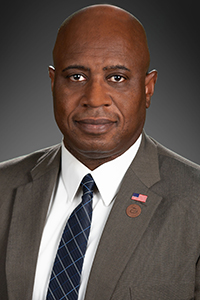
Returning to the Legislature is Representative-elect Walt Blackman from Legislative District 7. Blackman, a Republican from Snowflake and a U.S. Army combat veteran, served in the House from 2019 to 2023. He said he wanted to return because he saw too much “stagemanship” instead of policy while watching as an outsider for two years. “Everything we do affects everybody in this state whether they voted for us or not,” Blackman said. As the incoming chairman of the House Government Committee, he said he looks forward to easing burdens for licensed practices to be more user-friendly for Arizonans, but not irresponsible. Blackman will serve on the House Appropriations and Commerce committees. With Democratic governor, Blackman said he understands the importance of working with Democrats and treating people with respect and dignity. “This isn’t a war. These are people that just can’t get along sometimes,” Blackman said. He has two political heroes: former U.S. Secretary of State and U.S. Army General Colin Powell for his approach as an “independent Republican;” and former President John F. Kennedy, who Blackman said helped de-escalate the Cuban Missile Crisis by working across the aisle with Republicans.

Controversy surrounds LD7 House candidate in crowded race

Several Republicans have spoken out against a Republican candidate running for the state House of Representatives in the most crowded legislative race after he was accused of lying about his...

Get 24/7 political news coverage and access to events honoring top political professionals

Money expected to be deciding factor in LD7 GOP primary

Hard work versus money.   In a political campaign, consultants and pollsters will put their money on money.   They predict that in a primary contest between Sen. Wendy Rogers,...

Get 24/7 political news coverage and access to events honoring top political professionals

Prison panel to focus on 4 key areas

Gov. Katie Hobbs’ prison oversight commission met for the first time last week. It will split into four working groups to create recommendations by the end...

Get 24/7 political news coverage and access to events honoring top political professionals

Petersen unveils inflation reduction plan, mirrors Lake’s

Senate President-Elect Warren Petersen, R-Gilbert, unveiled a new plan to mitigate inflation on Tuesday, like the one gubernatorial candidate Kari Lake presented, but the measure will likely face heavy opposition. ...

Get 24/7 political news coverage and access to events honoring top political professionals

You don't have credit card details available. You will be redirected to update payment method page. Click OK to continue.