Sign In




 Free Newsletter
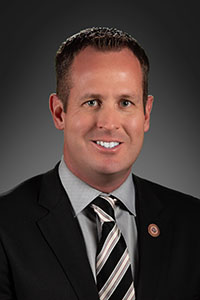
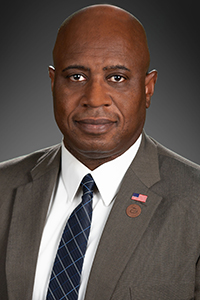 Returning to the Legislature is Representative-elect Walt Blackman from Legislative District 7. Blackman, a Republican from Snowflake and a U.S. Army combat veteran, served in the House from 2019 to 2023. He said he wanted to return because he saw too much “stagemanship” instead of policy while watching as an outsider for two years. “Everything we do affects everybody in this state whether they voted for us or not,” Blackman said. As the incoming chairman of the House Government Committee, he said he looks forward to easing burdens for licensed practices to be more user-friendly for Arizonans, but not irresponsible. Blackman will serve on the House Appropriations and Commerce committees. With Democratic governor, Blackman said he understands the importance of working with Democrats and treating people with respect and dignity. “This isn’t a war. These are people that just can’t get along sometimes,” Blackman said. He has two political heroes: former U.S. Secretary of State and U.S. Army General Colin Powell for his approach as an “independent Republican;” and former President John F. Kennedy, who Blackman said helped de-escalate the Cuban Missile Crisis by working across the aisle with Republicans.
Tag: walt blackman
Controversy surrounds LD7 House candidate in crowded race
Several Republicans have spoken out against a Republican candidate running for the state House of Representatives in the most crowded legislative race after he was accused of lying about his...
Get 24/7 political news coverage and access to events honoring top political professionals
Money expected to be deciding factor in LD7 GOP primary
Hard work versus money.
In a political campaign, consultants and pollsters will put their money on money.
They predict that in a primary contest between Sen. Wendy Rogers, R-Flagstaff, and Rep. David Cook, R-Globe, her larger campaign stash will ensure she keeps the Legislative District 7 seat in the Senate.
On July 7, Cook said he is going to run against Rogers after she received flack on social media for inadvertently retweeting a video with explicit images that has since been deleted.
Cook raised about $109,000 in the last election cycles and spent about $62,000.
Rogers raised about $3.3 million in the same period and spent about $3.2 million.
“Funding is always a concern,” Cook said in a text. He said that he’ll use the strategy he’s run with in the past. “Hard Work – meanwhile always thinking and putting the voters first and what is important to them and their daily lives,” he said.
Republican consultant Chuck Coughlin thinks money will be the most important factor in their primary race.
“Mr. Cook is biting off more than he can chew,” Coughlin said in a text message. He said Republican primary voters adore Rogers, making her an Arizona version of U.S. Rep. Lauren Boebert, R-Colo., a rural business owner and mother of four and torch bearer of former President Donald Trump.
Coughlin said that with Rogers’ money, Cook is “on the wrong side of the equation.”
In 2022, former lawmaker Kelly Townsend went head-to-head with Rogers and lost. Townsend had a longer career at the legislature and a similar platform to Rogers, but she was heavily outspent and lost with about 40% of the vote to Rogers’ 60%.
Democratic lobbyist Gaelle Esposito said that Cook is a stronger candidate than Townsend with a “conservative populist” message. “I have to wonder if R groups tired of her act will spend to help him,” Esposito said in a text.
Rogers, whose administrative assistant said was unavailable for comment, has a large following on social media and the support of many other MAGA Republicans nationwide including Trump.
Although many of her social media followers and donors are voters in LD7 where she is running, she collected substantially more than every other legislative candidate in Arizona in the last election.
Republican lobbyist Barrett Marson said of Cook: “He’ll work hard. But overcoming that huge war chest may be a hill too high to climb. In reality, very few people know who their state representatives are. But if Senator Rogers spends $1 million or $2 million to educate the GOP electorate, I don’t know that Cook can overcome that.”
Cook is termed out in 2025, meaning he cannot run for his current seat in the House of Representatives again in the upcoming election.
Rogers was elected for the first time in 2020, and Cook was first elected in 2016. He currently chairs the House Transportation and Infrastructure Committee, and Rogers chairs the Senate Elections Committee.
Consultant Tyler Montague said if anyone has a chance against Rogers, it’s Cook. But he also acknowledged the gap in their funding.
“Her superpower is her big pile of $ she gets from peddling her grift spiel to her donors,” he said in a text.
In LD7, former Reps. John Fillmore and Walt Blackman filed to run for seats in the House. So did Rep. David Marshall Sr, R-Snowflake, Cook’s seatmate.
Rogers is the only one who’s filed a statement of interest to run for the district’s state Senate seat so far, and Cook is the only person who has announced that he will challenge her.
“I think it will cost him more money than he has ever raised,” Democratic consultant Tony Cani said of Cook.
In last year’s primary, Rogers got 24,023 votes and Townsend got 16,185.
In Cook’s primary last year, he competed with two other Republicans, but voters could vote for two people. He was the highest vote getter with 21,276 votes. Fillmore got 16,742 votes and Marshall Jr. got 18,083.
As for how those numbers will carry over in 2024, Highground strategist Paul Bentz said he thinks it’s a “neutral” thing.
“It kind of comes down to what happens in Coconino County,” Bentz said. “Rogers is certainly doing the work and seems to be really representing the desires of that of that electorate.”
Cook did very well against Fillmore, who Bentz described as “much more aligned on some of these Trump issues.” Fillmore was also at the disadvantage of being placed into a very different area than he’d won in before through redistricting.
“Cook has got a very long and successful track record, but I don’t know if it’ll matter to those primary Republicans who really just want people to validate their feelings, and Rogers certainly has done that expertly over the years,” Bentz said.
Cook is successful in Pinal County and the parts of it that go into LD 7. Bentz predicts that the Pinal County part of the district will grow and move more to the center over time, but it’s not there yet. Rogers, however, is established with voters in the White Mountains area further north.
“Her donor base is almost exclusively national at this point. That will give her a significant financial advantage,” Bentz said.
Prison panel to focus on 4 key areas
Petersen unveils inflation reduction plan, mirrors Lake’s

Senate President-Elect Warren Petersen, R-Gilbert, unveiled a new plan to mitigate inflation on Tuesday, like the one gubernatorial candidate Kari Lake presented, but the measure will likely face heavy opposition.
Petersen’s plan would be to eliminate rental and food taxes, reduce (or eliminate) occupational license fees and increase housing supply.
“Government has done extremely well over the last few years by adding a record amount of revenue. Unfortunately, hardworking taxpayers are reeling during this period of runaway inflation and are having a tough time paying for the most basic necessities,” Petersen said in a written statement. “There are at least four actions we can make as a Legislature to counter the effects of rising costs and help our citizens who are living paycheck to paycheck.”
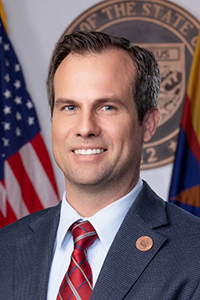
Elements of his plan strongly resemble the economic plan published by Republican gubernatorial candidate Kari Lake, which also called for cutting food and rental tax.
“Arizonans can’t afford to wait for a change of leadership in Washington – they need relief now. That’s why I’ve pledged to eliminate all taxes on groceries and rent in the State of Arizona, putting almost half a billion dollars back into the pockets of Arizona families,” Lake stated in her plan earlier this year.
Governor-elect Hobbs opposed Lake’s plan at the time and said it would essentially defund law enforcement by taking away revenue that cities and towns use to fund public safety.
Petersen’ plans won’t become law without Hobbs’ support.
“Lake’s ‘plan’ would do nothing to actually put money back in the pockets of working Arizonans. Instead, Lake’s plan would get rid of the tax revenue that funds law enforcement in Arizona’s cities and towns, defunding local police,” Hobbs said in a statement at the time, citing an opinion piece by Arizona Republic writer Laurie Roberts to that effect.
The opinion piece cites Republican Glendale Mayor Jerry Weiers as opposed to Lake’s idea. City and town officials have historically opposed similar measures.
Arizona cities and towns get hundreds of millions of dollars in tax revenue each year. A large portion of that goes to police and firefighters. Not all cities tax rent or groceries, but most of Arizona’s 91 cities and towns do.
RENTAL TAX
A proposal to eliminate rental tax was introduced in the legislature last session by Rep. Shawnna Bolick, R-Phoenix, but died on the Senate floor when Sen. Paul Boyer, R-Glendale, and the Democrats voted it down.
The bill was opposed by the League of Arizona Cities and Towns.
Boyer said on Tuesday that the measure – Senate Bill 1116 – was a “$202M ongoing hit to cities. Essentially, defunding the police given how much cities spend on public safety.”
“Nothing justifies poor tax policy but the good news is cities are enjoying surpluses from wayfarer and expanding state shared revenue to 18%. However we can look at delayed implementation for a soft landing,” Petersen said in response.
Petersen argued in his statement that homeowners don’t have to pay taxes on their mortgage payments and tenants shouldn’t have to pay a rental tax.
FOOD TAX
Bolick introduced a bill to cut food taxes in 2019, but the bill was held in House rules and never made it to a floor vote. It was co-sponsored by Reps. Leo Biasucci, R-Lake Havasu City, Walt Blackman, R-Snowflake, John Fillmore, R-Apache Junction, Kevin Payne, R-Peoria, Ben Toma, R-Peoria, and Frank Carroll, R-Sun City West. The bill was opposed by the East Valley Chamber of Commerce, the Professional Fire Fighters of Arizona and the Arizona State American Federation of Labor and Congress of Industrial Organizations.
Bolick’s bill would only have eliminated food tax on groceries, not meals in restaurants. Petersen doesn’t specify his plans but writes that food is “not a luxury” and that the tax hurts “the poorest of the poor.”
In Arizona’s largest cities, there is no food tax, and statewide, families who use federal food subsidies do not pay food taxes.
HOUSING SUPPLY
In a proposal that could enjoy some bipartisan support, Petersen writes that he wants to “increase the housing supply,” something that Democrats and Republicans have been saying loudly for at least the past year. The question is, how Petersen wants to go about it.
A Housing Supply Study Committee has been meeting for the past few months and will discuss possible legislation to create more affordable housing in an executive session at their next meeting on Tuesday, according to the committee’s chair Rep. Steve Kaiser, R-Phoenix. Republicans on the committee, including Kaiser, want to “deregulate zoning” on housing projects to make it easier to build more homes, however nothing concrete is on the table.
Petersen writes that he wants to shorten the window of time it takes to get approval for land development and housing projects. “One way to accomplish this is through administrative approvals for all projects that meet all existing laws and requirements,” he said.
Kaiser will chair the commerce committee next session and said that he and Petersen have spoken and that he is on board but didn’t get into specifics.
When asked whether he will sponsor the bills to make these economic changes himself, Petersen said that he will defer to committee chairs first.
LICENSE FEES
Petersen’s last proposal is to “reduce or eliminate occupational license fees,” which many professionals must pay to stay in business. Petersen has battled occupational licenses in the past. He sponsored two bills that Gov. Doug Ducey signed into law, one allowing professionals moving to Arizona from other states to keep their existing licenses and not acquire new ones, and one requiring state agencies to post about the occupational licensing requirements, notifying professionals of their right to petition to repeal or modify the existing regulation.
“To create new opportunities for Arizonans, we have to make sure our economy is one of the most competitive in the country to launch or relocate a business. To get there, I plan to identify and roll back any cumbersome and unnecessary regulations that get in the way of Arizona’s appeal to attract new businesses and jobs,” Lake said in her economic plan.
Petersen noted that the state has full coffers, pointing to over taxation. Arizona has a surplus of more than $2 billion dollars this year.
Finance Chair J.D. Mesnard, R-Chandler, said in a text that he’s “generally supportive” of the concepts Petersen put forward but hasn’t gotten into the details.
Hobbs has not yet commented on Petersen’s plan. Her support will be hard to win on the removal of food and rental taxes. City and town lobbyists also likely make their opinions known.
Lawmaker urges probes of property fraud in Mexico

An outgoing state representative is calling for the Attorney General’s Office and state law enforcement to investigate fraud claims from Arizona residents who have purchased property in Mexico and allege Mexican government officials are involved.

At a November 7 press conference, Rep. Walt Blackman, R-Snowflake, said two of his constituents, Rick Hatch and Julie Hatch, bought property in Puerto Peñasco in 2009 that was illegally transferred to another party without the Hatches’ consent. The Hatches reportedly provided evidence that the fraudulent transactions involve Puerto Peñasco Mayor Jorge Ivan Pivac Carillo.
During the press conference, Rick Hatch said a false meeting of his corporation – Coca & Hatch Properties – was formed on June 10, 2015, to forge signatures and borrow a $300,000 loan and mortgage. That unpaid loan was used to transfer the property to Pivak Carillo.
“I never borrowed $300,000 from anybody in Mexico. I was loaning money to people, including the developer that I got this land from,” Rick Hatch said.
Rick Hatch owns motorcycle dealership Top Spoke and is president of Hacienda Harley-Davidson in Scottsdale. He said proving the fraud should be easy, but he and his wife are being blockaded by government authorities in Puerto Peñasco.
A news release from Blackman said all individuals listed at the false assembly denied they were ever present at that meeting and testified their signatures were forged. One of the board members allegedly present, Mercedes Coca, died on October 8, 2008, years prior to the false assembly taking place. Another board member who was supposedly present at the meeting presented an identification card that had the name and picture of someone else, the release said.
During the false meeting, the company’s board members purportedly appointed Roberto Trahin Rodriguez as the company’s general manager, with authority to make contracts on the company’s behalf, the release said. However, Trahin has never had any position with the Hatches’ company.
The Hatches have been fighting for nearly seven years to reclaim their property, and their attorney in Mexico withdrew all evidence they had submitted to a court in Mexico after years of litigation, the release said. Additionally, Blakeman said that some lives have recently been threatened.
“This is a clear and present danger to Arizonans purchasing property in that part of Mexico,” Blackman said.
Blackman added that there are 40 claims from Arizona residents that their property in Puerto Peñasco was stolen from them by local government officials of the city.
Specifically, Blackman wants law enforcement in the U.S. and Mexico to investigate Pivac Carillo and his dealings. The Hatches also provided evidence that shows a U.S. bank account was used to facilitate part of the transactions involving their property and Pivac Carillo has property in Arizona, Blackman said.
While Blackman lost his primary race and won’t be in the House next session, he said he has talked to other legislators who are interested in carrying forward this issue and all of the Hatches’ evidence has been presented to the Attorney General’s Office.
Blackman’s office is inviting any other Arizona residents who have experienced a similar situation to call 602-926-3043.
Lawmakers who lost primaries plan next steps

Twenty-two lawmakers lost their races this year for various offices and won’t return to the Capitol for at least two years.
Nine House Republicans, nine House Democrats and four Republican senators were knocked out of the running, several in surprising upsets from political newcomers.
Nearly all the legislators say they will spend some time focusing on their other jobs and families, but don’t rule out another run down the road.
House of Representatives

Rep. Morgan Abraham, D-Tucson: “I can’t see a situation where I run for the lege (Legislature) anytime soon but there’s other offices,” Abraham said. He wants to go back to being an “involved citizen” in the meantime.
Rep. Richard Andrade, D-Glendale: Andrade is a locomotive engineer who was already on vacation in Hawaii by the middle of August. He’ll take a break from the Legislature but plans to run again as a Clean Elections candidate. “My opponent was able to pull it off because he had a lot of outside help like special groups, special interests,” Andrade said. He hopes that using Clean Elections funding will boost him and he won’t turn to organizations that he said disappointed him “immensely.” He lost his race to fellow legislator Rep. Diego Espinoza, D-Tolleson.
Rep. Walter Blackman, R-Snowflake: Blackman said in no uncertain terms that he will run for office again, but maybe not for a seat in the Legislature. “I’ve been asked to run for the Senate in my district, and so we’ll see. We’ll see, but I definitely am running,” he said. Blackman lost a congressional bid to Trump-endorsed newcomer Eli Crane.

Speaker of the House Rusty Bowers, R-Mesa: Bowers is hard at work traveling on behalf of the state. He wants to make a trip on his own to Romania and Kazakhstan outside of work, and paint pictures of Romanian haystacks. Bowers is the best-known artist in Arizona politics and decorated the House with his own paintings and sculptures. His vacation plans are no indication that he intends to leave politics behind. “I’m very, very concerned about the direction my party has taken. Obviously, I’m not a ‘member in good standing anymore’ because I didn’t want the Legislature to take away the right of citizens to vote,” he said of being censured by Republican Party Chair Kelli Ward. Bowers said he wants to have an impact on the future of the Republican party. “I am a victim in a district against three competitors who used tactics and said things about me and my morality and my stature and my reputation that was disgusting. … It’s a vicious bunch of people,” Bowers said. His primary opponent David Farnsworth was endorsed by Trump after Bowers testified to the January 6 congressional committee about former President Trump’s efforts to overturn Arizona’s election results.

Rep. Judy Burges, R-Sun West City: Burges said that she’ll be in her 80s when she runs again and she’d have to “give it some thought,” but in the meantime she’s going on a vacation to Hawaii for the first time. “I’m really looking forward to it,” she said on August 16. Burges wants to continue working for the Republican Party whether she runs again or not. “You can’t be busied out the Legislature and come back home and do nothing,” she said.
Rep. John Fillmore, R-Apache Junction: Fillmore said he will never leave politics and that his election isn’t over. He said he believes that he only lost due to problems in Pinal County on Election Day that included a shortage of ballots and is considering legal action. For now, Fillmore said he is in the mountains of Oregon “recuperating” by “drinking incessantly” and camping in a motel.

Rep. Joel John, R-Buckeye: “To be frank, I don’t think I’ll run any time in the near future. I would like to run again, but the Legislature is a huge commitment for someone who runs a business and has kids at home,” John said. He has an agricultural business to run and takes care of his children.
Rep. Sarah Liguori, D-Phoenix: She wants to remain in politics and hasn’t decided whether she’ll run for the Legislature again. “This time last year, I didn’t know I was going to be at the Legislature. So, this time next year, I don’t know what my life is going to be like,” she said on August 15. Liguori is interested in putting her experience in real estate behind her and focusing instead on politics in Phoenix. She was appointed rather than elected to this term and lost to fellow incumbents Rep. Amish Shah, D-Phoenix, and Rep. Jennifer Longdon, D-Phoenix.
Rep. Robert Meza, D-Phoenix: Meza said he’ll keep working at his own business and potentially come back into politics later. “I’ve never been through this before, because I always win by large amounts,” Meza said.
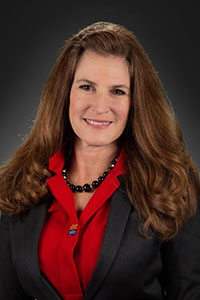
Rep. Joanne Osborne, R-Goodyear: “I will be doing what I always do and try and be a part of my community, and have my small business, and be a mom and a grandma,” Osborne said. She is not sure whether she’ll come back but said that may depend on what happens in Arizona. “We’re doing well as Arizonans, and I hope nobody screws that up,” Osborne said.
Rep. Lorenzo Sierra, D-Cashion: Sierra said he may run again, but now he’s hunting for a job in the private sector and considering moving to Washington, D.C., with his wife. “We have kids who live out-of-state and one of them is getting married. We’d love to be near grandchildren,” he said. In terms of his work, Sierra said he wants to remain “politics adjacent” with community relations and marketing.
Rep. Christian Solorio, D-Phoenix, Solorio’s spokesperson (and sister) Diana Solorio said that he will continue to work in the community and combat homeless issues but has not committed to another politics run.
House Minority Leader Reginald Bolding, D-Laveen; Rep. Shawna Bolick, R-Phoenix; Rep. César Chávez, D-Phoenix; Rep. Daniel Hernandez, D-Tucson; Rep. Michelle Udall, R-Mesa; and Rep. Jeff Weninger, R-Chandler, did not respond to requests for comment.
Sen. Michelle Ugenti-Rita, R-Scottsdale, Bolding and Bolick all competed and lost in the primary race for secretary of state. Rep. Mark Finchem, R-Oro-Valley, won that Republican primary.
Senate

Sen. Tyler Pace, R-Mesa: Pace didn’t promise to run again, but he said the 2022 session was “probably” not his last time serving in the Legislature. “I have no plans running for office in this next election cycle. Other than that, I’m not entirely sure, but it won’t be the end,” Pace said. Pace has his own business to manage and is considering getting a cabin or a beach house to enjoy. He also said he’s not planning to collaborate with Robert Scantlebury, who beat him in the primary election for Legislative District 9.
Sen. Kelly Townsend, R-Apache Junction: “I have given ten years plus of my life to serving the people of this state and country. I’ve sacrificed my children’s childhood, my career before politics, to some degree my health due to the high level of stress and many other things, and right now my focus is my children and my family and then I will decide,” said Townsend. She used to work full time as a doula but said she probably won’t go back to that now. “I’ve given every last fiber of my soul to this state for a long time and now it’s time to turn and focus forwards,” she said. Fellow Sen. Wendy Rogers, R-Flagstaff, beat out Townsend in the primary.
Sen. Vince Leach, R-Tucson: Leach still hasn’t conceded his Legislative District 17 race to victor Justine Wadsack. He had two friends file a lawsuit against Wadsack claiming that she actually lives outside of the district she ran in and is asking that her name be removed from the general election ballots and replaced with Leach’s. “If you’re going to represent the district; you should live in it,” Leach said on Thursday.
Sen. Michelle Ugenti-Rita, R-Scottsdale, did not respond to requests for comment.
Rogers calls Blackman ‘a weasel’ for criticism
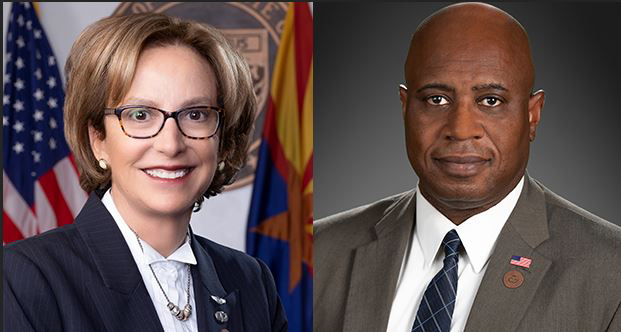
State Rep. Walt Blackman publicly declared that the people of the northern Arizona legislative district he shares with Sen. Wendy Rogers don’t agree with the Twitter post she made this weekend about the murder of 10 people in Buffalo by a white supremacist.
And what he said he got in return was a not-so-subtle jab from her: He said Rogers cut him off from reading any of her future Twitter posts.
“She’s able to give criticism, but she can’t take it back,” Blackman told Capitol Media Services. But he is not withdrawing what he said about her – though he never mentioned her by name – in a nearly three minute speech Tuesday on the House floor.
Rogers, for her part, said in a message to Capitol Media Services that she doesn’t recall blocking Blackman following his speech, saying that “must have been a long time ago.” Anyway, she said, Blackman has multiple accounts.
“I don’t think I have blocked all of these accounts,” she said – at least not yet. “Maybe I will, maybe I won’t.”
The post that caused the stir is simple.
“Fed boy summer has started in Buffalo,” she wrote, a comment that was widely interpreted to mean that the shooter actually was a federal agent and that the incident was a “false flag” operation by the government.
The Senate on Monday voted to open an inquiry to determine if Rogers violated ethical rules that govern the conduct of lawmakers.
Blackman, however, felt the need to do more. On Tuesday he took to the House floor to offer an apology of sorts from residents of the district they share which runs from Tusayan through Flagstaff to Snowflake – where Blackman lives – and Payson.
It started with what Blackman said was an apology to the House and Senate “on behalf of the delegation” for what was said by one of its members.
That “delegation” includes Rogers, Blackman and Rep. Brenda Barton, a Republican from Payson.
“I will tell you on behalf of the good people of Legislative District 6 that the thousands of constituents that I represent and that Rep. Barton represents, that we have good people in our district that don’t agree with the vitriol and the tweets that went out this past weekend that further hurt the families of those victims that were lost over this past weekend,” he said.
“And I would hope that my colleague in the Senate that has done this would stop and think, before any other tweets come out, about the families’ losses and not about a political statement,” Blackman said.
Rogers reacted shortly after the speech.
“Walt Blackman is a straight up weasel,” she posted. “Yells all of the time and no one likes or trusts him.”
I didn’t think I yelled that much,” Blackman wrote back in response.
Rogers issued a statement following the Senate vote to open an ethics investigation saying her comment “was taken out of context and became a false narrative that’s now the focal point of a firestorm created by certain race-obsessed members of the media.” But she did not explain how the comment was “out of context” since the posting — the one that led to the complaint — was the entire text.
She also said she does not condone violent crime or racism and denounced the tragedy. And Rogers said she believes the ethics probe will “give me due process in this matter.”
“And I am certain that once the facts have been analyzed, I will be vindicated,” the statement reads.
Juvenile court fees hinder rehabilitation

Arizona lawmakers have an opportunity to help young people avoid falling into a cycle of debt and poverty for mistakes they made during childhood.
I am proud to sponsor House Bill 2746, which will eliminate fees in Arizona’s juvenile system. It’s an issue with broad bipartisan support, doesn’t cost a lot, and will remove barriers that keep young people from turning their lives around.

The juvenile court system is supposed to help get kids back on the right track when they get in trouble. But right now, Arizona’s juvenile courts charge children and their parents a range of administrative fees, straining already struggling families and keeping kids trapped in the system.
These fees, which are separate from punitive fines or victim restitution, are charged for a child’s court-appointed lawyer, detention, probation, and court-ordered treatment. They can add up to thousands of dollars for just one case.
Many families simply do not have the money to pay these fees, preventing them from spending on education, housing, and food, or forcing them to take out “payday” loans. Some children have declined legal representation because they worry that public defender fees could cause financial strain on their families, choosing instead to face the court alone. The debt can even follow youth long after their case is over, preventing them from destroying their juvenile records and building financial independence as they transition into adulthood.
A system that is supposed to guide and support kids out of trouble is instead making families go broke and setting kids up for failure later in life. One study even found that owing court costs significantly increased the odds of a child getting re-arrested within two years. That means that the state and local governments stand to save money in the long run by reducing recidivism.
H.B. 2746 ends this harmful and counterproductive practice by eliminating fees from the Arizona juvenile court system and allowing youth to petition to have old fee debt waived. Courts and counties would receive $2.5 million in annual funding to offset any lost revenue and ensure that our public institutions can continue to provide important services to youth in the system.
Fourteen states, including Utah, Colorado, New Mexico, Nevada, Texas, and Louisiana, have eliminated some or all juvenile fees. Conservative and liberal groups alike, along with judges, youth correctional officers, and law enforcement leaders, have called for states to eliminate fees for youth.
I collaborated with the courts, the criminal justice reform community, and advocacy organizations that work directly with low-income youth for over a year to ensure this legislation would benefit youth while preserving critical court services. With a surplus in excess of $5 billion, now is the time to dedicate these modest resources toward some of our most vulnerable children, and I hope that HB 2746 will be included as part of the FY 2023 budget.
Move on to curb governor’s emergency powers

Two Republican lawmakers are moving to trim the powers of government during an emergency.
Rep. Mark Finchem of Oro Valley wants colleagues to rescind statutes that allow the governor to mandate vaccinations.
That’s not something Gov. Doug Ducey — or for that matter, any governor in recent history — has done. Finchem told Capitol Media Services, though, that just having such laws on the books is dangerous.

“Do you think the government should have the power to force you to take any ‘medication’ against your will?” he asked.
But Sen. Warren Petersen of Gilbert has his eyes on powers that Ducey has, in fact, exercised: Ordering certain businesses shuttered. So he wants to spell out in law that neither Ducey nor any local official has such a right.
The two measures are expected to be just the tip of a larger debate when the legislature convenes on Jan. 10 about when governors can declare emergencies, what powers they can exercise and, more to the point, how long they can unilaterally keep them in place.
Right now, there is no limit. In fact, the emergency that Ducey declared in March 2020 is still in effect.
“If anything’s been clear over the last year and a half, it’s that governors, whether they’re Republican or Democrat, are all too willing to abuse their emergency declaration powers,” said Sen. Michelle Ugenti-Rita, R-Scottsdale.
She already has introduced SB1009. It would limit emergency declarations to 30 days, with the possibility of three extensions.
But anything after 120 days would require the concurrence of the legislature.
Gubernatorial press aide C.J. Karamargin said his boss does not comment on legislative proposals.
While Ducey has voluntarily rescinded most of the restrictions he imposed in 2020, he retains the right to reimpose them. And it is that list of what the governor can do that is leading to some of what legislators want to debate.

Finchem points out that current law says that, during a state of emergency or war, the governor may mandate treatment or even vaccination of someone who has been exposed — or even may reasonably expected to be exposed — to any highly contagious and highly fatal disease, including smallpox, plague, viral hemorrhagic fever or any diseases with similar transmission characteristics. His HB2022 would repeal that language.
“No one has the authority to force you to accept something into your body that cannot be reversed,” Finchem said. And he said this is particularly true in situations like Covid where he says “there are other treatments that are more effective,” ones he said “do not change your DNA.”
Numerous medical sources say there is no evidence that Covid vaccines, which use messenger RNA to trigger an immune response, can alter genes or DNA.
Rep. Walt Blackman, R-Snowflake, has a related measure which is even broader. His HB2029 seeks to bar state and local governments from requiring someone to be vaccinated against Covid or any variant or to possess any sort of “immunity passport” or other evidence of vaccination or immunity.
But it goes beyond what government employers can do. The legislation would forbid state and local governments from entering contracts with any company that imposes a vaccine mandate on its own workers, whether there is a declared state of emergency.
“My goal is more to protect the employees from discrimination for not having the shot or having to carry a passport,” he said. Blackman compared this to the Jim Crow era where there were laws and policies in some states that enforced racial segregation.
“Folks were discriminated against because of their color,” he said. “I’m saying this is the same thing.”
Blackman said it is for that reason he wants to expand the protections against mandatory vaccinations to workers at private firms.
“I don’t believe that we need to fire people from their jobs or hold their jobs over their heads” for refusing to get vaccinated.
One potential sticking point could be the ban on the state doing business with those firms.
That might not be a problem in deciding to buy office supplies from a different firm. But it gets trickier when the state is dealing with the bank that handles its checks or the utility that provides electricity or gas.
“I hope it doesn’t go to that,” Blackman said. But he said he remains steadfast in his belief that no one’s job should be placed at risk for refusing to get inoculated.
Petersen’s proposal also deals with private business, but in a different way.
Arizona law allows mayors and the people who chair county boards of supervisors to declare local emergencies. His SB1048 would specifically rescind their ability during such an emergency to order the closing of any business.
But Petersen said the intent is to limit all levels of government — including the state — from forcing any business to shut down.
And this isn’t idle speculation.
Ducey closed all bars and restaurants in March 2020. And that followed decisions already made by the mayors of Tucson and Flagstaff,
Subsequent orders by the governor shut down gyms, water parks and even tubing along Arizona rivers. Ducey separately banned gathering of more than 50 people, though he exempted churches and political rallies. And swimming pools, including public, at hotels and even semi-private ones at apartment complexes, were limited to no more than 10 guests.
Petersen said all that is beyond the role of government.
“People have a fundamental right to work and to earn a living,” he said.
“It’s entirely possible to stay safe and keep businesses open,” Petersen continued. “And if people feel unsafe going to a business they can choose for themselves to stay away.”
Slew of newcomers fill empty seats in Legislature

The House will start 2022 with nine new members who were appointed to fill spots that opened due to a slew of resignations after the 2021 session. And that means new faces will be heading a couple of powerful committees.
Rep. Walt Blackman, R-Snowflake, will head the House Judiciary Committee next year, replacing Rep. Frank Pratt, who died in September. And the committee’s purview will be expanded to include the sort of bills Blackman pushed during the 2021 session as chairman of the House Criminal Justice Reform Committee. The latter panel is being dissolved and will have its responsibilities folded into Judiciary.
And House Speaker Pro Tempore Travis Grantham, R-Gilbert, will have his portfolio expanded to include the chairmanship of the House Rules Committee, replacing longtime Rep. Becky Nutt, a southeastern Arizona Republican who resigned a month ago.
“The last time we had this many resignations was, I think, in 1991, and that’s when AzScam occurred,” said veteran lobbyist Barry Aarons, referring to the gaming scandal that resulted in seven lawmakers being convicted of bribery.
This year’s resignations have mostly come for more pedestrian reasons – only one, former Sen. Tony Navarrete’s departure, was due to criminal charges. Three lawmakers have left for personal reasons, while two House members left that chamber after being appointed to the Senate, one left to take a job in the Biden administration, and three resigned to focus on bids for higher office.
Republican lobbyist and former lawmaker Stan Barnes said, “This is, in my 32 years, the rarest of situations, really, and I’m still surprised when I consider the amount of people resigning simply for a job opportunity or for some other reason that wasn’t compelling in time. To resign to run for another office when you don’t have to is a new phenomenon. The whole thing is one giant surprise to me.”
Barnes said he doesn’t know what has changed in the Capitol’s culture to prompt more members who are seeking higher offices to resign. He said it “does not make sense to me in the name of fundraising or living up to our obligation to voters who put you in the original office in the first place, or maintaining profile. … There’s not a part of it I understand in terms of strategy.”
Having so many new members, Barnes said, will make what is already expected to be a tough session even tougher.
“The problem isn’t so much new members,” he said. “The problem is new members with an attitude. And with an overconfidence. And with a lack of understanding of how things actually work not deterring them from talking too much or engaging in ways that are detrimental to the process.”
Aarons, who believes lawmakers running for higher offices should resign their current positions, doesn’t think having so many new members will be as disruptive as Barnes does.
“New members tend to be kind of still finding their way and will tend to rely more on their leadership as far as positions they’re going to take,” Aarons said.
Aarons thinks a bigger factor in prolonging the 2022 session will be the presence of so many legislators who are running for higher office. Among the legislators expected to return in 2022 are two who are running for Congress, four who are running for secretary of state, three running for state treasurer and one running for state superintendent of public instruction.
“I think they’re going to have a lot of things that they’re going to want to do so that they can raise their profile, and that’s not necessarily going to make for an easier session,” Aarons said.
There will be three new Republicans for whom 2022 will be their first session – Lupe Diaz, who was named to Nutt’s seat; Neal Carter, who replaced Pratt; and Teresa Martinez, who was appointed after Bret Roberts resigned.
Democrats will have six new House members – Christian Solorio, who was appointed when former Rep. Raquel Terán was named to Navarrete’s Senate seat; Brian Fernandez, who was named to his mother Charlene Fernandez’s seat when she left for a job in the U.S. Department of Agriculture; Sarah Liguori, who was appointed to Aaron Lieberman’s seat when he resigned to focus on his gubernatorial run; and two yet-to-be-named members from vacant seats in Tucson and Phoenix.
Grantham will serve as a key gatekeeper in his new role as Rule Committee chairman. All bills pass through that committee before going to the House floor, effectively letting the GOP leadership which holds the majority on the committee decide whether a bill should move forward or be killed. Barnes said the importance of the Rules chairmanship has grown greatly in recent years.
“Decades ago, it was somebody that would salute leadership when needed in the way of holding bills, but it was generally just a perfunctory rubber stamp,” Barnes said. “That’s changed in the ensuing time, and different members in the past have exercised tremendous gatekeeping … autonomy, apparently unchallenged by leadership. And, dependent on the personality, that phenomenon remains.”
Speaking briefly before Grantham’s appointment was announced, Barnes said he expected the GOP leadership to take this into account when naming Nutt’s successor.
“Speaker (Rusty) Bowers understands the changing dynamics of the role of the Rules chairman, and no doubt will choose someone that he considers a close ally that is cooperative with general majority issues support,” Barnes said.
There has also been some notable committee reshuffling among the House Democrats, who lost a couple of long-serving members to the wave of resignations and have had to name new ranking members to some committees as a result.
Reps. Kelli Butler, D-Paradise Valley, Jennifer Longdon, D-Phoenix, and Gail Griffin, R-Hereford, will join House Appropriations to replace three members who resigned, with Butler as the new ranking Democrat. Another notable change is that House Minority Leader Reginald Bolding, D-Laveen, who is running for secretary of state, is joining Government and Elections.
And if this seems like a lot of changes, just wait a year. Of the House incumbents who are returning for the 2022 session, six have already filed to run for state Senate; eight are seeking higher offices such as Congress or statewide posts; and at least three have publicly announced they plan to leave the Legislature for other reasons after the upcoming session. Others could be squeezed out when redistricting forces them into difficult primaries.
The picture in the Senate is similar, with several senators running for higher offices, several others who have said they don’t plan to run again and a few who could be forced into primary elections with current colleagues. And even if Republicans keep the majority, the House and Senate both will have new leadership in 2023 – Bowers is term-limited, and Senate President Karen Fann plans to retire.
“The turnover at the Legislature for the 2023 session is going to be among the largest ever, at least in my 50 years down there,” Aarons said.
Key committee chairs chosen
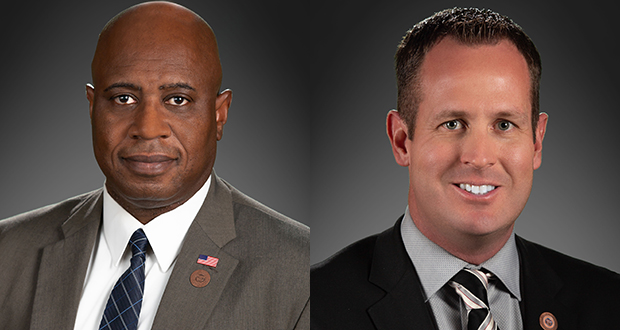
Rep. Walt Blackman will be the new chairman of the House Judiciary Committee, whose purview will expand to include criminal justice reform bills as well.
Blackman, R-Snowflake, had previously been the chairman of the House Criminal Justice Reform Committee, which first met this year. The committee advanced numerous bills aimed at overhauling Arizona’s criminal justice system; some of them became law, while others stalled when they didn’t get hearings in the Senate. The Judiciary chairmanship became vacant when former Rep. Frank Pratt died in September. With Blackman’s new role, the Criminal Justice Reform Committee will be dissolved and Judiciary will hear its bills instead.
The House Republican leadership announced new committee assignments for 2022 on Monday, taking into account the nine House seats that have become vacant since the end of the 2021 session. New members have already been appointed to six of those seats. Three Democratic seats are still vacant, and the announcement leaves empty spots for the Democrats to fill on the House Military and Public Safety; Natural Resources, Energy and Water; Government and Elections and Judiciary committees.
The other new chairman is Rep. Travis Grantham, R-Gilbert, who will now head the House Rules Committee. Grantham replaces Rep. Becky Nutt, who resigned for personal reasons a month ago. This is a key committee; after passing through the other committees that have jurisdiction over particular topics, all bills go through Rules before being sent on to the full House, effectively letting the GOP leadership which holds the majority on the committee decide whether a bill should move forward or be killed. Grantham will also keep his current spot as House Speaker pro tempore, said House GOP spokesman Andrew Wilder.
Stan Barnes, president of the Copper State Consulting Group, said the importance of the Rules chairmanship has grown greatly in recent years.
“Decades ago, it was somebody that would salute leadership when need in the way of holding bills, but it was generally just a perfunctory rubber stamp,” Barnes said. “That’s changed in the ensuing time, and different members in the past have exercised tremendous gatekeeping … autonomy, apparently unchallenged by leadership. And, dependent on the personality, that phenomenon remains.”
Speaking a little before Grantham’s appointment was announced, Barnes said he expected House Speaker Rusty Bowers, R-Mesa, to take this into account when naming Nutt’s successor.
“Speaker Bowers understands the changing dynamics of the role of the rules chairman, and no doubt will choose someone that he considers a close ally that is cooperative with general majority issues support,” Barnes said.
As for the new members, Reps. Lupe Diaz and Brian Fernandez will serve on the Land, Agriculture and Rural Affairs Committee; Reps. Teresa Martinez and Christian Solorio will join Military and Public Safety; Reps. Neal Carter and Sarah Liguori were named to House Commerce; Martinez and Liguori will be on Natural Resources, Energy and Water; Martinez and Solorio will join Government and Elections; Carter will also join Judiciary; Fernandez will join House Transportation; and Diaz will also join both the Education and Ways and Means committees.
Reps. Kelli Butler, D-Paradise Valley, Jennifer Longdon, D-Phoenix, and Gail Griffin, R-Hereford, will join the House Appropriations Committee to replace three members who resigned. Another notable change is that House Minority Leader Reginald Bolding, D-Laveen, is joining Government and Elections.