Please ensure Javascript is enabled for purposes of website accessibility

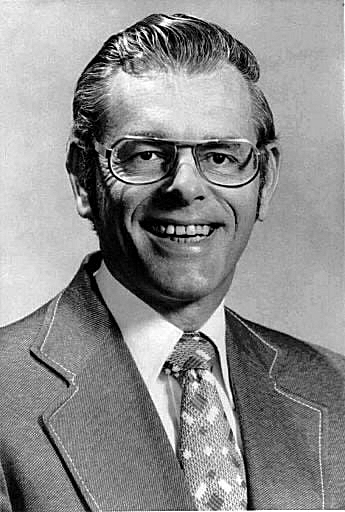
Lawmakers consider honoring slain reporter Don Bolles with Capitol memorial

Key points:
  • Arizona Republic reporter Don Bolles was killed in a car bombing 50 years ago
  • Rep. Selina Bliss is pushing for a memorial to Bolles to be placed at Wesley Bolin Plaza
  • Don Bolles’ assassination sparked a unique investigation into Arizona’s organized crime
Don Bolles (archive photo)

It will be 50 years this coming June since Arizona Republic reporter Don Bolles was killed in a car bombing linked to an investigation he was doing.

And Rep. Selina Bliss says she thinks the timing may finally be right to line up the votes – and overcome some opposition from a few within her own Republican Party – to allow a memorial to him to be placed across the street from the Capitol in Wesley Bolin Plaza.

It isn’t a question of money.

HB2079, sponsored by the Prescott lawmaker, says any funds for its construction must be privately raised. And that’s been the financial case now for the entire time since the idea was first proposed in 2023 by Phoenix Democratic Rep. Jennifer Longdon and Republican Sen. T.J. Shope from Coolidge.

What prior efforts have run up against is Sen. Jake Hoffman who chairs the Senate Judiciary Committee. The Queen Creek Republican, who has never explained his opposition, has used his position to block any such plans.

And Senate President Warren Petersen has, in the past, chosen not to exercise his ability to have the proposal sidestep Hoffman’s committee.

Bliss, a Prescott Republican, picked up the cause after Longdon left the Legislature. She said she thinks this might be the year, particularly since prior efforts by her and others have generated more than enough bipartisan support to secure the necessary votes.

“I spoke with his daughter,” she told Capitol Media Services, referring to Diane. “She is stepping up to support the effort,” with an eye on the 50th anniversary.

“This is it,” Bliss said.

Her original bill, which earlier cleared the House on a 45-15 bipartisan margin, was assigned by Petersen to Hoffman’s committee, where it died.

So she cooked up a plan: Bliss got permission from Sen. Janae Shamp, R-Surprise, to tack the exact same language onto an unrelated bill that had already passed the Senate when it went to the House. Again, a 45-11 approval.

That sent the now-amended bill back to the Senate where Petersen could simply have brought the new version up for a final vote of the full chamber, without further committee action. He did not. And the bill died.

“Senate leadership failed to move it forward,” Bliss said.

And this year?

“I wonder if Senate President Petersen can assign it to a different committee to give it a chance?” Bliss asked.

Petersen did not respond to multiple inquiries asking whether he would again assign any House-passed bill to Hoffman’s committee where it would again meet the same fate. Nor would he say whether he would use his power to get around Hoffman.

Still, some things are different this year.

Petersen, now running for state attorney general, is looking at a larger constituency than just his home community.

And there’s something else.

The Senate president is pushing his own plan to create an honor for someone else who was struck down. He wants to rename a 78-mile of freeway that loops in and around Phoenix for conservative activist Charlie Kirk, who was killed in a shooting earlier this year in Utah, as a memorial.

“It is right that Arizonans are regularly reminded of the tremendous legacy of this champion for free speech who was assassinated for his stand, which is why I introduced this bill,” Petersen explained earlier this month.

Bliss took note.

“When I saw the Charlie Kirk proposal, I thought, ‘Well, this is perfect,’ because the precedent will be set that Sen. Warren Petersen is going to run an individual out there that’s part of our history,” she said. “So this makes the Don Bolles bill even more applicable to this movement to acknowledge these individuals and their important part of history.”

That history, Bliss said, is what drives her on this issue.

“I think I was 13 when this happened,” she said. “It very much affected me to think that this could happen in the United States of America, someone being assassinated with a car bomb for discovering the truth.”

Bolles had gone to the Clarendon Hotel in midtown Phoenix in 1976 to meet with a source. That person, later identified as John Harvey Adamson, never showed up.

As he was backing out, six sticks of dynamite which had been attached to his 1976 Datsun 210, were detonated by remote control. He died 11 days later.

Adamson, seeking to avoid the death penalty, agreed to testify against Max Dunlap, saying he had ordered Bolles to be killed, with police saying that was because of a story the reporter had written about a friend, liquor magnate Kemper Marley.

Dunlap eventually was sentenced to life behind bars after a first conviction was overturned. He died in prison after a clemency plea was rejected.

Adamson and James Robison, who was accused of actually planting and detonating the bomb, also have since died.

Bliss said it’s important for people to be told that story.

“We have so many people that come to Arizona and they do not understand our important, rich history,” Bliss said. “And this is very much a part of it.”

Now the question for lawmakers is whether Bolles deserves to be honored in Wesley Bolin Plaza, alongside Arizona’s various veterans, pioneer women, the Ten Commandments, and Jesuit missionary Father Kino. The plaza already is home to more than two dozen plaques, statues, and other memorabilia, including large guns from the USS Arizona and USS Missouri.

State law requires that any memorial, regardless of whether, as in this case, the tab is to be picked up through private donations, must receive legislative approval and the governor’s signature.

The idea has had its detractors.

One was Rep. Jacqueline Parker, a Mesa Republican in 2023.

“So, the only thing this guy accomplished is that he was a reporter?” she asked in voting against the measure.

It also initially drew opposition from Rep. Alexander Kolodin.

But the Scottsdale Republican, now running for secretary of state, later changed his mind after saying he had developed a new appreciation for Bolles – even if it came with a slap at other reporters.

“Don Bolles, as opposed to the current hacks that we have in the liberal media, was actually a newsman,” Kolodin said.

Bolles’ assassination, unusual in a country like the United States, provoked an immediate and unique response within the journalism community. Nearly 40 reporters from newspapers around the country, sponsored by Investigative Reporters and Editors Inc., launched an extensive probe that resulted in a series of stories about organized crime in Arizona.

The series was printed in the Arizona Daily Star and in many newspapers around the country, though not in The Arizona Republic, where Bolles had worked.

Memorials at Wesley Bolin Plaza have not been without their controversy.

In 2011, the Senate voted to tear down part of a memorial to the victims of the 2001 terrorist attack at the World Trade Center after some lawmakers said they were upset by some of the phrases carved into the ring. Then-Sen. Al Melvin, R-Tucson, said the memorial should have only “patriotic, pro-American words” and not phrases that represented attitudes at the time, like “fear of foreigners.”

And in 2020, a monument to Confederate troops was removed from the park at the request of the United Daughters of the Confederacy. This group placed it there in 1961 during increased activity in the civil rights movement.

The group stated that the monument needed repair. But there was something else, with demonstrations and it being vandalized since the killing of George Floyd in Minneapolis. The organization said it would be “unwise” to repair it where it is located, due to the current political climate.”

It has never been replaced.

Among others memorials and monuments still in place are those honoring Purple Heart recipients, crime victims, canines that worked with law enforcement, former Gov. Ernest McFarland, and the 19 members of the Granite Mountain Hotshot Crew killed during a 2013 fire.

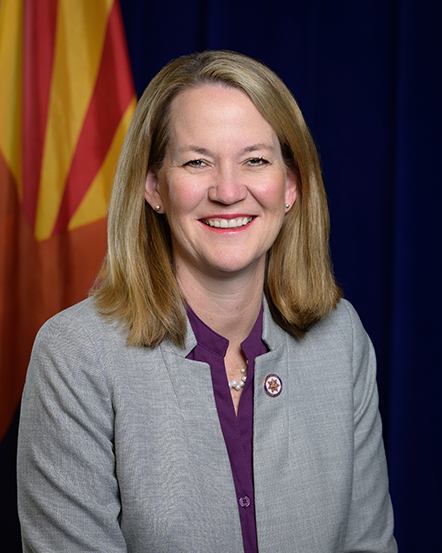
Meet Arizona’s Power 50

Welcome to the inaugural Power 50.

These are the state’s most important people — those who hold the power and wield the influence to shape the landscape of Arizona now and in the future. From legislative leaders and behind-the-scenes strategists to business moguls and grassroots changemakers, this inaugural list goes beyond titles to spotlight the individuals who make things happen. Whether they wield power from the Capitol, a courtroom, the halls of higher education — or sometimes from the shadows — these are the players to watch.

While this is by no means an exhaustive ranking of Arizona’s most impactful leaders, this list serves as a reference point and highlights those actively steering the political agenda. We hope it sparks discussion about Arizona’s future.

But you shouldn’t get too caught up in the rankings. The difference between No. 14 and No. 35 probably isn’t really that great.

This list will evolve annually. As a reader, you can be a part of it. Liked the direction we went in? Let us know. Didn’t see someone you believe should be on the list? Tell us about them.

We look forward to continuing to engage with you on these and other key players — and issues — shaping the state.

Thank you for reading the Arizona Capitol Times.

Teri Hayt, Managing Editor. 


  1. (AP Photo/Ross D. Franklin)

    Gov. Katie Hobbs: As the first Democrat elected governor of Arizona in nearly two decades, Hobbs has ushered the state through a new era of divided government. While sparring with the Republican-controlled Legislature over the last three years, she broke the state’s veto record twice, narrowly avoided a historic government shutdown and managed to see a few of her own priorities cross the finish line. Hobbs, a frequent punching bag for Republicans, is celebrated by fellow Democrats for signing a repeal of the state’s near-total abortion ban, quashing the most extreme Republican legislation and increasing access to health care and other essential services. The governor will lead the top of the ticket for Democrats in the state in 2026 when she seeks a second and final term on the ninth floor.


  1. Attorney General Kris Mayes: As the state’s chief law enforcement officer, Mayes stands as a Democratic bastion and counterweight to state and federal Republican policy. Since taking office in 2023, her focus has remained steady on enforcing stronger consumer protections, combating the fentanyl crisis, and targeting fraud in the state school choice program. Mayes has waded into, or decidedly stepped out of, political battles. After she refused to defend the state’s 15-week abortion law, the courts struck it down as unconstitutional. She also initiated the prosecution of the 2020 “alternate” presidential electors and is pursuing novel water litigation using public nuisance law. At the federal level, her office joined more than two dozen lawsuits against the Trump administration and saved the state an estimated $1.5 billion in federal funds. She is seeking reelection in 2026. 


  1. President Donald Trump: When Trump returned to the White House last November, Arizona was one of the key states to deliver him a victory. His influence was evident in the policies proposed by state Republican lawmakers, who reiterated their support for the president throughout the last legislative session. And Republican lawmakers have shaped much of their policies around his agenda, including bills calling for state law enforcement agencies to support federal immigration enforcement efforts, ending diversity, equity and inclusion initiatives at universities and government agencies and reducing the size of government.


  1. Sen. Warren Petersen: Petersen, R-Gilbert, is preparing for his last legislative session as Senate president before he embarks on his campaign for state attorney general. On the campaign trail, he has touted his conservative bona fides and involvement in more than 80 lawsuits, prompting some to refer to him as the “de facto” attorney general. Petersen has either led or joined legal action in numerous issues, including the drafting of the state’s Election Procedures Manual, the Arizona Motion Picture Production Program and litigation over Arizona’s Save Women’s Sports Act. Petersen has also helped lead the Republican effort to advance President Donald Trump’s agenda at the state Legislature and has met with members of the president’s administration in the last session.


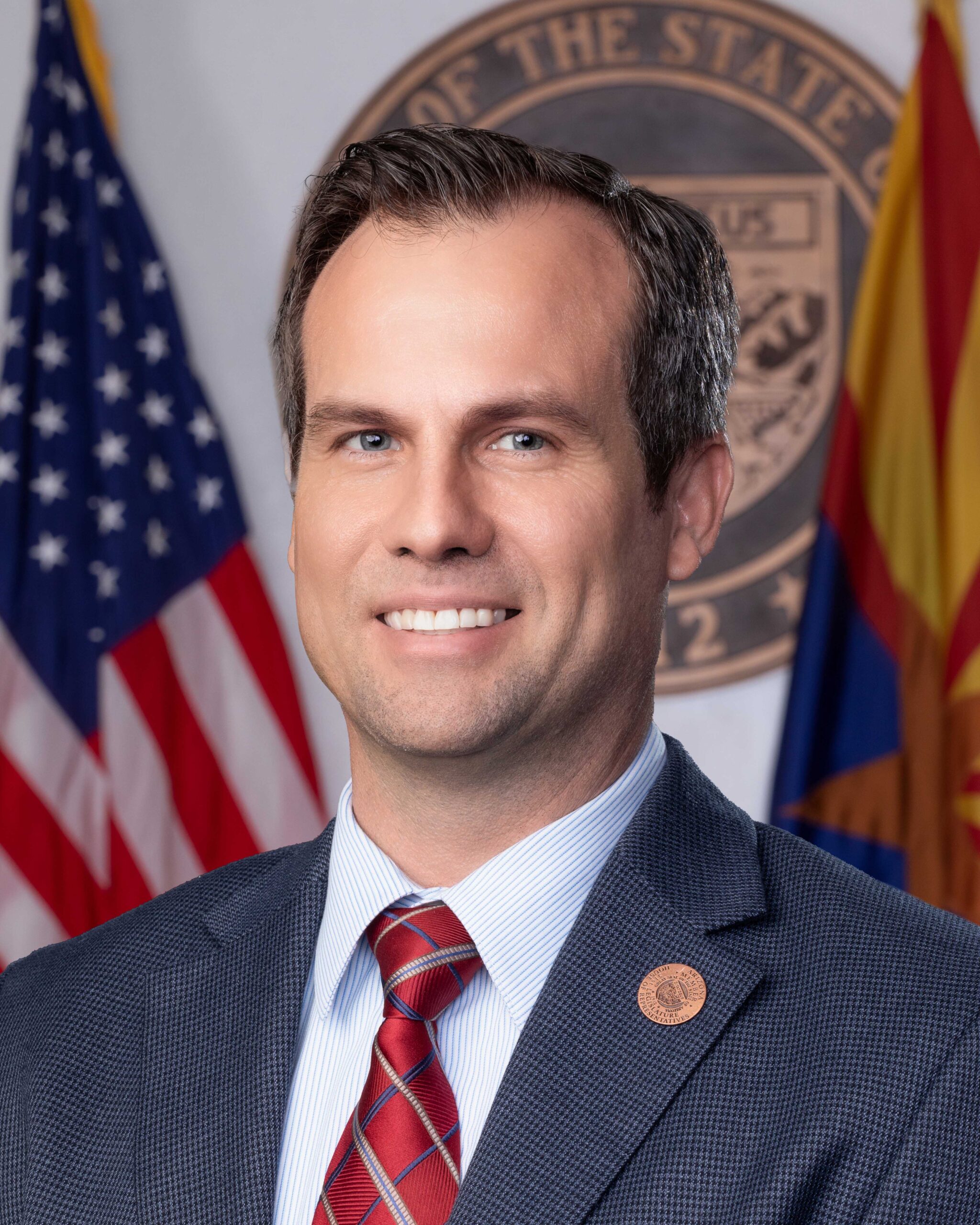
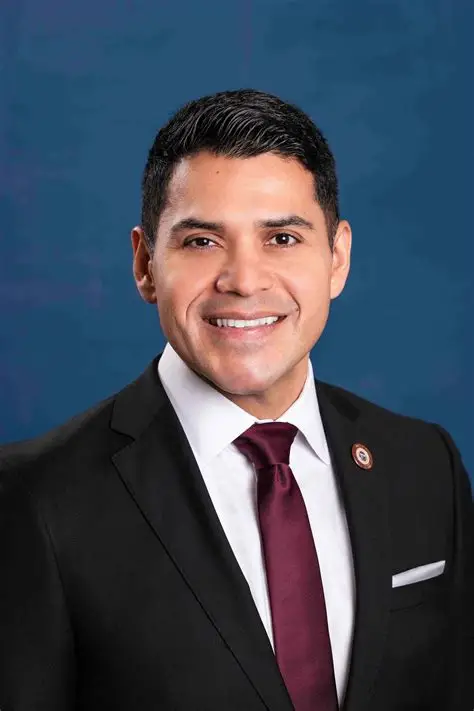
  1. Rep. Steve Montenegro: As one of the most experienced members of the Arizona Legislature, Rep. Montenegro, R-Goodyear, was elected by his Republican colleagues as House Speaker for the 2025 and 2026 legislative sessions. Montenegro was first elected to the Arizona House in 2008 and served in the chamber until 2017, when he unsuccessfully ran for Congress in a special election in 2018. He returned to the Legislature in 2023 and became the state’s first Latino speaker. Despite some close calls in his first session as speaker, Montenegro has led the chamber to a bipartisan budget and ensured Arizona’s Division of Developmental Disabilities received emergency funding to keep services available for about 60,000 Arizonans.


  1. Secretary of State Adrian Fontes: Fontes rode in on a blue wave in 2022 to continue a legacy of Democratic control at the Secretary of State’s Office that began with Gov. Katie Hobbs’ in 2019. A widely-respected elections expert, having steered Arizona’s largest county through the contentious and unprecedented 2020 election cycle during his time as Maricopa County recorder, Fontes uses his unapologetic air and commanding voice to fend off challenges to the security and effectiveness of Arizona’s election system. Known for his political ambitions, he has contemplated runs for governor and Congress in the last year, but will run for reelection in 2026 alongside the other top Democrats in the state.


  1. (Gage Skidmore/Flickr)

    Superintendent of Public Instruction Tom Horne: A seasoned politician, Horne returned to the Arizona Department of Education in 2023 as superintendent after serving in the same position from 2003 to 2011 and serving as attorney general between 2010 and 2015. He took the helm at the dawn of the universal expansion of the Empowerment Scholarship Account program — the state’s school choice program, which has grown to more than 90,000 enrollees from around 12,000. Horne has trained the department to focus on ensuring greater academic outcomes and stronger school safety — chiefly by deploying more armed police officers on school campuses. He’s come back to familiar crusades from his first term, too. He litigated to ensure that students learning English are taught in English and serves as the current presidential administration’s muscle in enforcing the ban on diversity, equity and inclusion and critical race theory. As he looks ahead to his next term, Horne will face Republican Treasurer Kimberly Yee to keep his seat. 


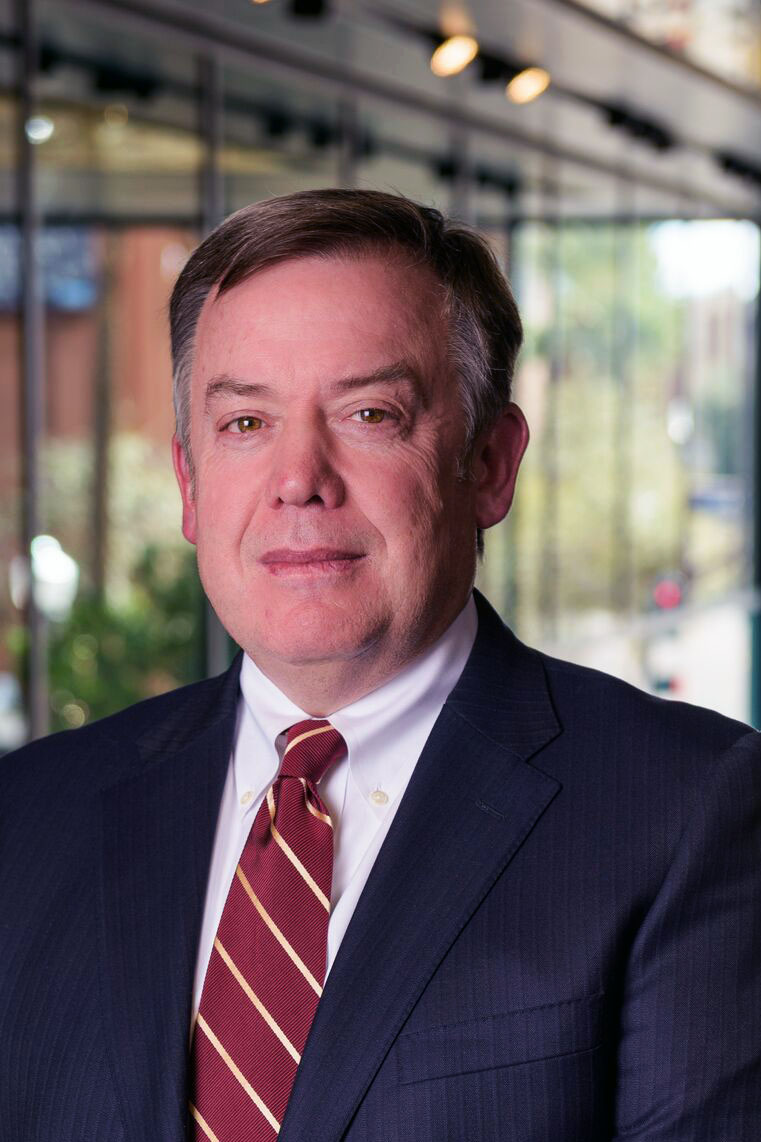
  1. Michael Crow: While many see the president of Arizona State University since 2002 as simply the leader of the state’s largest public university, some see him for what he really is — the unofficial king of Tempe, Arizona. Under his leadership, ASU campuses in Tempe and beyond have evolved into some of the most innovative public universities in the United States. His vision has not only significantly expanded ASU’s enrollment but also increased its impact on Arizona’s economy, workforce development and global reputation. Crow has championed university partnerships with local industries and governments, aligning ASU’s programs with Arizona’s economic needs in its technology, sustainability and health care sectors. In 2024 alone, the university reported a $6.1 billion impact on the Arizona economy. Beyond academia, Crow has been an influential voice in Arizona’s public policy, science and education reform. His forward-thinking leadership continues to shape the state’s educational and economic landscape, making him a key figure for the state’s continued growth and progress. 


  1. U.S. Sen. Ruben Gallego: Gallego became the first Latino to represent Arizona in the Senate after he was elected in November 2024. Gallego has sought to make a national impact since taking office and he spent considerable portions of 2025 travelling to Pennsylvania, Iowa and New Hampshire to support other Democratic candidates, engage with voters and discuss the issues facing the Democratic Party. The national spotlight has fueled rumors of a 2028 presidential run. His high-profile Senate committee assignments reflect his commitment to border security, energy, housing and Arizona’s veterans, ensuring he remains an influential voice within the national conversation on these important state and national issues. A U.S. Marine Corps combat veteran, he has advocated for Medicaid expansion, veterans’ issues and protecting the state’s water supply throughout his legislative career.


  1. U.S. Sen. Mark Kelly: Not to be confused with his twin brother and astronaut Scott Kelly, Arizona’s senior senator has made his own meteoric rise through the Democratic Party after first being elected to the Senate in 2020. Briefly rumored to be Kamala Harris’s 2024 running mate, Kelly was a key bipartisan voice in the $52 billion CHIPS and Science Act in 2022 that brought many microchip manufacturing jobs to Arizona. He has now set his sights on congressional reforms, including banning stock trading by members of Congress and ending corporate political action committees.


  1. Erika Kirk (Gage Skidmore/Flickr)

    Erika Kirk: Kirk has emerged as an influential figure in Arizona following the death of her husband, Charlie Kirk. After his assassination, she was unanimously appointed CEO and chair of Turning Point USA, one of the most influential conservative youth organizations in the country. Her leadership now carries not only political significance but also emotional and symbolic weight as she steps into the public eye amid national attention and personal loss. A former Miss Arizona USA raised in Scottsdale, Erika Kirk has long-standing ties to the state. Her influence is rooted not just in politics, but in faith-based media, where she has built a platform around Christian values and conservative messaging. With Turning Point’s national headquarters based in Phoenix, her leadership places Arizona at the center of a growing youth political movement. She is now seen as a unifying and strategic voice for a major segment of conservative America.


  1. Charlie Kirk (Gage Skidmore/Flickr)

    Charlie Kirk (posthumously): Republican candidates and conservative activists in Arizona who align with the youth-MAGA/Turning Point ecosystem still benefit from the network that Charlie Kirk helped build. Kirk’s work, as founder of Turning Point USA, a nonprofit that advocates for conservative politics on high school, college and university campuses, helped propel young conservative and Christian students at Arizona’s universities to mobilize, register and debate in favor of conservative politics and has played an undeniable role in solidifying Arizona as an important battleground state for national political debate. That influence has forced Democrat and moderate campaigns across the state to rethink their political strategy to account for this new, highly mobilized Republican base. And while the dynamic has changed since Kirk’s passing, the institutional momentum he created through youth chapters, activist culture and voter registration drives has only been emboldened by a new symbolic memorialization of his politics and character among his supporters. 


  1. (Gage Skidmore/Flickr)

    Kimberley Yee: Approaching eight years as head of the Treasurer’s office, Yee has maintained steadfast control while growing the state’s cash reserves. Since being elected in 2018, she has doubled assets under management to $30.2 billion from $15.4 billion. She oversaw a record high in total distributions, boasting $6 billion since taking office. Under her tenure, she’s also seen the Permanent Land Endowment Trust Fund increase by about $4 billion. Yee was the first Chinese American Republican woman to win statewide office, the first Asian American woman elected to the Arizona Legislature and the second woman to serve as Senate Majority Leader. Now, Yee looks to lodge a challenge against incumbent Superintendent Tom Horne.


  1. (Gage Skidmore/Flickr)

    Sen. T.J. Shope: Shope, R-Coolidge, sponsored one of the few bills passed into law on June 30 that sought to address two of the state’s biggest issues — water conservation and housing development. The Ag-to-Urban legislation, which garnered bipartisan support, will allow farmers to sell agricultural land and the accompanying water rights to developers to boost the state’s housing supply and preserve groundwater. Shope, who serves as chair of the Senate Natural Resources committee, has been a vocal advocate for the Colorado River negotiations and for ensuring Arizona isn’t shortchanged during the discussions. 


  1. Sen. Jake Hoffman: As chairman of the Senate Director Nominations Committee and the Arizona Freedom Caucus, Hoffman, R-Queen Creek, has emerged as one of the most influential Republicans in the Legislature. Hoffman’s leadership of the nominations committee has put him at odds with Democratic Gov. Katie Hobbs. The committee has rejected several of Hobbs’ agency director nominees, although more were approved this past session. As Freedom Caucus chair, Hoffman has recruited and endorsed a number of Republican candidates for state and national offices and wields considerable influence within the party.


  1. Rep. Julie Willoughby: After being appointed by the Maricopa County Board of Supervisors to the Statehouse to replace expelled lawmaker Liz Harris in 2023, Willoughby, R-Chandler, has quickly climbed the ranks of the House GOP caucus. When House lawmakers were running out of time to address a funding shortfall for the Division of Developmental Disabilities this year, Willoughby was among the lawmakers advocating for Arizonans who depended on the program, going against a House GOP proposal that was vetoed by the governor and working with House Democrats to find a solution just days before funding expired. Willoughby is now running for the state Senate next year and has positioned herself as one of the most influential lawmakers at the Legislature.


  1. U.S. Rep. Andy Biggs: With eight-years of experience in a deep-red Congressional District 5, Biggs officially jumped into Arizona’s gubernatorial race earlier this year. The congressman quickly picked up an endorsement from Trump and the late leader of Turning Point USA, Charlie Kirk. Biggs is a former leader of the Congressional Freedom Caucus and a member of the powerful House Judiciary and Oversight Committee. He also brings state legislative chops to the table, having served in the Legislature for 14 years, including as Senate President for four of those years. 


  1. U.S. Rep. Yassamin Ansari: Arizona’s youngest representative in Congress is already having an impact in D.C. Ansari was named the president of the House Democratic freshman class at the beginning of the 119th U.S. Congress after she narrowly emerged from Arizona’s 2024 Democratic primary race for its third Congressional district by just more than 40 votes. The former Phoenix vice mayor is the youngest woman in Congress and the first Iranian American Democrat in the U.S. House. Ansari, a member of the House Natural Resources Committee and the House Oversight Committee, has stood staunchly opposed to the Trump administration’s immigration policy with surprise oversight visits to Immigration and Customs Enforcement detention facilities, calling for better living conditions for detained individuals. 


  1. Rep. Gail Griffin: One of the Capitol’s worst-kept secrets is that no water policy gets through the Legislature without Griffin’s seal of approval. The chairwoman of the House Natural Resources, Energy and Water Committee has held the role in various forms since her career as a state lawmaker began in 1997 and she has frustrated both Democrats and Republicans seeking a bipartisan update to Arizona’s rural groundwater law. Griffin, R-Hereford, has long opposed Active Management Areas in the state and has advocated for alternative solutions, which she says give rural communities greater local control and flexibility over groundwater management, but she has presented a roadblock to the governor’s efforts to regulate groundwater pumping in rural parts of the state.


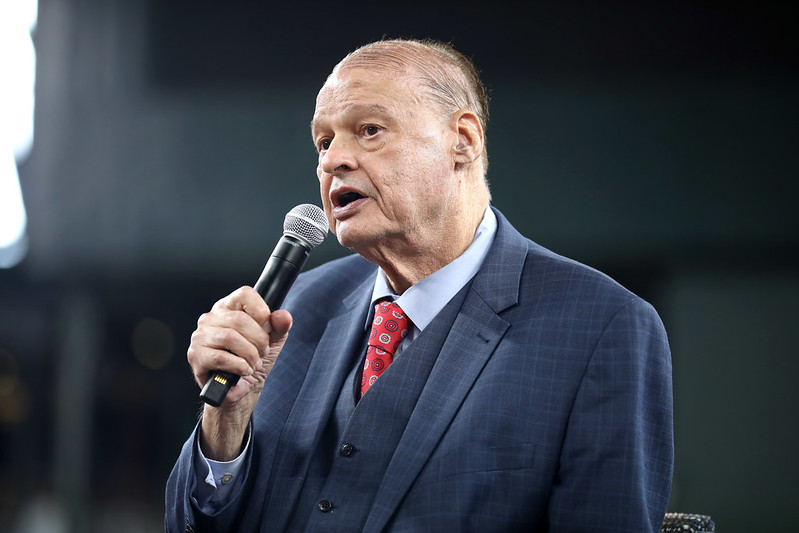
  1. Terry Goddard: Goddard serves as president of the Central Arizona Project board, which sets taxes and policies for the canal system that brings Colorado River water to homes throughout the state. A power player in negotiations over future use of the Colorado River, Goddard — a former Phoenix mayor, two-term attorney general and three-time gubernatorial candidate, is an unwavering advocate for Arizona’s future.


  1. Gina Swoboda: Swoboda stepped into the role of Republican Party chair in 2024 to help deliver the state to President Donald Trump and increase GOP seats in the Arizona House and Senate. The party turned out to be the greatest swing state margin for Trump and raised $20 million, with the majority of the money used to directly contact voters. Trump endorsed Swoboda in her original bid for party chair and in her reelection, and she also received support from state and federal lawmakers. In July, Swoboda was hired by the state House of Representatives to help craft elections policy after working in the Arizona Senate as an elections consultant, where she served for three legislative sessions.


  1. Regina Romero: Tucson’s first Latina mayor may have started her mayoral career in 2019, but she is no amateur. She spent nearly 20 years on the Tucson City Council — the first woman to ever hold the position. She has been an advocate for progressive policies in Tucson, supporting affordable housing projects and serving as the co-chair of Mayors against Illegal Guns. Having won reelection in 2023, Romero has gained traction within the Democratic Party and was the only mayor invited by the White House in 2024 during former President Joe Biden’s administration to join a federal delegation in Mexico for the inauguration of Mexico’s President Claudia Sheinbaum.


  1. Kate Gallego: Gallego, the mayor of Phoenix, has represented city residents for more than a decade. After first being sworn in to the city council in 2014, she became the city’s second female mayor in 2019 and has served in the position for more than half a decade. Gallego has set a goal to make Phoenix the most sustainable desert city in the U.S. She has led efforts to build electric vehicle charging infrastructure throughout the city and established an Office of Heat Response and Mitigation to address the extreme summer temperatures that residents face. Gallego pushed back this year against lawmakers who wanted to fund renovations at Chase Field to keep the Arizona Diamondbacks in town and helped negotiate the final version of the bill.


  1. Thomas Galvin: The new chairman of Maricopa County Board of Supervisors has made his mark as the leader of the nation’s fourth most populous county. Elected chairman in January, Galvin announced ambitious goals, including bringing back the Arizona Coyotes after the NHL team left for Utah in 2024. Fed up with the nation routinely waiting for word on the county’s vote tally on presidential election nights, Galvin has also helped lead Republican efforts to change state law to deliver faster election results. He also spearheaded a nearly $500,000 independent review of the county’s election processes and procedures to address complaints of recent election administration from 2020 and 2022.


  1. Tom Buschatzke: As director of the Arizona Department of Water Resources, Buschatzke serves as the state’s chief negotiator on Colorado River guidelines and the protector of its water supply. Buschatzke started his career in water as an intern in the department he would eventually lead, and is now a widely-respected policy expert who can be found taking part in every meaningful conversation about Arizona water. Most recently, Buschatzke has used his authority to enact groundwater pumping restrictions in rural areas, create new active management areas in dwindling basins and usher in new state laws allowing farmland to be converted for residential use. 


  1. John Boelts: As president of the Arizona Farm Bureau, Boelts is a leading voice in groundwater management policy discussions for rural areas. Last session, he supported a measure from Sen. Tim Dunn that would’ve imposed a series of restrictions intended to preserve groundwater in Gila Bend, Hualapai Valley and the Willcox Groundwater Basin. Boelts has advocated for policies that strike a balance between establishing conservation measures to preserve groundwater and ensuring property owners’ water-use rights. He is also a generational farmer who owns Desert Premium Farms in Yuma. 


  1. Lea Márquez Peterson: Márquez Peterson is the longest-serving member of the Arizona Corporation Commission and the only statewide elected official who resides in southern Arizona. She became the first Hispanic woman in a statewide position after Gov. Doug Ducey appointed her to the commission in 2019. Now in her final term, Márquez Peterson wants to increase transparency and awareness of the commission’s work, which primarily revolves around regulating the state’s major public utility companies. When she finishes her tenure, Márquez Peterson will no doubt be recruited by Republicans to run for any number of high-profile seats at the state or federal level.


  1. Nick Ponder: Ponder, the senior vice president for governmental affairs at HighGround Public Affairs Consultants, has emerged as an authority on two of the state’s most pressing issues — groundwater and affordable housing. As a lobbyist representing the League of Arizona Cities and Towns, he testified on the proposed Arizona Starter Homes Act. Ponder also represented rural counties and cities in discussions on groundwater management policy.


  1. Danny Seiden: As president and CEO of the Arizona Chamber of Commerce and Industry, Seiden has tirelessly worked to bolster the state’s economy and businesses. Seiden brings a public policy background to the role, having served as former Gov. Doug Ducey’s deputy chief of staff after helping run his 2014 gubernatorial campaign. Seiden is a familiar face at the Arizona Capitol, where he can often be found chatting with lawmakers and testifying on legislation impacting the business community. Most recently, Seiden and his team at the Arizona Chamber of Commerce helped ink a deal for stadium upgrades to the Arizona Diamondbacks’ Chase Field.


  1. Stephen Roe Lewis: A strong voice for Arizona’s tribal communities, the Gila River Indian Community governor has helped find solutions for long-standing issues facing the community. Lewis helped organize the opening of a managed aquifer recharge site, which has helped the community secure access to water and serves as a key cultural identity achievement. He’s prioritized youth educational opportunities and veteran support, and he was one of Arizona’s 2020 presidential electors. Lewis is in his third term as governor and serves as the National Congress of American Indians’ secretary.


  1. Brenda Burman: Burman leads the Central Arizona Project as its first female general manager where she is tasked with sustainably managing the 336-mile canal system that distributes Colorado River water to Arizonans. In 2017, Burman became the first female commissioner of the U.S. Bureau of Reclamation after previous water policy roles in the U.S. Department of the Interior, The Nature Conservancy and U.S. Sen. Jon Kyl’s office. She is also an attorney with experience in Native American water rights, making her a strong asset for Arizona’s water policy community.


  1. Sandra Watson: Watson is the president and CEO of the Arizona Commerce Authority, a state agency dedicated to bringing companies, jobs and capital to the state. She is one of the state’s longest-serving agency heads, having been appointed to her role when the ACA was created in 2011. Watson and the ACA have been credited with helping Arizona become a semiconductor manufacturing hub, bringing countless jobs and investments to the state.


  1. Tom Savage: Lawmakers have grown accustomed to seeing Savage in the halls of the House and Senate for nearly a decade. Savage, who joined the League of Arizona Cities and Towns as a legislative associate in 2016, now serves as the League’s legislative director and represents cities at the Capitol for a wide range of issues. Before joining the League, Savage worked as a House staffer and helped research policy issues for the Agriculture, Water and Lands, and Energy, Environment and Natural Resources committees.


  1. Jen Marson: As executive director of the Arizona Association of Counties, Marson’s expertise encompasses property taxes, elections, public records, criminal justice, law enforcement, justice, superior courts, education and then some. Her experience working in multiple government jurisdictions makes her the go-to person to take the stand at any number of committee hearings for counties across the state. As a certified election office, Marson has fought against election mistrust and misinformation for years. She continues to be recognized for her work, having won the Arizona Capitol Times’ Best Government Lobbyist award two years in a row. 


  1. Buu Nygren: A self-described carpenter, public servant and father, Nygren has spent the past two years constructing a better future for Arizona’s tribal communities as the president of the Navajo Nation. But his tenure has not been without problems, he faced a recall petition but a Navajo Nation investigation cleared Nygren of the accusations. Despite the investigation, his long term vision and steady commitment to his people did not falter. He is one of the more powerful and influential cultural and political leaders in the state. His priorities include access to water, modern infrastructure, affordable housing, and a thriving economy for tribal lands. To that end, Nygren was instrumental in negotiating with Hopi and San Juan Paiute leaders to secure a historic water rights settlement between the tribes. He also made clever use of the American Rescue Plan Act to secure more than $500 million in funding for infrastructure projects. A steadfast defender of Navajo sovereignty, he has worked to protect tribal lands from the transportation of uranium from the Pinyon Plain Mine south of the Grand Canyon. 


  1. Arizona Supreme Court Justice Clint Bolick: Bolick, first appointed to the court in 2016 by Gov. Doug Ducey, fought an effort to remove him from the bench over his vote to keep a statewide abortion ban in place. Despite a coordinated and funded campaign against his candidacy, Bolick kept his seat with 58% of the vote. He continues to advocate for an independent judiciary and further civic education on the state’s judicial retention system, especially as the race attracts more political and campaign interest each year. Before ascending to the state’s high court, Bolick served as the vice president for litigation at the Goldwater Institute and as the president and general counsel for the Alliance for School Choice, where he advocated for school choice, private property rights, freedom of speech and federalism. 


  1. (Gage Skidmore/Flickr)

    Arizona Supreme Court Justice Maria Elena Cruz: Cruz, the newest member of the Arizona Supreme Court, brings a wealth of experience from rural Arizona and is the first Latina and Black justice to serve on the court. Cruz started her career as a prosecutor at the Yuma County Attorney’s Office, pivoted to criminal defense, and then worked in family and criminal law as a solo practitioner. She has worked as a judge pro tem for the Cocopah Indian Tribe, as a superior court judge and as a presiding judge in Yuma County. Before her ascent to the state high court, she served on the Arizona Court of Appeals for eight years. Hobbs chose Cruz in January after a lengthy nomination process, slotting her to fill the vacancy left by former Chief Justice Robert Brutinel. 


  1. (Gage Skidmore/Flickr)

    Karrin Taylor Robson: After a loss in the 2022 Republican gubernatorial primary, Robson has continued her fight to become Arizona’s governor. Robson is an attorney and land use consultant who has dabbled in lobbying and public service, including a stint on the Arizona Board of Regents. For the 2026 gubernatorial primary, she rebranded from an old-guard Republican backed by critics of President Donald Trump to a “MAGA” darling with the president’s endorsement. Robson is hoping her self-funded campaign war chest and lifelong conservative values are enough to make her Gov. Katie Hobbs’ challenger next year.


  1. Andy Gaona: As the governor’s go-to outside counsel and a leading election attorney in the state, Gaona has sparred in court over election contests in 2020 and 2022, served as the go-to voice on campaign finance, ballot access and the inner workings of elections, and drafted and defended a host of voter initiatives over the past 10 years. He waded into and successfully defended the statewide initiative to enshrine a right to abortion, a measure to legalize marijuana and the funding fix for Arizona schools under Proposition 123. He continues to serve as a partner at Coppersmith Brockelman, where he co-leads the election and political practice with the governor’s former general counsel, Sambo “Bo” Dul. 


  1. (Photo by Jon Willey/Arizona Diamondbacks)

    Ken Kendrick: Kendrick, a Paradise Valley resident, is more than just a baseball fan, he’s Arizona’s MVP for anything related to the Arizona Diamondbacks. Kendrick has played a pivotal role in intergovernmental relations between the state’s premier professional baseball team and its government. He was pivotal in negotiating a bill that authorized up to $500 million in public funding for stadium renovations, effectively securing the team’s future in the state and establishing an enormous tax base for Phoenix residents. Moreover, through the Ken Kendrick Grand Slam Awards and the Arizona Diamondbacks Foundation, Kendrick has contributed significantly to Arizona philanthropy, providing nearly $2 million in funding to Arizona nonprofits between 2024 and 2025. His work to renovate youth sports fields in places like Arcadia and South Mountain, and his work in the Give Back Jersey Program to supply Diamondbacks-themed apparel and uniforms to thousands of young athletes in Arizona, have both contributed significantly to the health and well-being of Arizona’s youth sports leagues. 


  1. Rick Smith: Smith, the founder and CEO of Axon, has solidified his status as an influential leader of one of Arizona’s most prominent companies. Axon is known for developing the Taser, body cameras and other safety technology. The homegrown company flexed its lobbying muscles last session when a ballot referendum threatened to derail the construction of its global headquarters in north Scottsdale. Smith rallied with dozens of employees and worked with lawmakers to garner support for a bill that would allow the company to complete the project. He accomplished his goal when Gov. Katie Hobbs signed a law that cleared a path for the company to proceed with its plans. 


  1. (Gage Skidmore/Flickr)

    Michael Bidwill: Following the death of his father in 2019, Bidwill has worked to keep ownership of the Arizona Cardinals in the Bidwill family. He took over as the team’s president in 2006 and helped create State Farm Stadium in Glendale, which has brought an economic surge to the area and hosted multiple Super Bowls and large events, including the 2025 Memorial for Charlie Kirk and Taylor Swift’s Eras Tour in 2023. With an estimated net worth of $1.4 billion, Bidwill has taken an interest in engagement with the NFL and has held various committee roles, including the league’s Conduct Committee and the Player-Owner Committee. In 2016, he was inducted into the National Football Foundation Leadership Hall of Fame.


  1. Jenny Clark: As founder of Love Your School, a multi-state school choice advocacy and support organization, Clark continues to be the first line of defense in strengthening, growing and defending school choice options in the state. Her main focus continues to be the Empowerment Scholarship Account program, with resources and one-on-one support for families to sign up, obtain disability diagnoses, and secure funding for the child to attend private school or create a tailored homeschool option. But her work does not end there. She’s assisted families with disabilities in navigating the public school system and in obtaining tax credit scholarships through School Tuition Organizations. She served on the State Board of Education from 2022 to 2025, appointed by former Gov. Doug Ducey. 


  1. Marisol Garcia: Garcia leads the premier labor union for more than 22,000 Arizona public school educators and has continually gone to the mat for all school employees at the local, state and federal levels. During her tenure as president of the Arizona Education Association, Garcia has transformed the union into a more visible, organized presence in political battles and public school education advocacy. Garcia has pushed for paying all school employees through the continuation of Proposition 123, a school funding measure relying on the state land trust fund. She’s fought for educators in her own district, the Isaac Elementary School District, amid a financial crisis. And she, of course, leads the charge in securing additional funding for schools across the state while fighting against what she calls “unfunded mandates”— education policies without a proper fiscal note. Garcia was first elected as Arizona Education Association president in 2022 and was reelected in May 2025. 


  1. John Ward: Ward, executive director of Empowerment Scholarship Accounts at the Arizona Department of Education, assumed responsibility for a program hurtling toward a $1 billion price tag, with 91,000 enrollees and growing. Prior to his current role, Ward served as the chief auditor for the department and a manager at the Arizona Auditor General’s office. He’s continued to walk a tightrope, ensuring no misspending of state funds while maintaining enough flexibility for families — a dance that continues to bring him equal doses of praise and criticism from state school choice advocates and program participants. 


  1. Tammy McLeod: While some plant seeds to grow trees, McLeod, through her leadership of the Flinn Foundation, plants seeds that grow industries. She has remained a mobilizing and industrious philanthropist in Arizona’s higher education community for almost a decade. McLeod has led Arizona’s bioscience sector to tremendous growth in funding, wages and jobs. Her work on the Flinn Foundation’s Arizona Bioscience Roadmap, which sets the state’s strategy for fostering growth in the industry, created the blueprint for the last decade of growth in Arizona’s bioscience community. Moreover, her work to update that roadmap for implementation in 2025 will set the course for the billion-dollar industry through the next decade. 


  1. Elizabeth S. Chatham: While some make their names by who they attack, others make theirs for who they protect. The latter is the case for Chatham, Arizona’s premier immigration attorney, community leader and diversity advocate. Named one of the “Most Influential Women in Arizona Business” by AZ Big Media in 2025, Chatham has built a legacy in Arizona through her legal work for Fortune 500 companies, startups, universities and more. She has dedicated herself to helping the state’s at-risk populations navigate complex U.S. immigration laws, including visa card applications, green card strategies, naturalization and more. Chatham’s work bridges the gap between Arizona’s government and its immigrant communities, and her legal expertise has made her an influential figure in Arizona’s business and political communities. 


  1. Jessica Nuñez (Via Facebook.com)

    Jessica Nuñez: While many would crumble and fall in the face of family tragedy, Nuñez proves that some are still willing to stand up and fight for what they know is right for their family. Nuñez rose to prominence in Arizona in 2024 and 2025 through her advocacy work after her teenage daughter, Alicia Navarro, went missing in 2019. While Navarro resurfaced four years later, her disappearance lit a fire under her mother. Even after their reunion, Nuñez’s powerful message of “never lose hope and always fight” resonated widely across the nation, prompting new calls for support for neurodivergent youth, missing children, online safety and mothers in advocacy. 


  1. Monica Villalobos: Villalobos brings people, data and power together. As CEO of the Arizona Hispanic Chamber of Commerce, she’s a strong advocate for Hispanics across the state. And she’s not just a figurehead. Villalobos is actively shaping Arizona’s economic landscape by working with government leaders and co-chairing key committees, like the one that helped Gov. Katie Hobbs build her administration. Through the Chamber’s annual DATOS report, she gives business and political leaders clear insight into the growing power of Arizona’s Hispanic market. She’s also a connector, building bridges between communities, companies and policymakers. With deep roots in both business and academia, she’s actively using her platform to open doors for others. 


  1. Robin Reed (posthumously): Reed earned his reputation by who he elevated. As CEO of the Black Chamber of Arizona, he worked tirelessly to open doors for Black-owned businesses, pushing for real access to funding, partnerships and opportunity across Arizona. He didn’t just talk about equity — he rolled up his sleeves and worked to build it. Reed’s influence reached far beyond business. He mentored leaders, advised nonprofits, and sat on boards that shaped Arizona’s education and community development. He was a key figure in bringing the state together across racial, class and industry lines. He always focused on how to make Arizona stronger and more inclusive. What made him truly powerful wasn’t just his resume — it was his character. People listened to Reed because he spoke with wisdom, led with heart, and always followed through. 

Republicans question AG’s defense of transgender birth certificate law

Key Points:
  • Top GOP lawmakers want to appeal federal court ruling on transgender birth certificates
  • Judge James Soto voided state law requiring surgery for amended birth certificates
  • Arizona law bars doctors from performing “irreversible gender reassignment surgery” on minors

Top Republican lawmakers want to appeal a federal court ruling that voided a state law that says transgender individuals can get an amended birth certificate only if they first undergo surgery.

In new court filings, the lawyer for House Speaker Steve Montenegro and Senate President Warren Petersen contend that U.S. District Court Judge James Soto got it wrong in voiding the surgery requirement. Justin Smith called it “a dramatic departure” from a law that has been on the books for five decades.

But it’s not just that they’re unhappy with the ruling. Smith said that Attorney General Kris Mayes, who was defending the law, has not been as vigorous in doing that as the GOP lawmakers believe she should have been.

And now they’re questioning whether she even intends to appeal.

What makes the question of appeal important – and imminent – is that Soto directed the Department of Health Services to begin issuing amended birth certificates as early as January to those who do not identify with the sex assigned at birth.

More to the point, the judge’s order, unless overturned, strips the requirement in Arizona law that the person must first have undergone a sex change operation.” Instead, it would require only a physician’s attestation that the person is transgender.

An aide to Mayes said her office is consulting with the Department of Health Services – the entity that was sued for issuing birth certificates – on any appeal. And an agency spokesman said it does not comment on pending litigation.

But an appeal is not guaranteed. In fact, Christian Slater, press aide to Gov. Katie Hobbs, who has ultimate decision-making authority for the health department, said no decision has been made.

All that, Smith is telling the judge, is reason to let Montenegro and Petersen, who were not part of the original case, file an appeal.

The lawsuit, filed in 2020, is on behalf of three transgender boys whose Arizona birth certificates list them as female and a transgender girl identified as male.

Rachel Berg, an attorney with the National Center for LGBTQ Rights, said some individuals have “gender dysphoria,” a disconnect between the person’s identity and the assigned sex.

She said one of the treatments is to align the person’s life with their gender identity. And while that could include hormone-replacement therapy and surgery, she said it starts with “social transition,” changing their names, using different pronouns, adopting clothing and grooming habits associated with their peers of the same gender identity.

Further complicating the issue is that then-Gov. Doug Ducey signed a law in 2022 that bars doctors from performing “irreversible gender reassignment surgery” on minors – the procedure that state law considers a legal prerequisite before the health department can change a child’s birth certificate.

Attorneys for the state defended the law, saying it has nothing to do with discrimination and everything to do with accurate records.

The lawyers argued that all the birth certificate does is create a record of  “the external genitalia of the person at the time of birth as observed by a medical professional present at the birth.” And they said none of that restricts how people identify themselves.

Soto disagreed, saying that birth certificates are what individuals need to present as identification.

“Their outward physical appearance will not fit with the gender markers on their birth certificate,” the judge said of the concerns of those affected. “Thus, if these documents are presented to others, they would, of course, be forced to involuntarily out themselves as transgender.”

It is that ruling that the DHS and the Governor’s Office are still deciding whether to appeal. And it is that lack of a decision that Smith said should entitle Montenegro and Petersen to appeal.

More immediately, however, Smith wants Soto to delay his order. The key is the January deadline for the health department to start issuing amended birth certificates.

He said once that procedure starts, it may be impossible to undo. And that, said Smith, would result in “irreparable harm” to the state – and the legislative leaders – if an appellate court ultimately reverses Soto’s decision.

“The legislative leaders are not aware of any procedure to revoke amended birth certificates issued pursuant to a reversed court order,” he wrote. “Nor is it clear that the legislative leaders could pass legislation setting forth such a procedure after amended birth certificates have been issued.”

Put simply, once someone gets an amended birth certificate, there may be no way for the health department to rescind it.

Montenegro, in a separate statement, said Soto should allow him and Petersen to intervene in the case to try to reinstate the requirement that amended birth certificates should be issued only after sex-reassignment surgery.

“Arizona’s laws are not optional,” he said.

“The ruling now opens the door for anyone to change the sex marker on a birth certificate with just a doctor’s note,” Montenegro said. And that, he said, means “erasing decades of statute and undermining the integrity of vital records.”

But the new legal filings on behalf of Montenegro and Petersen are about more than whether there will be an appeal. Smith claims that one reason an appeal is needed is that Mayes has not adequately represented the interests of the GOP lawmakers in defending the surgery requirement.

In fact Smith, in his legal filing, suggested that the outcome of the case might have been different had Montenegro and Petersen been involved in the case from the beginning. Instead, the judge limited the two lawmakers to filing only “friend of the court” briefs to make their points.

Smith argues the two lawmakers raised legal points that the Attorney General’s Office “never sought nor intended to raise,” such as whether the remedy Soto was imposing – eliminating the need for surgery – was appropriate. Smith also mentioned there were arguments, which were never presented, about how judges in other similar cases across the nation did not reach the same conclusion as the judge here.

Montenegro said there is every reason that he and Petersen should be involved in the case – and the appeal.

“When a federal court rewrites a statute, the Legislature has a duty to defend it,” he said. “If the attorney general won’t defend Arizona’s laws, we will.”

Richie Taylor, press aide for Mayes, said Smith’s legal filings amount to little more than “partisan political attacks” against Mayes, a Democrat, by the two Republicans. That includes Petersen, who is running to unseat her in the 2026 election.

He said the court record shows that Mayes, who inherited the case from Mark Brnovich, her Republican predecessor, did defend the surgery requirement in the law. Taylor called the comments by Montenegro and Petersen “offensive to the attorneys who have worked on this case on behalf of their client.”

Soto has not set a date to consider the request by the two GOP lawmakers to intervene.

Arizona doctors challenge state’s abortion restrictions in court

Key Points:
  • Arizona doctors sue to void abortion restrictions
  • State lawmakers argue doctors have no legal right to sue without threat of prosecution
  • Judge Greg Como expects to rule on the lawsuit within two to three weeks

The state’s top Republican lawmakers are trying to short-circuit a bid by doctors to void several restrictions the Legislature has adopted on abortion.

Attorney Justin Smith, representing Senate President Warren Petersen and House Speaker Steve Montenegro, urged the Maricopa County Superior Court Judge Greg Como on Monday to toss the lawsuit challenging three separate restrictions on the procedure.

Smith has already filed legal briefs saying the provisions remain legal despite voters in November enacting a constitutional provision guaranteeing a “fundamental right to abortion.”

But, rather than defend the laws, he contends the doctors have no legal right to sue because they haven’t shown they are in any danger of being prosecuted if they break them.

Smith pointed out that Gov. Katie Hobbs issued an executive order in 2023 giving Attorney General Kris Mayes the right to prosecute any violations of abortion laws. And Mayes, in turn, has vowed not to bring any such charges as long as she is in office.

So unless the doctors are charged with breaking any of those laws, Smith told the judge, he can’t issue a ruling about whether those laws are constitutional and enforceable.

That drew a skeptical response from Como, who asked what the doctors who perform abortions do in the meantime.

“Are they supposed to violate the law so that they can find out whether it’s enforceable or not?” he asked.

“Or are they just supposed to comply with the law that they believe is unconstitutional? Como said. “They’re kind of stuck in a Hobson’s choice, aren’t they?”

Nor did the judge seem to be impressed by Smith’s argument that the presence of Hobbs and Mayes in office — and their decision not to prosecute — leaves nothing for him to decide. He pointed out that there’s no guarantee that Mayes, seeking reelection, will be in office after 2026.

And there’s something else.

Assistant Attorney General Hayleigh Crawford reminded Como that Smith’s clients actually are arguing that the challenged laws are constitutional and should be enforced. And she also noted that there is a seven-year statute of limitations, meaning a future attorney general could bring felony charges against a doctor who violates the law today — something she said is not far-fetched.

“One of their clients is running for attorney general,” she pointed out, referring to Petersen, who is seeking the Republican nomination to run against Mayes and is defending the challenged laws as enforceable despite voter approval of Proposition 139.

Hanging in the balance are several laws that already were on the books when voters approved the measure in November.

One is a requirement for a 24-hour waiting period between the time a woman sees a doctor and the time she has the procedure performed. Caroline Sacerdote, representing the doctors, said that presents a particular hurdle for women in rural areas who would have to make two trips to a doctor.

Closely related to that is a ban on the use of telemedicine for abortion, allowing doctors to prescribe medications to terminate a pregnancy after an online conversation with a patient. Challengers say this, too, harms rural women.

Finally, some laws make it illegal for doctors to perform an abortion if they know the reason a woman is seeking it is due to a fetal genetic abnormality. That, Sacerdote said, creates a situation that discourages doctors from talking with their patients.

Paul Isaacson and William Richardson, both of whom perform abortions, along with the Arizona Medical Association, contend that the language in Proposition 139 supersedes all that and makes those laws unenforceable. So they want Como to issue an order declaring that those statutes are no longer enforceable — and that they cannot be charged with a crime for violating them.

The lawsuit also asks that the Arizona Medical Board be precluded from disciplining any doctor who violates those laws. And it seeks a declaration voiding any private lawsuits that seek to enforce the laws.

Smith, however, told Como that courts have no right to rule on any of that until the case is considered legally “ripe,” meaning there is an actual case in front of them.

It starts, he said, with Hobbs’ executive order and Mayes’ vow not to prosecute anyone for disobeying any abortion law at all, not just those at issue here.

“They must show that there’s a real threat of prosecution in order for their lawsuit to succeed,” Smith said. “Here, there is no real threat, credible threat, whatever adjective you put in front of the word ‘threat’ because the state officials who have the authority to enforce these provisions said that they will not, in fact, enforce them.”

Smith also said there’s little danger of the Arizona Medical Board taking action because the governor has the power to appoint its members.

Sacerdote said that all is irrelevant with that seven-year statute of limitations.

“There is a credible threat (of enforcement) because the attorney general or a future attorney general could enforce the challenged laws for conduct that is occurring today,” Sacerdote said.

“Forcing plaintiffs to wait until a more hostile attorney general is elected would cause substantial irreparable harm,” she said, with the ability of a new chief prosecutor to file cases that occurred before that person’s election. And that, said Sacerdote, forces doctors to comply with the old — and she believes unconstitutional — laws now for fear of who voters might elect in the future.

The alternative, Sacerdote said, is no better.

She said Petersen and Montenegro essentially are saying that if the doctors want a ruling now on the laws they must break the laws “in order to have a day in court to assert the constitutional rights that are clearly so recognized by the amendment.”

“That defies credulity that someone would necessarily just break the law and ignore the myriad of penalties at issue here,” she said.

The judge said he expects to rule in two to three weeks.

Correction: This story has been updated to correctly attribute comments to Caroline Sacerdote, the doctors’ legal representative in the case.

Arizona leaders condemn death of Turning Point USA founder Charlie Kirk

Key Points:
  • Arizona officials condemn assassination of Charlie Kirk
  • Kirk, a prominent conservative activist, was shot at a Utah event
  • Authorities have released images of a person of interest; no arrest has been made

Arizona’s political community condemned the assassination of Turning Point USA founder Charlie Kirk, who died after he was shot while speaking at a Utah Valley University event on Sept. 10. 

Kirk, a prominent Arizona conservative activist and the leader of Phoenix-based Turning Point USA, was speaking to a large crowd of people at a debate when he was shot in the neck. He later died from his injuries at a Utah hospital. A suspect was not immediately captured. 

This undated combination of images provided provided by the Federal Bureau of Investigation shows a person of interest in connection with the fatal shooting of Charlie Kirk at Utah Valley University on Wednesday, Sept. 10, 2025, in Orem, Utah. (Federal Bureau of Investigation via AP)

According to the Associated Press, investigators released two images of the suspected shooter and are appealing to the public for tips. As of Sept. 10, the unidentified suspect is believed to have jumped off a roof and fled into a neighborhood after firing one shot from a high-powered, bolt-action rifle. The weapon they believe was used in the attack has been recovered, and video recordings of the person they believe to be responsible are being reviewed.

Arizona government officials on both sides of the aisle responded after the shooting, offering condolences to Kirk’s family and condemning political violence. 

“I am deeply saddened by the news of the assassination of Charlie Kirk. I am saddened for Charlie’s family, friends, and Arizonans as they mourn his loss, and I am saddened for our country as our politics have descended into horrific violence,” Gov. Katie Hobbs said in a statement provided through her campaign. “This tragedy is not about who Charlie Kirk supported politically. It is about the devastating loss of a father, a neighbor, and an Arizonan who called this state home, and whose life was cut short by senseless violence.”

FILE – President Donald Trump shakes hands with moderator Charlie Kirk, during a Generation Next White House forum at the Eisenhower Executive Office Building on the White House complex in Washington, Thursday, March 22, 2018. (AP Photo/Manuel Balce Ceneta, File)

Senate President Warren Petersen, R-Queen Creek, reacted similarly in a post on X.

“I am absolutely shocked, sickened and outraged to hear about the passing of Charlie Kirk,” Petersen wrote. “Today was a dark day where evil was on full display. He was singular, indispensable and irreplaceable. America will not be the same without him.”

Kirk was a large figure in Arizona politics and TPUSA has been a driving force for the state’s Republican candidates in major elections over the past few years. Most recently, the group has thrown its weight behind U.S. Rep. Andy Biggs’ campaign in the Republican gubernatorial primary. 

“Charlie. My friend. I’m heartbroken. Rest now,” Biggs wrote in a post on X.

Former U.S. Rep. Gabby Giffords, who survived her own assassination attempt in Tucson in 2011, and her husband, U.S. Sen. Mark Kelly, both condemned the attack on social media.

“Democratic societies will always have political disagreements, but we must never allow America to become a country that confronts those disagreements with violence,” Giffords wrote on X. 

The outpouring of support continues from Arizona officials. 

Sen. Wendy Roger: “Charlie Kirk was a transformational force in America. This will be the beginning… as he looks down from Heaven on us & his family, who we must continue to love & support. I knew Charlie; he was a fighter. He died doing what he loved. He was always respectful, kind & intelligent. We will honor him & continue the fight as he would want.”

Arizona GOP Chair Gina Swoboda: “Prayers for Erika and her children as we grieve the loss of Charlie Kirk.” 

U.S. Sen. Ruben Gallego: “This is beyond terrible. Charlie Kirk was a husband, father, and son. Violence is never the answer. Sydney and I are keeping the Kirk family in our prayers.”

Secretary of State Adrian Fontes: “Our condolences are with Mr. Kirk’s family, his colleagues, his supporters, and all those affected by this senseless act. Let’s not retreat into silence or hatred, but rise above violence by recommitting ourselves to the democratic principles of civil engagement and mutual respect.”

U.S. Rep. Juan Ciscomani: “Laura and I join millions of Americans in mourning the horrific loss of Charlie Kirk. Charlie leaves behind a legacy of love of God, love of family, and love of country. He lit a fire that brought so many young Americans along with him, and his voice for conservative values echoed far beyond Arizona.”i

U.S. Rep. Greg Stanton: “The attack on Charlie Kirk is horrifying. I’m praying hard for him, and keeping his family in my thoughts. Political violence has absolutely no place in our country.”

U.S. Rep. Yassamin Ansari: “Horrific gun tragedies one after another. Charlie Kirk lost his life. Not even an hour later, a school in Colorado came under fire. Communities shattered. Lives changed forever. This is not normal and this is not acceptable. We cannot keep living like this.”
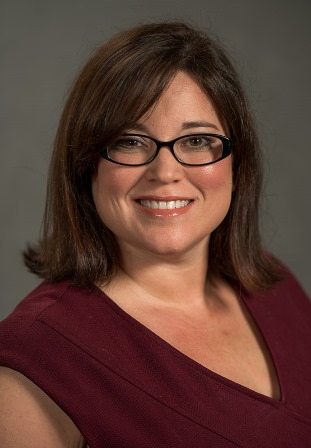
Former Gov. Doug Ducey: “America was blessed that Charlie Kirk walked this earth. He inspired young people to love our country in a way I’ve never seen in my lifetime. His passion for ideas, for debate and for Free Speech was infectious. We are all in shock and devastated. We pray for his wife Erika, his children and his family. Today’s assassination was an act of terrorism. Political violence isn’t the answer — and Charlie showed us that. May God rest his soul.”

Sen. Jake Hoffman: “The world will never truly understand the magnitude of the loss it suffered today. Charlie Kirk was one of the most fearless, patriotic, loving, God-fearing, brilliant men to ever walk this earth. Few compare. Charlie we love you dearly. You’re home with our Creator now.” 

Attorney General Kris Mayes: “Political violence is never the answer. I strongly condemn the horrific act of violence against Charlie Kirk. We may not all agree in this country but our ability to freely share and discuss our political beliefs is what makes us American.”

Kirk’s casket is to be flown back to Arizona from Utah aboard Air Force Two, according to The Associated Press. 

GOP leadership threatens Ortiz with expulsion over ICE posts

Key Points:
  • Sen. Jake Hoffman filed an ethics complaint against Sen. Analise Ortiz
  • Hoffman has criticized Ortiz for posting the location of ICE agents on social media
  • Ortiz has been among the most vocal critics of the federal government’s deportation efforts

Sen. Jake Hoffman has officially filed an ethics complaint against Sen. Analise Ortiz for posting the location of U.S. Immigration and Customs Enforcement agents on social media.

Hoffman, a Republican, originally announced his intention to file an ethics complaint last month on his X account after Ortiz, a Democrat, posted an Instagram story on Aug. 5 detailing the location of ICE near Southwest Elementary School in south Phoenix.

Hoffman, along with several other Senate GOP officials, submitted the complaint on Sept. 2 and issued a press release the following day.

The complaint is the latest in a barrage of criticism and threats from Republicans to investigate Ortiz, who has been among Arizona’s most outspoken critics of the federal government’s mass deportation efforts and the use of masks during immigration arrests.

Numerous Democrats have defended Ortiz’s First Amendment rights and praised her for protecting the community.

Ortiz has referred to the reactions of Hoffman and other Republicans as intimidation tactics intended to deter her from speaking out against ICE activity in neighborhoods.

“Masked, armed men showed up at a school in our community and I reshared a post to let my Instagram followers know,” Ortiz wrote in a text message. “Now, Arizona Republicans are going to extreme levels of intimidation to block me from doing my job for the people of LD 24.”

In the complaint, Hoffman accused Ortiz of “openly and brazenly advocating for lawlessness, even at the potential cost of violence against those charged with the solemn and already often dangerous duty of enforcing our nation’s laws.”

The Queen Creek Republican also wrote in the complaint that Ortiz engaged in disorderly behavior and showed a disregard for law enforcement officers.

“Senator Ortiz’s actions were not only reckless — they were dangerous,” Hoffman said in a statement. “By publicly posting alerts about federal law enforcement activity, she actively tipped off individuals being pursued by ICE, jeopardizing the safety of officers and law-abiding citizens.” 

Hoffman is calling for either Ortiz’s expulsion from the Legislature or her severe punishment, such as her removal from all committees, the loss of her office, administrative staff support, unrestricted building access and her parking spot.

“When an elected official openly undermines law enforcement, puts lives at risk, and erodes the rule of law, there must be accountability,” he said.

Senate Ethics Committee Chairwoman Shawnna Bolick said in a press release on Sept. 3 that she referred the matter to the U.S. Attorney’s Office since the allegations involve federal law enforcement and should be investigated by federal authorities.

Bolick said in the statement the Ethics Committee must adopt its operating rules before meeting and addressing the complaint.

“Once those rules are established, the committee will conduct a thorough review of the facts, strictly adhering to constitutional standards, as well as applicable state and local laws. I have distributed the complaint to all committee members and Senator Ortiz in a single email to ensure full transparency,” Bolick said. “This is an issue I do not take lightly, and I am committed to ensuring that it is handled with the full weight of the law and the Constitution. Until then, the process remains with the U.S. Attorney’s Office, whose review will inform the committee’s next steps.”

Petersen also referred the issue to the U.S. Attorney for the District of Arizona for investigation last month.

Ortiz’s Instagram story first drew widespread attention after the social media account Libs of TikTok posted on X that Ortiz was impeding and doxing ICE agents and should be charged.

That prompted a number of Republicans to accuse Ortiz of engaging in obstruction of justice because she was posting the location of the agents.

The online quarrel also raised questions on whether her actions actually constituted an obstruction of justice or whether her speech was constitutionally protected.

“The First Amendment generally allows for citizens to criticize and report on the government’s actions,” said Gregg Leslie, executive director of the First Amendment Clinic at Arizona State University’s Sandra Day O’Connor College of Law.

“Generally, yes, this is the kind of thing that should be covered by the First Amendment. She has a right to speak about this,” Leslie said. “If they actually bring a charge like obstruction of justice, then you have to dig deeper into what that law actually penalizes and how the First Amendment interacts with that.”

Ortiz previously said she had to take precautions to protect herself and her family due to threats she received, but will continue to notify residents of the presence of ICE agents in their neighborhoods.

“These tactics are straight from the authoritarian playbook and eerily reflect the darkest moments in world history,” she said. “The future of our democracy depends on bravery. I choose to remain brave.”

Ethics complaint filed against senator for sharing ICE location online

Key Points:
  • Sen. Jake Hoffman seeks to eject Sen. Analise Ortiz from Senate over an immigration enforcement post
  • Hoffman files ethics complaint, alleging disorderly behavior and violation of public trust by Ortiz
  • Ortiz faces potential federal investigation for alleged interference with ICE operations

The head of the conservative Freedom Caucus is moving to eject Sen. Analise Ortiz from the Senate because she informed followers on her social media about immigration enforcement in her community.

In an ethics complaint filed on Sept. 3, Sen. Jake Hoffman contends that the action by the Phoenix Democrat fits within the definition of disorderly behavior. The Queen Creek Republican also said it runs afoul of Senate rules for violating the public trust and for being “unethical or unprofessional conduct.”

But Hoffman, who is asking for expulsion, acknowledged that he probably doesn’t have the necessary two-thirds vote in the Senate where Republicans hold only 17 of the 30 seats. So instead he wants something just short of that, including kicking her out of her office space, removal from all committees and even stripping her of any staff support — all things that could be done either by Senate President Warren Petersen himself or with a simple majority vote of the Senate.

An inquiry by the Ethics Committee, however, may be just part of the problem facing Ortiz.

Sen. Shawnna Bolick, the Phoenix Republican who heads the Ethics Committee, not only agreed within hours of Hoffman’s complaint to open a probe but is suggesting that Ortiz violated a state law that makes “doxing” a crime. That involves the electronic release of personal identifying information on someone without that person’s consent with the intent to provoke harassment.

Bolick, however, did not respond to questions about how publishing the location of something occurring in public — and without the names of those participating — runs afoul of that law.

But Bolick also could make a federal criminal case out of all this.

She sent a letter Sept. 3 to Timothy Courchaine, the new interim U.S. attorney for Arizona installed by the Trump administration, asking him to launch his own investigation to determine if Ortiz violated federal law. She said that what Ortiz has admitted doing — telling constituents about ICE officers near a school — could be considered “interference with federal law enforcement operations.”

The Democratic senator is unapologetic, saying all she did is repost something online that already was online that “masked, armed men were outside a school in our community.”

And she reacted angrily to the suggestion that she was violating any laws.

“They know damn well that sharing public information about visible law enforcement activity in our communities does not constitute as doxing,” she told Capitol Media Services. In fact, Ortiz contends, it is Republicans and their allies who, in publicly claiming she is doing something illegal, who are crossing the ethical line.

“I have received threats to my personal safety because of this lie in saying that masked agents outside of a school is equivalent to doxing when it absolutely is not,” she said.

“By continuing to perpetrate that lie, Senator Bolick and her Republican colleagues are continuing to incite political violence against me,” Ortiz continued. “It’s quite frankly disgusting that this is how low they are willing to go to score cheap political points.”

But Hoffman, in his complaint, said it is Ortiz who has acted improperly — and in a manner that he said he believes makes her unfit to serve.

“Although Senator Ortiz continues to feign moral superiority in this manner, it should be noted that it is she who is out of touch with reality,” he said.

Hoffman said all nations have — and enforce — immigration laws.

“Those who find themselves oppositional to the basic premise that foreigners should not be able to violate the laws of a nation with impunity are unfit to make laws for everyone else,” he wrote in his complaint.

What started all this was Ortiz sharing a post from someone else that alerted people on Aug. 5 that ICE agents were outside an elementary school on the southwest side of Phoenix.

“I reshare different content from different accounts,” she said. For example, there’s a recent post about a Maryvale Resource Fair on Sept. 6.

“They are going to extreme levels of intimidation to block me from doing my job in LD 24 because they want police operations to happen in secret,” she said. “And they want people to be terrified by what they are witnessing in our communities.”

But what happened this time, Ortiz said, is that LibsOfTikTok, a site that posts conservative viewpoints, posted that Ortiz “is actively impeding and doxxing ICE by posting their live locations on Instagram.”

Things escalated from there.

“Yep,” Ortiz responded online. “When ICE is around, I will alert my community to stay out of the area, and I’m not f****** scared of you nor Trump’s masked goons.”

When Hoffman interjected himself with his own press release, she followed it with another social media post.

“Bring it on, Jake,” she wrote. “ICE alerts keep people away from the area since these lawless thugs are gleefully disappearing people, including US citizens and lawful residents.”

All that, Hoffman wrote in his complaint, shows Ortiz “is openly and brazenly advocating for lawlessness, even at the potential cost of violence against those charged with the solemn and often dangerous duty of enforcing our nation’s laws.”

“The consequence of her action is not only evasion of the law, but potential danger posed to officers of the law,” he continued. “This is unacceptable behavior for an elected official who similarly has sworn an oath to the U.S. and Arizona constitutions and is charged with upholding the duly enacted laws of our state and nation.”

Hoffman did not respond to repeated messages asking how publicizing or reporting something that is occurring in public view — as was the case with the ICE agents — is in any way unethical or improper, much less illegal.

Ortiz, for her part, called the move to expel her or discipline her in any way for doing something she said she believes is completely legal “authoritarian tactics.”

“It’s disgusting and it’s scary,” she said. “This is an escalation and it needs to be talked about as such.”

Bolick said she is preparing for the Ethics Committee probe, including adopting the rules for the panel.

“Until then, the process remains with the U.S. Attorney’s Office, whose review will inform the committee’s next steps,” she said.

There was no immediate response from Courchaine or anyone in his office to questions about what, if anything, he intended to do with the complaint.

Arizona PBS faces potential FCC probe over alleged bias in 2022 election

Key Points:
  • Senate President Warren Petersen has asked the FCC to investigate Arizona PBS
  • Arizona PBS allegedly favored Gov. Katie Hobbs over Kari Lake in 2022 election
  • A specialist says TV the station is unlikely to have its license revoked

Senate President Warren Petersen wants the Federal Communications Commission to investigate and potentially revoke Arizona PBS’s broadcast license after an Arizona Republic story revealed the station appeared to favor Gov. Katie Hobbs over Republican gubernatorial candidate Kari Lake in 2022.

However, if the FCC were to take any action against the Phoenix public television station, it would more likely result in a fine than a revocation of its license due to First Amendment protections.

And a fine for a local station would also stray from the usual precedent, since the FCC usually focuses on the major networks, said Scott Flick, an attorney with Washington D.C.-based Pillsbury Winthrop Shaw Pittman LLP, who heads the firm’s communications practice.

If the FCC did investigate, the agency would have to find that Arizona PBS violated its requirement to operate in the public interest, Flick said.

Petersen sent a letter to FCC Chairman Brendan Carr on Aug. 12 claiming the station broke a longstanding tradition and a contractual rule with the Citizens Clean Elections Commission, which is authorized by state law to host the debates.

The rule called for the station to offer a one-on-one interview to the candidate who agreed to debate when their opponent declines to participate. Instead, the station offered interviews to both Hobbs and Lake.

“Arizona PBS broke this long-standing debate tradition and its contractual obligations for political reasons during the 2022 general election for governor. Like she had during the primary, Katie Hobbs ducked the debate with her opponent, Kari Lake,” Petersen said in the letter.

Both The Arizona Republic story and Petersen’s letter highlighted how the decision to offer interviews to both candidates was influenced by Arizona State University President Michael Crow and Mi-Ai Parrish, managing director of ASU’s Media Enterprise, which oversees the station. 

ASU holds the station’s broadcast license. 

Petersen’s letter cited a 1998 U.S. Supreme Court ruling that stated “a broadcaster cannot grant or deny access to a candidate debate on the basis of whether it agrees with a candidate’s views” because such viewpoint discrimination would present “an inevitability of skewing the electoral dialogue.”

“Unlike the PBS station before the Supreme Court, Arizona PBS’s actions were not “in good faith;” instead, they were “the result of political pressure from … inside” Arizona PBS and were “an attempted manipulation of the political process,” according to Petersen’s letter.

Petersen’s complaint would likely fall under the FCC’s news distortion policy. This previously dormant rule was resurrected earlier this year when the agency reinstated a complaint against CBS News’ “60 Minutes” after an interview with former Vice President Kamala Harris, Flick said.

“If they basically said that you had interviewed one of the candidates and edited it in a way that made the candidate look better or made it look worse, that would be similar to what the accusation is about the 60 Minutes interview,” he said.

Petersen’s letter referred to the “60 Minutes” interview, along with ABC News’ election debate between former President Joe Biden and Republican candidate Donald Trump, which is also the target of a reinstated FCC complaint.

However, the complaint request against Arizona PBS doesn’t appear to reach that threshold since Hobbs and Lake were both offered interviews, Flick said.

“The FCC requires that licensees operate in the public interest, which includes, obviously, providing local news and information,” he said.

Revocations are even more rare and would likely be linked to a station operator committing a more “horrific” crime than violating the news distortion policy, especially since broadcasters are protected by the First Amendment and any revocation could be challenged in court, he said.

“I’m not sure there’s anyone alive today that could point to a license revocation under the news distortion rule,” he said.

Arizona PBS alluded to its licensing requirements in a statement posted on a webpage explaining why the station decided to offer both candidates an interview.

“When Hobbs decided not to debate Lake, the Clean Election Commission’s plan to proceed with a one-party debate conflicted with Arizona PBS’s licensing requirements,” according to the webpage. “Arizona PBS was prepared to move ahead with a different format with the Clean Elections Commission to allow each candidate to speak and be interviewed about their candidacy on Arizona PBS. Hobbs chose to accept the interview invitation. Lake ultimately decided not to do so.”

Although an investigation may appear unlikely, there has still been an increase in these investigations since Donald Trump reclaimed the presidency in January.

“There’s certainly an uptick in them,” Flick said. “The fact that none have led to a resolution so far has led many people to state that it’s more about keeping pressure on broadcasters to be careful about what content they air than it is to take away their licenses.”

Senate president calls for probe into Arizona PBS’s 2022 election coverage

Key Points:
  • Senate President Warren Petersen asks FCC to investigate KAET-TV
  • KAET-TV gave Katie Hobbs an interview despite her refusal to debate Kari Lake
  • Petersen claims that move violated an agreement between KAET-TV and the Citizens Clean Elections Commission

Senate President Warren Petersen is asking the Federal Communications Commission to investigate KAET-TV, the Phoenix PBS affiliate, with an eye on revoking the station’s license.

In a letter to FCC Chairman Brendan Carr, the Gilbert Republican said the station acted improperly in its 2022 decision to give a half-hour interview to Democratic gubernatorial hopeful Katie Hobbs even after she refused to debate GOP foe Kari Lake. That, he said, violated the agreement KAET had with the Citizens Clean Elections Commission to deny such an opportunity to those who would not face their foes.

Lake was also given an opportunity for a 30-minute interview with Ted Simons, the host of the station’s public affairs program, but she refused after hearing that KAET was giving Hobbs an interview despite her refusal to debate.

What makes matters worse, the Senate president said, is that documents unearthed by the Arizona Republic found that ASU President Michael Crow had been involved at least indirectly with the decision to give airtime to Hobbs — without a debate requirement — at one point talking about the “election denier issue.” That refers to the fact that Lake was campaigning for governor on the false claim that Donald Trump beat Joe Biden in Arizona in the 2020 presidential race. Official results and several lawsuits confirmed Biden’s win.

And it also found that Mi-Ah Parrish, who had headed ASU’s media enterprise operations, told the head of the Clean Elections Commission that putting “a person on television with those views was wrong.”

All that, Petersen contends, is illegal.

In his letter to Carr, the Senate president, who also is running for attorney general, cited a 1998 U.S. Supreme Court ruling which said broadcasters “cannot grant or deny access to a candidate debate on the basis of whether it agrees with a candidate’s views,” with the court saying such viewpoint discrimination would present “an inevitability of skewing the electoral dialog.”

And, he said, that internal email showed that university officials were convinced that Hobbs would win, even after refusing to debate Lake.

In the end, Hobbs won by 17,116 votes out of nearly 2.6 million votes cast.

“Based on emails between top university officials, Arizona PBS made broadcast decisions based on how it viewed Kari Lake’s positions on election integrity and Katie Hobbs’ electoral prospects,” Petersen wrote.

“The FCC should investigate Arizona PBS’ blatant viewpoint discrimination against Kari Lake and partisan calculations designed to benefit Katie Hobbs,” he said. Petersen said he is seeking “appropriate enforcement action, including license revocation, to protect the public interest and ensure that Arizonans will not be subjected to biased media manipulation in the future.”

There was no immediate response from Scott Woelful, the station manager.

Whether there will be a repeat of all this in 2026 remains unclear. Hobbs has declined to say whether she will debate whoever survives the Republican primary race between Andy Biggs and Karrin Taylor Robson.

Senate president Petersen calls for investigation after Sen. Ortiz’s ICE alert

Key Points:
  • Sen. Analise Ortiz faces social media backlash for posting the location of ICE agents
  • Senate President Warren Petersen referred the issue to the U.S. Attorney for the District of Arizona
  • Ortiz’s supporters praised her for protecting the community and defending her First Amendment rights

An Instagram story shared by Sen. Analise Ortiz alerting residents to the presence of U.S. Immigration and Customs Enforcement in a Phoenix neighborhood sparked a viral war of words on social media and calls for an investigation from the Senate president.

Ortiz posted on her Instagram account on Aug. 5 that ICE agents were in the area near Southwest Elementary School in South Phoenix.

That prompted a response from social media account Libs of TikTok, which posted on X that Ortiz was impeding and doxing ICE agents and should be charged.

The issue then exploded on X, with critics condemning Ortiz for sharing the locations of the agents and supporters defending her First Amendment rights and praising her for protecting the community.

Ortiz said on X she would not be intimidated by President Donald Trump’s “masked goons.”

Senate President Warren Petersen released a statement disapproving of Ortiz’s comments and saying he referred the issue to the U.S. Attorney for the District of Arizona for investigation.

“Senator Ortiz is fortunate the Legislature is not currently in session, as her remarks would no doubt face significant scrutiny from her colleagues,” Petersen said in the statement. “Public servants have a duty to uphold the law and respect those who enforce it, not undermine them.”

Sen. Jake Hoffman said on X that he would file an ethics complaint against Ortiz.

Petersen’s comments drew a response from Attorney General Kris Mayes, who criticized him for using his position to “threaten and intimidate” Ortiz.

“That’s not leadership—it’s bullying. I know he’s only been a lawyer for a year and a half but he needs a CLE on the Bill of Rights,” Mayes said on X.

Mayes launched an inquiry of her own on August 8  when she sent a letter to Pinal County Attorney Brad Miller after he said on a radio show that he was willing to serve as a special prosecutor if the state legislature launched an investigation into Ortiz for obstruction of justice.

Miller said Thursday on “The Afternoon Addiction with Garret Lewis” that posting ICE’s location wasn’t protected by the First Amendment because Ortiz was aiding and abetting in the commission of a crime.

He then said he would’ve investigated Ortiz if the incident had happened in Pinal County.

“But I will also offer this … if our Arizona state legislators would like an investigation into this particular matter, let them know I’m free,” he said.

Mayes responded in the letter by posing a series of questions to Miller regarding why he thought he could volunteer himself to the legislature and investigate crimes in another county, and on what basis he concluded Ortiz was obstructing justice.

Mayes also reminded Miller that she’s the “chief legal officer of the state” with supervisory powers over the county attorneys.

“I find it concerning that you expressed a willingness to use your office to prosecute an elected Arizona State Senator in what appears to be in excess of your constitutional and statutory authority,” Mayes said in the letter.

She wants Miller to provide a report with answers to her questions by Aug. 15.

Miller said in a statement on X that he would respond to Mayes’ letter next week.

“I cannot and will not stay silent when anyone makes the dangerous job of being a law enforcement officer more dangerous. The First Amendment was never meant to protect criminal activity or aiding criminal activity,” he said on X.

Ortiz’s posts also caught the attention of the federal government, with the Department of Homeland Security’s Assistant Secretary Tricia McLaughlin saying in a statement to the Arizona Capitol Times that Ortiz’s actions were weakening national security and “certainly looks like obstruction of justice.”

Ortiz said the reactions from Petersen, Hoffman and others who oppose her are just intimidation tactics intended to deter her from speaking out against ICE activity in neighborhoods.

“I feel as though it’s pathetic that they are pandering to these far right extremist trolls on Twitter,” she said. “That’s the only reason they’re doing this is because Libs of TikTok put this out and got 5,000 likes, and they thought, ‘Oh, we can capitalize off this too.’”

Ortiz said she’s had to take precautions to protect herself and her family due to threats she received, but will continue to notify residents of the presence of ICE agents in their neighborhoods.

She has been among the most outspoken critics of the Trump administration’s mass deportation efforts and the tactics of ICE agents who wear masks during arrests.

In May, Ortiz joined a group of Democratic lawmakers and activists at the Phoenix immigration court to protest the arrests of people who arrived for court hearings. She also worked with groups such as Puente Arizona and the Borderlands Resource Initiative to train volunteers, inform individuals of their rights, and accompany them to their hearings.

“My intention has always been alerting my community about ICE activity so people who are at risk can stay home and keep themselves safe,” she said. “This is especially important when Trump’s masked thugs are terrorizing people, both documented and undocumented.”

Senate president sues to eliminate tax credits for filmmakers

Key Points:
  • Lawsuit says 2022 law setting aside funds runs afoul of the Arizona Constitution
  • Sen. Warren Petersen and Goldwater Institute say law makes “refundable tax credits” a gift of public funds
  • Law was created to bring Arizona film industry back to life

The president of the Arizona Senate is trying to undo tax incentives designed to lure Hollywood producers to Arizona — incentives backed by half of the senators of his own party.

In a new legal brief, Senate President Warren Petersen contends the 2022 law that sets aside up to $125 million a year in “refundable tax credits” runs afoul of the Arizona Constitution. He says the way the law is structured makes those credits effectively a gift of public funds.

The Gilbert Republican is even telling Maricopa County Superior Court Judge Michael Herrod that, despite the broad authority of the Legislature to set tax policy, he has the power to overrule that when he decides that lawmakers have gone too far.

He’s not the first to make that argument. In fact, the filing by Petersen is in line with a lawsuit filed earlier this year by the Goldwater Institute, which asked a judge to overturn the law.

The lawsuit is unusual because it amounts to the Senate president, acting in his official capacity, trying to void legislation sponsored by fellow Republican David Gowan. And the Sierra Vista Republican convinced half of his GOP Senate colleagues to support the measure — and even got Gov. Doug Ducey to allow it to become law, albeit without his signature.

Petersen did not respond to a request for comment on the filing. Nor did he or his press aide answer questions of whether the filing, made on his behalf by a private law firm, was done with public money.

What’s behind all this is the 2022 law that proponents said was designed to breathe new life into what was once a thriving film industry in Arizona. It dates back at least to the 1930s, when John Ford visited Monument Valley and decided to film “Stagecoach” there with John Wayne.

The studios at Old Tucson were once the site for various westerns, ranging from The Lone Ranger to Three Amigos, before much of the facility was destroyed in a 1994 fire.
More recently, the productions intended to portray events in Arizona have been filmed elsewhere. Even Only The Brave, the 2017 film about the deaths of the Granite Mountain Hotshots from Prescott, was filmed primarily in New Mexico.
To provide a financial incentive, lawmakers approved tax credits that apply against what a production company would otherwise owe the state.

That’s not the problem.
What is, according to the lawsuit filed earlier this year, is that these are “refundable” credits. Put another way, if the amount of credits exceeds the tax owed, the production company gets a check from the state.

The bottom line, the challengers claim, is that this violates a provision in the Arizona Constitution that prohibits the use of state funds for a gift unless taxpayers receive something of equal benefit in return.

Proponents of the 2022 law contend that these are not gifts or grants, arguing that the state will get benefits in the form of sales taxes spent by production companies and their employees, as well as income taxes from the workers who are hired. But the lawsuit contends that Arizona courts have ruled that only direct benefits count, not anticipated future tax collections.

And the Arizona Commerce Authority also is telling Herrod that it is up to the Legislature — and not the courts — to determine tax policy.

Petersen, filing a legal brief through his attorneys in his capacity as Senate president, told the judge to ignore those arguments.

It is true, he said, that the Legislature can “enact any law its discretion may dictate.”

“But even that expansive authority is modulated by the Constitution’s structural constraints on the elected branches,” Petersen said. “If a legislative enactment veers outside one of those guardrails, it is the courts’ core constitutional authority and duty to ensure that the Arizona Constitution is given full force and effect.”

And that, he said, is true with the Gift Clause.

He said it’s one thing to forgive taxes owed. But he said what’s at issue here is a credit that is independent of a company’s actual liability.

“It is, as a matter of law and common sense, a ‘subsidy’ within the meaning of the Gift Clause,” Petersen said.

He also took a slap at those who crafted this bill and others like it for being a bit too cute with how they describe what really is going on here.

“Because the lexicon of ‘tax credits’ is more mellifluous to many voters’ ears than the terminology of ‘handouts,’ interest groups and their allies devising new subsidies often are tempted to seek the cloak of the tax code in the hope that opponents of a generous social welfare state will not find out what we are doing,” Petersen said. “But cosmetic political nomenclature cannot alter the inescapable fiscal and practical reality that refundable credits represent direct, redistributive expenditures of government funds (i.e., revenues collected from other citizens) to the claimant taxpayer.”

This isn’t the first time the issue of the merits — if not the legality — of these tax credits has come up.

The state enacted a similar program in 2005 and expanded it in 2007.

A report said that the credits generated 317 full-time jobs in the industry in 2008. And another 413 were created indirectly through spending by filmmakers in the state.

All totaled, according to the report, that generated about $2.3 million in additional state and local taxes.

However, it turned out that Arizona issued more than $8.6 million in credits to achieve that gain. And a similar report for 2007 showed a $1.7 million loss to the state.

Lawmakers repealed the program in 2015.

Gowan, however, insisted that the new credits are different from the prior program. He said it requires those seeking the credits to show, subject to a state audit, that they have spent the money in Arizona.

Incumbent Mayes, challenger Glassman lead fundraising in Arizona AG race

Key Points:
  • Warren Petersen uses leftover campaign funds for attorney general bid
  • Rodney Glassman leads in fundraising with $2.4 million in the bank
  • Incumbent Kris Mayes has nearly $1.1 million for the 2026 election

Senate President Warren Petersen is relying on money left over from prior legislative campaigns to give his bid for attorney general a financial bump.

But he still hasn’t caught up with Rodney Glassman, the other Republican who hopes to get the nod from voters to take on Democratic incumbent Kris Mayes in the 2026 general election.

New reports filed with the Office of the Arizona Secretary of State show that Petersen brought in more than $69,000 in new contributions in the second quarter of the year. That brings his donations for this election cycle up to more than $190,000.

But Petersen started ahead of the curve with nearly $200,000 left over from prior campaigns. That means he now has almost $351,000 in the bank.

That, however, pales in comparison to Glassman, a Phoenix attorney, who added another $578,000 in donations over the last three months, on top of the $604,000 he had collected earlier this year.

But Glassman, who lost his bid to be the GOP nominee for AG in 2022, has now been accumulating money for this race for more than a year. And he invested $1 million of his own money late last year.

All that, he reports, leaves him with $2.4 million in the bank.

Incumbent Mayes, facing no primary opposition, listed new donations this quarter of nearly $515,000. Mayes, however, has also been amassing donations since her 280-vote victory in 2022 over eventual Republican nominee Abe Hamadeh.

That race cost her about $3 million. So, now she already has close to $1.1 million for the 2026 race, all of which can be allocated to the general election, as she has no primary foe.

In the race for secretary of state, Republican Alexander Kolodin, who thus far faces no primary opposition, reported more than $93,000 in donations. But Kolodin, who did not have a lot of money left over after his successful 2024 bid for the state House, says he has less than $125,000 on hand.

That puts him behind incumbent Democrat Adrian Fontes, who brought in another $224,000 in the past three months. With expenses, his cash on hand is less than $212,000.

One statewide race where there will be a primary is the effort by Tom Horne to hang on to his position as superintendent of public instruction.

Horne had to spend more than $1.1 million in 2022 to first survive a three-way GOP primary and then to defeat incumbent Democrat Kathy Hoffman. That left him little in the bank at that time for the 2026 race.

He reports having collected more than $61,000 in the most recent quarter, with $212,000 in cash on hand.

Now he has to fend off a challenge by state Treasurer Kimberly Yee to get the Republican nomination. Yee, who is in her second term, cannot seek reelection. In May, she entered the race for school chief.

She reports more than $162,000 in donations and, with few expenses so far, still has more than $161,000 in the bank.

This race could get expensive.

Horne can use his own finances to boost his chances, having spent almost $900,000 in his 2022 campaign.

Help for Yee is more likely to come from the outside.

She has the backing of the Arizona Freedom Caucus, a group of the most conservative Republican state legislators. And that is likely to bring with it money spent on her behalf.

There are a handful of Democrats who have expressed interest in the race.

However, so far, only two of them have filed campaign finance reports: Teresa Luiz, with $18,000 in the bank, and Michael Butts, who has a negative cash balance of $44.

There is, however, money in the race to replace Yee as treasurer.

Republican Elijah Norton reports $1.1 million since entering the race earlier this year. So far, however, all of that has been self-funded.

Democrat Nick Mansour, also a newcomer to the race, has raised more than $233,000 in donations. He has reported no expenses so far, leaving all of that in the bank.

In the race for the Arizona Corporation Commission, Republicans Kevin Thompson and Nick Myers are trying to keep their seats. Both, however, are expected to run with public financing as they did in 2022.

They are being challenged by two Republican lawmakers: Ralph Heap and David Marshall. Both have said they also will use public finances.

But both also have been endorsed by the Arizona Freedom Caucus, which remains free to find outside funds to run on their behalf, all without limits.

Of three Democrats interested in pursuing the two available seats, none reported any campaign donations.

You don't have credit card details available. You will be redirected to update payment method page. Click OK to continue.