Sign In


 Free Newsletter

The housing shortage is real. This just decides who has to live with it.
Nicole Newhouse, Guest Commentary//April 10, 2026//
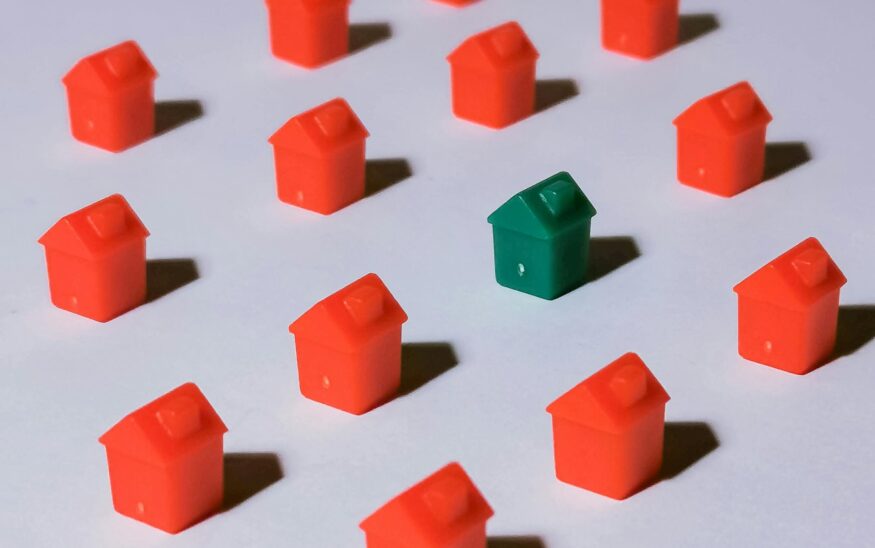
(Krista Glīzdeniece / Pexels)
The housing shortage is real. This just decides who has to live with it.
Nicole Newhouse, Guest Commentary//April 10, 2026//



Arizona’s housing problem isn’t complicated to describe. There aren’t enough homes [1], [2], [3], [4]. The ones that exist cost more than many people can pay [5], [6]. And the gap between what housing costs and what wages cover has been widening long enough that most Arizonans either feel it personally or know someone who does.
For most of the 20th century, cities made a series of decisions about what could be built where. Single-family zoning spread. The rules governing what you could do with your own property multiplied. Housing types that had been common — the duplex, the fourplex, the small apartment building on a neighborhood street — became first discouraged, then in many places impossible. Not because anyone voted to have a housing shortage. Because the accumulated weight of those decisions eventually produced one.
You can see the before and after in Arizona’s older neighborhoods. The duplexes and small multifamily buildings that exist in many historic districts weren’t placed there by planners with foresight. They were built before the rules changed, and they’ve sat alongside single family homes for decades without incident.
Last session, the Legislature acknowledged some of this. The Middle Housing Act allowed duplexes, triplexes, and fourplexes near jobs and transit — a limited adjustment that said: if you own property and meet the standards, you can build. SB 1118 moves in the other direction – not by repealing what passed, but by adding layers.
Not by repealing what passed. The bill adds layers — standards, limits, additional review — concentrated in historic neighborhoods. Enough to make the housing the bipartisan Middle Housing Act was meant to encourage, harder to deliver, even where it remains nominally permitted.
Add time, cost, and uncertainty to any project and some of them stop. Not randomly — the ones that drop out are the modest ones: the small builder who can’t carry debt through a long review, the homeowner who needed the numbers to work without a cushion. A large developer building luxury units can absorb the wait. So the process doesn’t just slow housing down. It favors the projects that can carry higher costs and longer timelines — and those tend to be at the high end.
Supporters will argue that historic neighborhoods represent a small slice of the housing market, and they’re not wrong about the numbers. But these tend to be the neighborhoods closest to employment, transit, and the daily infrastructure of urban life. When those areas become harder to build in, the pressure doesn’t dissipate — it shifts. Longer commutes, higher rents in whatever’s left, one more place that used to be affordable that isn’t anymore.
Historic neighborhoods already operate under meaningful oversight — design review, demolition controls, contextual standards. Those frameworks exist and they function. The question isn’t whether historic areas deserve protection. It’s whether adding another layer on top of what already exists serves preservation or just limits housing.
There’s a property rights argument here, too. By-right development means that if you own land and satisfy the applicable rules, you can build — without seeking permission, without waiting to find out whether a hearing goes your way. SB 1118 converts that clarity into uncertainty. It doesn’t change the rules so much as add a process for deciding whether the rules apply to you.
Arizona isn’t short on policy ideas about housing. The shortage is in the housing itself.
SB 1118 takes a problem that’s already unevenly distributed and pushes it further toward the people least equipped to absorb it — the teacher priced out of the district where she works, the home health aide driving an hour each way because his clients live somewhere he can’t afford to.
The shortage doesn’t go away. It just becomes someone else’s problem to solve — usually someone with fewer options for doing so.
Nicole Newhouse is the Executive Director of the Arizona Housing Coalition.
References:
[1] National Low Income Housing Coalition, “The Gap: A shortage of Affordable Homes,” 2026.
[2] Common Sense Institute, “Housing Affordability in Arizona (Quarterly Report),” 2025.
[3] A. Cook-Davis, K. Eustice, A. Nagle, A. Cooper, L. Kurtz and C. Kanala, “State of Housing in Arizona,” Arizona Research Center for Housing Equity & Sustainability, 2025.
[4] Z. S. S. a. A. R. McRae, “Abundance for Who?:,” Georgetown Center on Poverty and Inequality, 2026.
[5] Joint Center for Housing Studies of Harvard University, “The State of the Nation’s Housing,” Harvard Graduate School of Design, Harvard Kennedy School, 2025.
[6] Harvard University Joint Center for Housing Studies, “The State of the Nation’s Housing 2025: Interactive Maps & Data,” 2025. [Online]. Available:
https://www.jchs.harvard.edu/state-nations-housing-2025.