Sign In


 Free Newsletter

Arizona lawmakers propose 5 different ways to raise legislator pay
Howard Fischer, Capitol Media Services//April 13, 2026//
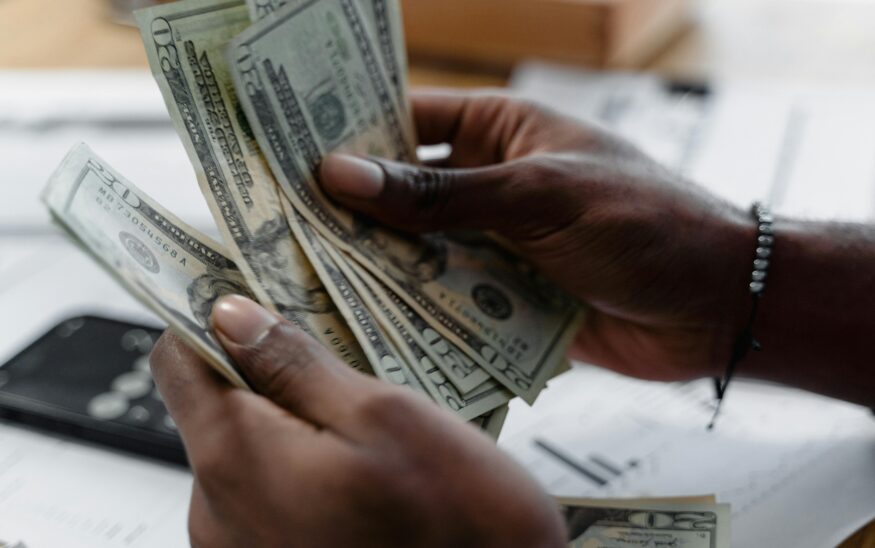
(Tima Miroshnichenko / Pexels)
Arizona lawmakers propose 5 different ways to raise legislator pay
Howard Fischer, Capitol Media Services//April 13, 2026//


Key Points:
-
Lawmakers have introduced a variety of proposals to raise legislator pay
-
Many say the current $24,000 salary, unchanged since 1998, is insufficient
-
Voters could decide on a raise via ballot measure come Election Day
Katie Hobbs says when she was a state senator a decade ago she was making $24,000 a year.
“It wasn’t enough,” she said in a recent message to followers while asking for money for her reelection campaign.
But Hobbs, now governor and making $95,000 a year, is showing far less sympathy toward lawmakers who are still being paid the same $24,000.
“It’s certainly not sustainable to live on $24,000 a year,” she said in response to a question from Capitol Media Services. “But it is intended to be a part-time salary,” with sessions lasting — at least according to legislative rules — just four months a year, though that hasn’t happened in years.
Still, Hobbs acknowledged that for many lawmakers it ends up “being more of a full-time job,” with other legislative obligations through the rest of the year making it difficult, if not impossible, to convince another employer to allow them to be gone that much.
But don’t look for the governor to champion any of the various efforts being proposed this year to ask voters — who under the Arizona Constitution now have the final say on salaries — for more money. And the reason is strictly political.
“I think if they want Arizonans to pay them more, they need to show up, they need to present their budget, they need to work with me to get a 123 (education fund extension) passed so we can fund public schools,” Hobbs said. “That way they can make the case for voters to give them more.”
The Republicans who control both the House and the Senate, for their part, contend that the Democratic governor is the obstruction.
They say her $17.8 billion budget proposal is based on unrealistic revenue predictions, like getting $760 million in reimbursement from the federal government for money spent on border security. And then there are proposals with no realistic chance of support in the GOP legislature like putting income caps on families who want vouchers of taxpayer funds to send their children to private and parochial schools or home school them in an effort to save $80 million.
And then there’s the fact that it was Hobbs who walked away from budget negotiations.
But none of that is keeping lawmakers — from both parties — from proposing various ways to convince voters to approve plans that would raise their salaries, in some cases by quite a lot.
The current constitutional language says a special commission is supposed to meet regularly and make recommendations on legislative salaries. But anything the panel proposes has to be ratified at the ballot.
Voters approved the last raise in 1998, taking the pay from $15,000 to the current $24,000.
Since then, there have been several attempts to boost the pay, with offers at $30,000, $35,000 and $36,000. All were rejected. And the commission hasn’t met in years because state officials — including the governor — have failed to appoint new members.
Each of the five proposals would ask voters to scrap that system. And, each of them, upon approval, eliminates the need for lawmakers to get their approval for future pay hikes.
Sen. Shawnna Bolick crafted one rather complex proposal to send to voters.
It would set the salaries of state senators at 30% of what members of Congress are paid — currently $174,000 — with state representatives getting half of what senators get.
But there’s more.
Her SCR 1050 would give senators four-year terms, leaving representatives at two. It would prohibit lawmakers from leaving office to take a job in any position created while they were in office, or for four years after that. It would remove drunk and reckless driving from the list of offenses for which lawmakers cannot be arrested during session.
And legislative candidates would have to list on the ballot their education level, any vocational training, professional licenses, whether they served in the military and were honorably discharged, and whether they voted in the last three general elections.
Her proposal never got a hearing.
Phoenix Rep. Stacey Travers proposed setting the salary at $35,000, with automatic cost-of-living increases after that, given voter approval.
To sweeten the deal for voters, her HCR 2002 sought to limit legislative tenure to no more than eight years in the Senate and eight years in the House. There are current eight-year limits — but no prohibition against lawmakers going back and forth between the chambers forever.
Her bill, too, never got a hearing.
The same fate befell HCR 2025 by Tucson Democratic Rep. Chris Mathis, who simply wanted to ask voters to give up their right to ratify legislative salaries and leave it to lawmakers themselves.
Currently, two measures are advancing.
One is a proposal by Sen. John Kavanagh to change the Arizona Constitution to replace the requirement for voter approval of pay hike proposals with automatic inflation indexing.
But what SCR 1020 does not make absolutely clear is that this indexing, if approved in November, would not be prospective only. Instead, it would require a computation going back to that last pay raise in 1998.
The Fountain Hills Republican said that approach is appropriate.
He said that, in approving the $24,000 salary at that time, voters decided that was appropriate compensation. Kavanagh said all this does is respect the will of the voters that $24,000 — in 1998 dollars — is appropriate compensation.
That, however, still leaves the fact that $24,000 in 1998 dollars translates out to about $48,000 now. And that could prove too much of a one-time jump for some voters.
The other measure also awaiting further legislative action is SCR 1012.
Sponsored by Sen. David Gowan, R-Sierra Vista, it would replace the current commission — the one that hasn’t met in years because of a lack of appointments — with a different panel chaired by the chief justice of the Arizona Supreme Court and made up of members chosen by Democratic and Republican legislative leaders.
They would recommend an appropriate salary for all state elected officials, from the governor on down — but not for legislators. And their recommendations would become law unless amended or rejected by the Legislature.
And legislative salaries? The bill would automatically set the governor’s pay at 60% of whatever the governor makes — a provision that could encourage lawmakers to accept the panel’s recommendation, as it would affect their own pay, with the added political advantage of not actually having to publicly vote for their own pay.
Right now the governor makes $95,000. So, if nothing else changed, that would boost legislative pay to $57,000.
No other state pays its governor so little. That potentially could create pressure on the commission — if SCR 1012 goes on the ballot and is adopted — to boost the salary and, by extension, the legislative pay tied to it.
But Hobbs, after questioning whether lawmakers deserve more money, sidestepped the question of what she considers a proper salary for the governor of Arizona.
“It’s not up to me to decide,” she said.
“I talk to Arizonans every day who are struggling,” the governor said. “And they make a lot less than I do as governor.”
Hobbs, however, said she won’t be making the same promise as gubernatorial hopeful Hugh Lytle who is hoping to secure the No Labels nomination for governor. He has promised that, if elected, he would donate his entire salary to a qualified charity.
“I cannot afford to do that because I am not a billionaire,” Hobbs said.
A campaign spokesman for Lytle said he is not a billionaire but merely a multi-millionaire.