Sign In




 Free Newsletter
Supt. Horne was right to save Primavera’s virtual charter school
Ian Kingsbury, Guest Commentary//April 15, 2026//

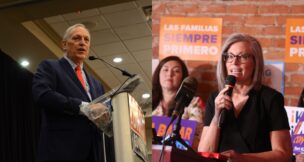
(Gage Skidmore/Flickr)
Supt. Horne was right to save Primavera’s virtual charter school
Ian Kingsbury, Guest Commentary//April 15, 2026//



School “accountability” means different things to different people. In the case of an Arizona virtual charter school, its leaders recently discovered that it could include compliance with clerical paperwork. The inability to recognize that sooner would have culminated in the school’s closure if not for last-minute intervention from State Superintendent of Public Instruction Tom Horne. The school’s plight ought to invite fresh thinking about accountability for schools of choice.
Primavera Online School is an Arizona-based, fully virtual charter school. The school opened in 2001 and enjoys robust parental demand, with a current enrollment of more than 6,000 full time students. Nevertheless, in March 2025, the Arizona State Board for Charter Schools sent a notice of intent to revoke the charter. It left thousands of families hanging in balance until last week, when Horne overruled the board and announced that the school would stay open.
Primavera ended up in the crosshairs of the board due to test score outcomes well below the state average. But longitudinal data shows that this difference isn’t new.
What changed at Primavera was not academic performance, but the school’s classification. During the height of the Covid pandemic, the school neglected to turn in paperwork to preserve the school’s “alternative” status. In Arizona, the designation means that the school’s mission is to serve students who are in poor academic standing or face barriers to academic flourishing due to disruptive behavior, a history of dropping out, being a primary caregiver, being adjudicated, or being a ward of the state.
Primavera would have received a passing “C” grade if appropriately identified as an alternative school, a reality that Horne acknowledged when he overruled the board.
For the purposes of school accountability, the alternative designation allows for more flexible standards for defining school success. Simply put, there are student populations for whom high test score results are difficult if not impossible to attain. For those populations, success might include persisting through school, remaining safe, learning a vocation, or learning to regulate behavior.
The binary designation of “alternative” betrays the reality that a student population’s likelihood of academic success exists on a continuum. In Arizona, for example, a school qualifies as “alternative” when 70% of the student population meets the aforementioned eligibility criteria. For the purposes of the state, then, Primavera would have been deserving of more flexible accountability measures if they had turned in paperwork to show that 70% of students matched the eligibility criteria but undeserving if that number fell to 69%.
Sharp, arbitrary cutoffs that allow charter schools to have flexibility only if they reach the “alternative” threshold are a bad idea for the sector generally, but they are especially punitive for schools that happen to narrowly miss the cutoff. Virtual schools often find themselves in such a plight. Typically, students end up in virtual schools due to push rather than pull factors, including bullying, social or emotional difficulties, learning differences, or disruptive events in their personal lives. For many of these students and their families, success isn’t understood as high test scores and college enrollment but safety or technical career training.
Horne made the right call to save Primavera. Looking ahead, charters should enjoy more autonomy and flexibility so that their fate is determined by parents voting with their feet rather than bureaucrats with the stroke of a pen.
Ian Kingsbury is a senior fellow at the Educational Freedom Institute, an Arizona-based think tank.