Sign In




 Free Newsletter
Arizona’s 911 funding model is due for a second look
By Dan Cotterman//July 29, 2026//

Close-up shot of a firetruck's door featuring the 911 emergency number. (Ash H / Pexels)
Arizona’s 911 funding model is due for a second look
By Dan Cotterman//July 29, 2026//


Twenty cents. That’s what Arizona asks each telephone line to contribute each month to help fund one of government’s most essential public safety services. That amount — among the lowest dedicated statewide 911 fees in the nation — has remained unchanged since 2008. In fact, Arizona’s statewide surcharge was reduced over time from 37 cents per line to today’s 20-cent rate. Over that same period, Arizona became one of the nation’s fastest-growing states, adding more than one million residents, while emergency communications evolved from answering voice calls into a complex digital enterprise: text-to-911, enhanced location services, statewide interoperability, cybersecurity, and the Next Generation 911 network that ties it all together.
Sooner or later, policymakers will have to reconcile those two facts. Good public policy is rarely made under the pressure of a crisis. It is made when leaders are willing to ask difficult questions before circumstances leave them no choice.
I come to this issue from the local government side of the table. Over the past several years, I served on two iterations of the Maricopa Association of Governments (MAG) 911 Study Committee, working alongside dispatch professionals, police and fire leaders, county officials, state agencies and telecommunications experts. That work gave me a front-row seat to one of the state’s most critical — and least visible — public safety systems. Two things stood out.
The first was the remarkable level of collaboration. The Regional 911 System serving Maricopa County is a partnership among our cities, towns, the county and MAG. The available funding was never sufficient to meet every need. Yet instead of fighting over scarce resources, the partners brought a regional mindset: identify the highest priorities, fund the most critical improvements, and thoughtfully defer the projects that could wait. That kind of discipline is uncommon in government, and it deserves recognition.
The second was how advanced the system had become. Before serving on the committee, I assumed Arizona’s system looked much like those elsewhere in the country. Instead, I discovered that Arizona has built a feature-rich, highly capable Next Generation 911 network that compares favorably with systems across the nation — and has done so while operating with one of the lowest dedicated 911 funding levels in the country. Time and again, innovation and careful stewardship have compensated for limited resources.
But that approach has limits. Building a modern emergency communications system was only the first step. Like our highways, water systems and electrical grid, 911 infrastructure requires continuous reinvestment — in cybersecurity, software, equipment replacement, mapping technology, redundancy and the technologies that will define the next generation of emergency response. Maintaining excellence is often more difficult than achieving it.
The issue before policymakers is not whether Arizona has built an effective 911 system. It has. The issue is whether a funding model established nearly twenty years ago can reasonably be expected to sustain a system designed for the next twenty.
I generally believe government should spend taxpayer dollars wisely before asking taxpayers to contribute more, and my experience on the committee reinforced that belief. I watched public agencies collaborate instead of compete, and dedicated professionals stretch every available dollar. But stewardship also means recognizing when yesterday’s funding model no longer matches today’s operational realities.
I am not advocating for a specific fee increase or predetermined outcome. I am advocating for a comprehensive review of how Arizona funds its statewide 911 system. That review should examine whether the current model remains sustainable, transparent and equitable; whether it reflects how Arizonans actually communicate today; how it compares with peer states; and whether a flat per-line surcharge remains the most appropriate long-term funding mechanism for supporting the technology, cybersecurity and highly trained emergency communications professionals that every resident depends on.
The best infrastructure decisions are made before a crisis forces them upon us. Every Arizonan depends on 911, whether they ever dial it or not — and everyone involved in building the system we have today, from dispatchers and first responders to state and local leaders, deserves tremendous credit. We should not allow one of Arizona’s greatest public safety achievements to become the victim of its own success.
Now is the time to begin that conversation.
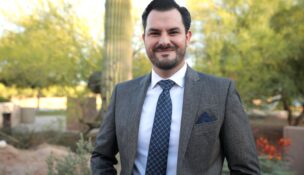
Dan Cotterman is the former city manager of Buckeye and former deputy city manager and information technology director for the City of Goodyear. He served on two iterations of the Maricopa Association of Governments’ 911 Study Committee.