Please ensure Javascript is enabled for purposes of website accessibility

Survey: What makes a good election in the eyes of Arizonans?

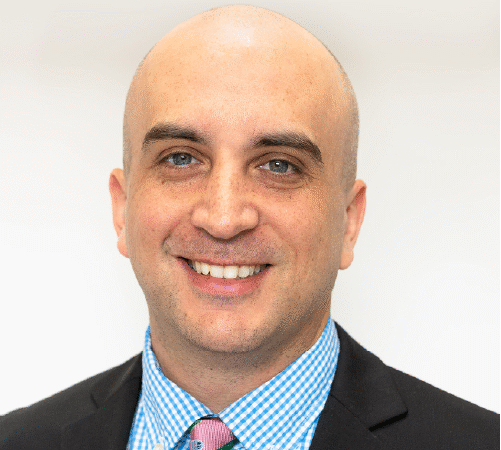
Dr. Sybil Francis
Dr. Sybil Francis

Elections matter. Voting matters. That’s what we learn in school. But changes being proposed to how Arizonans vote at the national and state levels would make your civics teacher cry. But even more importantly, the proposed changes — most designed to make voting more difficult — fly in the face of what large majorities of Arizonans say matters to them when it comes to voting and elections. I know this from multiple public opinion surveys we have conducted over the years.

For over two decades, we at the Center for the Future of Arizona have asked Arizonans across the state for their thoughts on issues critical to Arizona’s future, including education, health care, immigration and the environment. Our aim is to advance the voices of Arizonans on what matters to them and to our state’s future. We want to help leaders in our state see that Arizonans agree on many important issues, even when their voices get drowned out by partisan politics.

Our most recent survey explores what Arizonans believe a good election should deliver — regardless of party, candidate or outcome. 

We started with a very basic question. Do Arizonans think fair and secure elections are important to a healthy democracy? The answer is virtually unanimous: 97% of Arizonans agree. This is the highest level of agreement we have seen in two decades of public opinion research. And a significant majority of Arizonans believe that their vote makes a difference, with 79% believing that it does. The voices seeking to undermine trust in elections and claims of voter fraud have not eroded these fundamental beliefs.

And what do Arizonans think about some of the proposed changes to how elections are run? Do these hot button issues resonate with Arizonans? Where do Arizonans stand on limiting or eliminating the option to cast their vote by mail, cutting off early ballot drop-off before election day, speeding up reporting of election results, or reverting to precinct voting?

The disconnect between these proposals and what Arizonans actually want could not be greater.

With regard to voting by mail, 81% of Arizonans want to keep their option to do so. That’s a supermajority and includes majorities of Republicans, Democrats and independent/unaffiliated Arizonans. In 2024, 81% of ballots in Arizona were cast using returned mail-in ballots.

And while Arizonans certainly think receiving timely results is great, nearly seven in 10 prefer preserving their option to drop off their early ballot up to, and on, election day. We asked if they preferred this option even if it means election results take longer to report, and the answer was clear: yes. In 2024, an estimated 8% of Arizona’s votes were mail-in ballots returned in person on election day. 

With regard to voting centers, 89% of Arizonans want more voting centers, including 91% of Republicans, 95% of Democrats, and 83% of independent/unaffiliated Arizonans. These and other trends in our survey results show that Arizonans want more and more convenient options to vote, not fewer.

Finally, we asked Arizonans what makes a good election. What should a good election deliver regardless of your party or whether or not you like the outcome? How do you want to experience voting? Among nine core principles we asked about, three clear priorities rise to the top: accuracy, trustworthiness and transparency. Other priorities considered essential include voter access, fiscal responsibility, voter participation, preserving multiple ways to vote and the safety of voters and election workers.

Only one principle fell below 50% support: speed of reporting results. Speed is important to voters, but it’s not as important as accuracy, trustworthiness, transparency or other priorities such as voter access and convenience.

What does this mean for current debates about how elections are designed and run?

Arizonans have spoken on these issues. Will leaders listen? What will this mean for current debates about how elections are designed and run? Will the policies advanced reflect the interests of the voters or run cross-wise with them?

Listening to Arizonans and understanding their priorities doesn’t end debate, but should inform it. As changes to elections are considered, we should ask whether they align with what voters say are hallmarks of a good election. Arizonans know what matters to them, and that should matter to everyone, including our elected leaders.

Sybil Francis, Ph.D. is chair, president & CEO of Center for the Future of Arizona, a nonprofit, nonpartisan organization that brings Arizonans together to create a stronger and brighter future for our state.
23 more speciality license plates possible, but not for LGBTQ+ students

Key Points:
  • An omnibus bill could bring 23 new specialty license plates to Arizona drivers 
  • License plate revenues support local organizations, typically apolitical
  • A proposed specialty plate that would support LGBTQ+ students attending college was never heard in committee

Arizona’s specialty license plates were designed to raise money for a wide range of causes, but a new proposal to add 23 more plates to the state’s roster is testing the political limits. 

A proposal to create a plate that would honor late activist Charlie Kirk and send donations to the nonprofit conservative organization Turning Point ignited a mix of support and criticism before it met Gov. Katie Hobbs’ veto. 

The governor said his assassination was tragic and a horrifying act of violence and spoke against political violence, adding, “I will continue working toward solutions that bring people together, but this bill falls short of that standard by inserting politics into a function of government that should remain nonpartisan.”

At the same time, efforts to create a specialty plate that would benefit LGBTQ+ college students attending Maricopa Community Colleges have also been repeatedly rejected by Republican lawmakers for the past four legislative sessions. 

Now, 23 more specialty license plates are coming through the Legislature, supporting causes like honoring military Bronze and Silver Star recipients, skin cancer prevention, students recycling used technology and finally, a Grand Canyon license plate. 

But one question remains: How many skirt the political line? 

Rep. Lorena Austin, D-Mesa, has been trying to pass a specialty plate that would show support for the LGBTQ+ community and help support college students with scholarships. The bill has never been heard in committee. Austin said it’s because the group who would pay the implementation fee supports the LGBTQ+ community. 

“It is discriminatory to exclude this one bill every single year simply because it’s from an LGBTQ+ organization, which is really sad. Like it’s freedom and justice for all except you and freedom for anyone to put anything on their car except you,” Austin, who is non-binary and prefers they/them pronouns, told the Arizona Capitol Times. “That’s literally what is being relayed to us as a community that we are less than and we are not deserving of showing our pride.”

As a member of the LGBTQ+ community, Austin has seen the struggles that some students face. Some don’t have family support or financial assistance to help with college, Austin added. 

“Scholarship opportunities for underserved communities are either taken very quickly, and then there’s just not enough,” Austin said. “Whatever opportunity we can give for a student to get through school, I don’t know why we wouldn’t take it.”

In this year’s effort to see an LGBTQ+ plate, Rep. Betty Villegas, D-Tucson, filed House Bill 2719, but it was never heard in the House Transportation and Infrastructure Committee. Rep. Leo Biasiucci did not return a request for comment on why the bill was never heard. 

However, when lawmakers started asking about the group that would benefit, they didn’t give the bill a hearing, Austin and Villegas said. In contrast, Villegas pointed out that the Charlie Kirk license plate bill at least made it to the governor’s desk.

“That’s a big problem for me. We don’t have a voice,” she said. 

Arizona already has two specialty license plates that could be considered political. 

One is the “In God We Trust” plate, which donates funds to the Alliance Defending Freedom, a nonprofit organization founded in Scottsdale that defends religious liberty. According to the Department of Transportation, the plate was approved in 2011 and available to the public in 2012. During the last five years between July 2022 and March 2026, the plate has raised $1.15 million. The organization did not answer questions by deadline about their plate. 

Arizona also has the “Choose Life” plate, which donates funds to the Arizona Life Coalition, a nonprofit organization in Phoenix that supports pro-life efforts. It has raised $86,600 over the past five years. The coalition did not respond to a request for comment about their plate. 

The advocacy group behind the LGBTQ+ license plate is Equality Maricopa and its current president, Jay Franzen, who said his nonprofit organization has existed since the early 2000s in different iterations. Previously, they were an employee affinity resource group operating within the Maricopa Community Colleges district. 

But when President Donald Trump signed an executive order that directed universities and colleges to disband their Diversity, Equity and Inclusion efforts, Equality Maricopa “divorced” the district and became a nonprofit. Now they advocate and bring awareness to LGBTQ+ issues.

They’ve been waiting for a specialty plate for years and have the $32,000 implementation fee raised and ready to go, Franzen said. They also have a preliminary design, which is subject to change amid Arizona Department of Transportation approval.

“We’re just getting stonewalled because we’re a queer organization,” he said. “It will never make it out of committee because it doesn’t have enough support from the other side of the aisle.”

The LGBTQ+ license plate isn’t part of House Bill 2127, which is an omnibus bill with 23 specialty license plates. Rep. Neal Carter filed that bill, but did not respond to requests for comment about that bill or the LGBTQ+ plate. 

The Arizona Capitol Times reached out and confirmed several plate proposals that would receive the donations if the bill is signed, the $32,000 implementation fees are paid and the plate design is approved by the Arizona Department of Transportation. 

The organizations are only identified by criteria in the bill language, not by name. People can choose to pay $25 for a specialty plate, with $8 going to the State Highway Fund and $17 going to the nonprofit organization sponsoring the plate.

Maricopa Community Colleges didn’t comment on the license plate but said in a statement they welcome support from community partners and organizations that help students access and succeed in college.

Arizona’s next economic chapter depends on moving what we build

Tony Lydon

For more than three decades working in industrial real estate and supply chain logistics, I have seen one principle hold true in every successful market: strong economies are built on the ability to move goods efficiently.

That sounds simple. It is not.

Every product we rely on — building materials for homes, components for advanced manufacturing, goods on store shelves — depends on a system that works quietly in the background. When that system is strong, growth follows. When it is strained, everything becomes more expensive, less reliable and harder to sustain.

Arizona is approaching that inflection point.

Our state has spent decades making deliberate decisions to build a competitive economy. We have invested in higher education and embraced pro-growth policies. Arizona now competes nationally for advanced manufacturing, logistics and investment.

But success creates pressure.

Today, metro Phoenix has become a major hub for manufacturing and distribution in the western United States. Companies that once clustered in California are expanding here. Supply chains increasingly run through Arizona. That growth is not theoretical; it is already happening.

And it is placing strain on how we move freight.

We can debate individual projects. We can discuss location and community impacts. Those are fair conversations. But Arizona’s logistics network is running nearly at capacity.

Standing still carries real consequences for a growing state like ours.

If freight demand accelerates without corresponding investment in infrastructure, the consequences are predictable. More trucks on already burdened highways. Higher transportation costs embedded in housing and groceries. And a gradual erosion of the advantages that have made Arizona competitive.

That is the context in which projects like BNSF’s Logistics Park Phoenix in the West Valley should be evaluated.

From a supply chain perspective, facilities of this scale are foundational. They connect regions to national and global trade networks and give manufacturers confidence that goods can move reliably and cost-effectively.

There is a reason similar facilities in places like Chicago, Kansas City, and Dallas-Fort Worth have attracted billions in investment. They expand capacity, improve efficiency and signal that a region is serious about competing.

Arizona now has a similar opportunity – one equivalent to the economic impact of seven Super Bowls annually.

That does not mean concerns about traffic, infrastructure or community impact should be dismissed. Large-scale projects require planning, transparency and enforceable commitments.

Success depends on getting those details right, particularly around roads, utilities and the impacts on surrounding communities. But those are challenges to solve, not reasons to stand still.

Throughout my career, I have worked with companies making location decisions across North America. One factor consistently rises to the top: confidence in infrastructure. If a region fails to show it can move goods efficiently today and into the future, it becomes harder to attract employers that create high-quality jobs and sustained growth.

Regions that recognize the importance of opportunities like this benefit for generations. Those that hesitate often find themselves trying to catch up.

The conversation in the West Valley should not be framed as growth versus no growth. Arizona will continue to grow. Goods will continue to move. The real choice is whether our growth is supported by modern, efficient infrastructure or constrained by a system which cannot meet demand.

From where I sit, the path forward is clear.

If Arizona intends to remain competitive and continue attracting investment, we need to ensure our logistics infrastructure keeps pace with our ambitions.

That is not about one company or one project. It is about whether we are prepared to build the next chapter of Arizona’s economy or allow it to be defined by the limits of yesterday’s infrastructure.

Tony Lydon has spent more than 30 years advising industrial users, developers, and investors on supply chain strategy and logistics-driven economic growth.

Arizona’s growth is accelerating; zoning clarity needs to keep pace

Ali Fakih

Phoenix had an estimated 1.67 million residents in 2025, reinforcing its position as the fifth-largest city in the United States and a major driver of regional economic growth. 

However, there’s a challenge: Arizona’s increasing population and building needs are moving faster than the systems that approve development. Here’s why this matters, and how zoning clarity can resolve costly issues before they arise.

Why zoning clarity matters before a project even begins

The nature of the architecture, engineering and construction (AEC) industry is complex, involving many stakeholders and numerous steps. All too often, developers buy land before they’re able to confirm whether the project they’re envisioning will be approved.

This happens for a variety of reasons. One is timing. Projects typically must complete an entitlement process that can take six months to a year (or longer), before construction permits can even be requested. In the meantime, developers are evaluating site feasibility and digging into zoning rules that determine what can be built.

These early decisions carry significant weight. Developers must assess whether land can support a grocery store, housing development, logistics facility, or another type of project long before they can receive definitive answers from local planning departments. When zoning information is difficult to access or interpret, those early decisions become far more uncertain than they need to be.

Development teams are often trying to answer very basic questions early in the process. Is the intended use even permitted on this parcel? How long might a rezoning take? What conditions could affect the project before construction even begins? When those answers are difficult to obtain, teams are forced to make uninformed decisions.

Answers often arrive too late in the development process

In order to minimize risk, development teams need answers quickly. But there are constraints that make this difficult. While the municipalities do excellent work with the resources available to them, planning departments are facing growing pressure from rising development demand.

This is true in Arizona and across the country. The U.S. Bureau of Labor Statistics estimates about 3,400 openings for urban and regional planners each year, many created by retirements or turnover. Local governments broadly report staffing shortages that affect their ability to deliver services such as permitting and development review.

With staffing gaps, growing demand for development reviews and extreme regulatory complexity, it’s no wonder that cities are stretched thin. Planning teams are working to balance community oversight, economic development and regulatory compliance, all while responding to a steady stream of new project proposals. 

At the same time, development proposals themselves are becoming more complex. Mixed-use projects, infrastructure coordination and community input all add additional layers to the review process. Even well-resourced planning departments are working within systems that were not designed for the pace of growth many cities are experiencing today.

The challenge affects far more than developers. Brokers, architects, engineers, lenders and municipal staff all rely on the same information to move projects forward efficiently.

Uncertainty creates risk for developers and cities alike

This deeply entrenched system, while designed for a reason, creates significant risk for developers. Land has to be purchased, before it is fully clear whether a project will receive approval. Developers have to hire planners, architects, engineers and attorneys, long before the final outcome is known.

In some cases, developers may spend substantial time and resources moving a project through early planning and entitlement stages only to learn that zoning limitations prevent the project from moving forward as originally envisioned.

Those early investments are rarely small. Engineering studies, architectural plans, legal reviews and feasibility analyses all take time and money. By the time those efforts are complete, a development team may have already committed significant resources simply to determine whether a project can progress.

The uncertainty also affects other stakeholders involved in the process, including brokers, lenders and planning staff. When early answers are difficult to obtain, everyone involved spends more time navigating questions that could potentially be resolved much earlier.

Upfront insight allows developers to make go or no-go decisions before significant resources are committed.

Looking ahead

Arizona’s growth is unlikely to slow in the coming years. As new residents arrive and businesses continue expanding in the region, the need for housing, retail, infrastructure and services will only increase.

Improving access to zoning information can help everyone involved in the development process make better decisions earlier. When developers understand site feasibility sooner, they can move forward with greater confidence. When planning departments receive clearer proposals from the outset, they can focus their time on reviewing projects that are more likely to succeed.

As Arizona continues to grow, clearer pathways from site selection to approval will help ensure that development keeps pace with opportunity.

Ali Fakih is a Phoenix-based civil engineer and the CEO of SEG and AIAEC

How much money did citizens in your state lose to cryptocurrency fraud last year?

 Key Points: 
  • Americans lost over $11 billion in cryptocurrency crimes
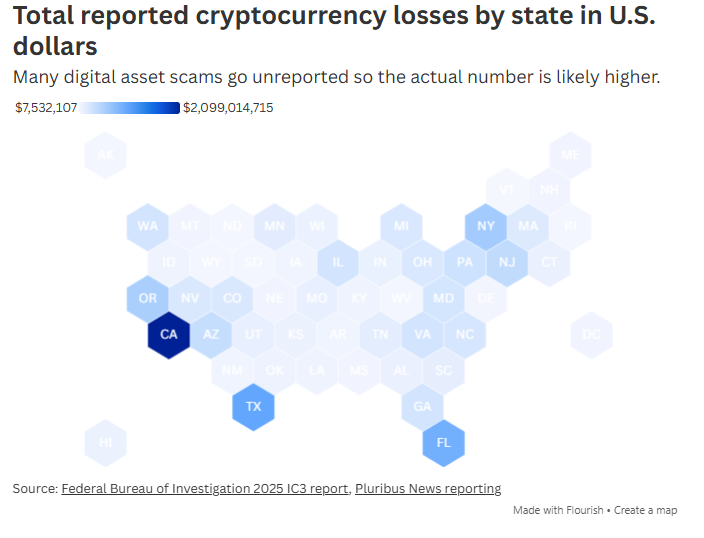
  • California reported the most crypto crimes and dollars lost
  • Twenty-three states have enacted crypto ATM regulation laws to curb fraud

Americans reported losing more than $11 billion in cryptocurrency-related crimes between 2024 and 2025, according to a new report from the Federal Bureau of Investigation that found complaints rising 21%.

California by far reported the most cryptocurrency-related crimes and dollars lost to digital asset scams last year, nearly double that of runner-up Texas in both categories, according to new data the FBI released its annual Internet Crime Report for 2025. Residents in the largest states – California, Texas, Florida and New York – reported the most complaints and overall losses. But after those mega-states, the correlation between population and the number and scale of scams becomes less clear: Oregon, which ranks 27th by population, reported the fifth largest losses due to cryptocurrency-related crime: $545,938,510. The FBI data shows cryptocurrency scams resulting in a total of a reported $11.366 billion in losses. Seniors were the hardest hit of any age group: Americans over the age of 60 reported the most complaints and the largest amount lost — more than $4.4 billion from that group alone last year.

Twenty-three states have enacted crypto ATM regulation laws in total, with 10 states passing laws in 2025. At least 22 bills have been introduced this year. Indiana in March became the first to outlaw the kiosks with the enactment of House Bill 1116.

In the last month lawmakers have passed bills to do so in Alabama (HB 303), Florida (HB 505), Wisconsin (AB 968) and Kansas (HB 2515 and HB 2591), Mississippi (HB 1625) and Kentucky (SB 189).

Emma Kinery is a State Affairs national reporter covering state politics and policy out of our Washington, D.C. office. Contact Emma Kinery at ekinery@stateaffairs.com or on X @EmmaKinery.

RELATED

Beshear signs cryptocurrency kiosk regulation bill, joining slew of other states

Mississippi Gov signs law tamping down on elder fraud from crypto ATMs

Alabama latest state to regulate cryptocurrency ATMs, seeking to curb fraud

Kansas passes crypto ATM bill; third state to do so in a month

Indiana becomes first state to ban cryptocurrency ATMs

Florida passes crypto ATM bill to curb scams targeting seniors

Wisconsin passes stringent crypto ATM regulation bill

Lawmakers in New Jersey aim to outlaw crypto ATMs, citing ‘rampant’ scams

Arizona implements law to regulate Bitcoin ATMs and prevent fraud

States move to rein in crypto ATMs as scams surge

Supt. Horne was right to save Primavera’s virtual charter school

Ian Kingsbury

School “accountability” means different things to different people.  In the case of an Arizona virtual charter school, its leaders recently discovered that it could include compliance with clerical paperwork. The inability to recognize that sooner would have culminated in the school’s closure if not for last-minute intervention from State Superintendent of Public Instruction Tom Horne. The school’s plight ought to invite fresh thinking about accountability for schools of choice.

Primavera Online School is an Arizona-based, fully virtual charter school. The school opened in 2001 and enjoys robust parental demand, with a current enrollment of more than 6,000 full time students. Nevertheless, in March 2025, the Arizona State Board for Charter Schools sent a notice of intent to revoke the charter. It left thousands of families hanging in balance until last week, when Horne overruled the board and announced that the school would stay open.

Primavera ended up in the crosshairs of the board due to test score outcomes well below the state average. But longitudinal data shows that this difference isn’t new.

What changed at Primavera was not academic performance, but the school’s classification. During the height of the Covid pandemic, the school neglected to turn in paperwork to preserve the school’s “alternative” status. In Arizona, the designation means that the school’s mission is to serve students who are in poor academic standing or face barriers to academic flourishing due to disruptive behavior, a history of dropping out, being a primary caregiver, being adjudicated, or being a ward of the state.

Primavera would have received a passing “C” grade if appropriately identified as an alternative school, a reality that Horne acknowledged when he overruled the board.

For the purposes of school accountability, the alternative designation allows for more flexible standards for defining school success. Simply put, there are student populations for whom high test score results are difficult if not impossible to attain. For those populations, success might include persisting through school, remaining safe, learning a vocation, or learning to regulate behavior.

The binary designation of “alternative” betrays the reality that a student population’s likelihood of academic success exists on a continuum. In Arizona, for example, a school qualifies as “alternative” when 70% of the student population meets the aforementioned eligibility criteria. For the purposes of the state, then, Primavera would have been deserving of more flexible accountability measures if they had turned in paperwork to show that 70% of students matched the eligibility criteria but undeserving if that number fell to 69%.

Sharp, arbitrary cutoffs that allow charter schools to have flexibility only if they reach the “alternative” threshold are a bad idea for the sector generally, but they are especially punitive for schools that happen to narrowly miss the cutoff. Virtual schools often find themselves in such a plight. Typically, students end up in virtual schools due to push rather than pull factors, including bullying, social or emotional difficulties, learning differences, or disruptive events in their personal lives. For many of these students and their families, success isn’t understood as high test scores and college enrollment but safety or technical career training.

Horne made the right call to save Primavera. Looking ahead, charters should enjoy more autonomy and flexibility so that their fate is determined by parents voting with their feet rather than bureaucrats with the stroke of a pen.

Ian Kingsbury is a senior fellow at the Educational Freedom Institute, an Arizona-based think tank.

Election integrity: Review flags 28 of Arizona’s 2024 election ballots for possible fraud

Key Points:
  • Arizona’s 2024 presidential election review finds minimal fraud
  • Only 28 of 3.6 million ballots cast were possibly fraudulent
  • Maricopa County Recorder refers 207 non-citizen voting cases for investigation

Amid renewed suspicions of election fraud as the midterm elections near, a review of voting in Arizona’s 2024 presidential election found only a sliver of the votes cast were possibly fraudulent.

Only 28 of the 3.6 million ballots cast were flagged as potentially illegal by an organization that crosschecks Arizona voter data with other states. That works out to 0.0000083% of total ballots.

In 25 cases, individuals were found to have first voted in Arizona’s November 2024 election and later cast a 2024 ballot in another state. Because it’s the second vote that makes the practice illegal, no one is being charged in Arizona.

Another three cases are still under investigation by the state Attorney General’s Office, including one instance where an individual appears to have voted the ballot of a dead person.

The numbers show it’s rare that people vote illegally, a finding that is consistent with past crosschecks that compared Arizona voting practices with those of other states.

Secretary of State Adrian Fontes said the results should quiet “the conspiracy theorists and liars” who stoke fears about election fraud.

“The message will get through if people are paying attention,” Fontes told Capitol Media Services. “It shows we have a system that works because these folks were caught.”

Shane Hamlin, executive director of the Electronic Registration Information Center, echoed that view.

“A far smaller number of people want to commit voter fraud than what people suspect,” he said. The center crosschecked Arizona’s 2024 voter information with that of 18 other states — mostly states controlled by Democrats — that belong to the nonprofit organization.

Although the match involved fewer than half the states, Hamlin said the results are a “good sample” and reflect the fact that member states have strong election programs.

“All states have made massive improvements in administration of elections in recent years,” he said, adding he hopes the organization’s work reassures the public that the system works.

ERIC came under fire from election skeptics in the wake of the 2020 election, causing its membership to drop, including the populous Republican states of Florida and Texas. But the numbers are ticking back up, with 26 states participating and New York and Virginia expected to join, Hamlin said.

States that join ERIC share voter registration data as well as identification data from their motor vehicle divisions. They mask details such as the last four digits of a person’s Social Security number but provide enough data to pinpoint a voter.

The center’s staff uses that information to create reports on voters who have moved from one state to another; voters who moved within their state; voters with duplicate registrations in the same state; and voters who died as reported to the Social Security Administration. These reports are cross checked with participating states to identify voting issues.

ERIC’s initial comparison identified 316 cases of possible illegal voting in Arizona. Those cases were then reviewed by the Arizona Secretary of State and the 15 county recorders, resulting in the 28 referrals to the attorney general for review.

All but two of the investigations involved Maricopa County voters; the others were from Apache and Mohave counties, according to data provided by the Attorney General’s Office. Of the 28 referrals, 15 were Republican voters, eight were independents, four were Democrats and one voter’s party affiliation was not discerned, records showed.

One voter, who was flagged for voting in both Arizona and Washington in 2024, said she was flummoxed when she received a letter from the Attorney General’s Office stating she appeared to have voted twice in the 2024 election.

The letter directed her to cancel her voter registration in Washington if Arizona is indeed her primary residence, and warned that any potential future violations could result in possible prosecution.

The woman, who asked to remain anonymous for fear of retribution but emphasized that she was 76, said she hasn’t lived in Washington for more than a decade. She has called the Attorney General’s Office to better understand the situation, and said she may contact authorities in her former state to find out why her name would still be on that state’s voter rolls — and how a ballot got cast under her name.

There are varied reasons for double voting, from the accidental to the intentional.

“Historically, when double voting has occurred it is usually an innocent mistake,” said Richie Taylor, communications director for Attorney General Kris Mayes.

One example is a snowbird who mistakenly voted in two states, believing that was legitimate because they pay property taxes in both states. However, the law is clear: A person can only vote once in an election.

A Green Valley couple admitted to double voting in the 2008 election. They voted by mail in their previous home state of Kansas, but later cast ballots in Arizona in the same election. James and Karen Marshall pleaded guilty to a misdemeanor and were sentenced to a year of probation.

A Bullhead City woman was found guilty of voting in Colorado’s 2010 general election by mailing her ballot from her Arizona address. She then cast a ballot in Arizona’s general election. She lost her voting privileges and was sentenced to three years of supervised probation and ordered to pay a $1,000 fine.

Taylor said the 25 individuals investigated for double voting in 2024 were given a warning. The ballots they cast in Arizona were counted; any violation would have happened in the second state where they are suspected of having voted.

Other cases of illegal voting involve voting a dead person’s ballot.

In 2020, Krista Michelle Conner of Sierra Vista was sentenced to three years’ probation for voting her dead mother’s ballot in the 2020 election. She also was required to pay a $890 fine and complete 100 hours of community service.

The cases are interesting, but uncommon. The Heritage Foundation tracks election fraud cases nationwide. It lists 17 cases of double voting that were prosecuted in Arizona over the 43-year period their database covers; there were three instances of voting a dead person’s ballot.

One area not covered by the crosscheck process is non-citizen voting, a key concern of Maricopa County Recorder Justin Heap. He recently referred 207 cases of voting by people suspected of not being U.S. citizens to the county attorney for investigation.

Heap relied on a federal database called the Systematic Alien Verification for Entitlements, or SAVE system, to identify these potential illegal voters. That database was updated during the current Trump administration but even before that, it was viewed skeptically by many election officials because it has been found to rely on outdated immigration information.

Hamlin said ERIC does not use the system, citing its shortcomings.

Heap’s office did not respond to a request for comment on the 28 suspected cases of illegal voting. All but two of the cases involve Maricopa County voters.

The housing shortage is real. This just decides who has to live with it.

Nicole Newhouse

Arizona’s housing problem isn’t complicated to describe. There aren’t enough homes [1], [2], [3], [4]. The ones that exist cost more than many people can pay [5], [6]. And the gap between what housing costs and what wages cover has been widening long enough that most Arizonans either feel it personally or know someone who does. 

For most of the 20th century, cities made a series of decisions about what could be built where. Single-family zoning spread. The rules governing what you could do with your own property multiplied. Housing types that had been common — the duplex, the fourplex, the small apartment building on a neighborhood street — became first discouraged, then in many places impossible. Not because anyone voted to have a housing shortage. Because the accumulated weight of those decisions eventually produced one. 

You can see the before and after in Arizona’s older neighborhoods. The duplexes and small multifamily buildings that exist in many historic districts weren’t placed there by planners with foresight. They were built before the rules changed, and they’ve sat alongside single family homes for decades without incident.

Last session, the Legislature acknowledged some of this. The Middle Housing Act allowed duplexes, triplexes, and fourplexes near jobs and transit — a limited adjustment that said: if you own property and meet the standards, you can build. SB 1118 moves in the other direction – not by repealing what passed, but by adding layers. 

Not by repealing what passed. The bill adds layers — standards, limits, additional review — concentrated in historic neighborhoods. Enough to make the housing the bipartisan Middle Housing Act was meant to encourage, harder to deliver, even where it remains nominally permitted. 

Add time, cost, and uncertainty to any project and some of them stop. Not randomly — the ones that drop out are the modest ones: the small builder who can’t carry debt through a long review, the homeowner who needed the numbers to work without a cushion. A large developer building luxury units can absorb the wait. So the process doesn’t just slow housing down. It favors the projects that can carry higher costs and longer timelines — and those tend to be at the high end. 

Supporters will argue that historic neighborhoods represent a small slice of the housing market, and they’re not wrong about the numbers. But these tend to be the neighborhoods closest to employment, transit, and the daily infrastructure of urban life. When those areas become harder to build in, the pressure doesn’t dissipate — it shifts. Longer commutes, higher rents in whatever’s left, one more place that used to be affordable that isn’t anymore. 

Historic neighborhoods already operate under meaningful oversight — design review, demolition controls, contextual standards. Those frameworks exist and they function. The question isn’t whether historic areas deserve protection. It’s whether adding another layer on top of what already exists serves preservation or just limits housing. 

There’s a property rights argument here, too. By-right development means that if you own land and satisfy the applicable rules, you can build — without seeking permission, without waiting to find out whether a hearing goes your way. SB 1118 converts that clarity into uncertainty. It doesn’t change the rules so much as add a process for deciding whether the rules apply to you. 

Arizona isn’t short on policy ideas about housing. The shortage is in the housing itself. 

SB 1118 takes a problem that’s already unevenly distributed and pushes it further toward the people least equipped to absorb it — the teacher priced out of the district where she works, the home health aide driving an hour each way because his clients live somewhere he can’t afford to. 

The shortage doesn’t go away. It just becomes someone else’s problem to solve — usually someone with fewer options for doing so.

Nicole Newhouse is the Executive Director of the Arizona Housing Coalition.

References:

[1] National Low Income Housing Coalition, “The Gap: A shortage of Affordable Homes,” 2026. 

[2] Common Sense Institute, “Housing Affordability in Arizona (Quarterly Report),” 2025.

[3] A. Cook-Davis, K. Eustice, A. Nagle, A. Cooper, L. Kurtz and C. Kanala, “State of Housing in Arizona,” Arizona Research Center for Housing Equity & Sustainability, 2025. 

[4] Z. S. S. a. A. R. McRae, “Abundance for Who?:,” Georgetown Center on Poverty and Inequality, 2026. 

[5] Joint Center for Housing Studies of Harvard University, “The State of the Nation’s Housing,” Harvard Graduate School of Design, Harvard Kennedy School, 2025. 

[6] Harvard University Joint Center for Housing Studies, “The State of the Nation’s Housing 2025: Interactive Maps & Data,” 2025. [Online]. Available: 

https://www.jchs.harvard.edu/state-nations-housing-2025. 

Arizona sees highest reduction in food stamp recipients after HR 1, study finds

Key Points:
  • Arizona sees largest food stamp drop nationwide with 32% decline
  • HR 1 law and requirements cause 2.5 million nationwide food stamp reduction
  • Arizona’s outdated technology and new system problems contribute to delays

A higher percentage of Arizonans have been knocked off food stamps since Congress approved HR 1 than any other state in the nation, according to a new study.

The report by the Center for Budget and Policy Priorities says participation in the Supplemental Nutrition Assistance Program dropped by 2.5 million nationwide since the federal law and its new requirements were enacted in July and December. That translates to about 6% according to figures from the U.S. Department of Agriculture.

But that same USDA data shows a 32% drop in Arizona in the program that provides benefits averaging $312 per month for all households and $520 for households with children.

And it may be even more dire: The study says more recent figures from the state’s Department of Economic Security show a 47% decrease, a reduction of more than 400,000, including 180,000 children — leaving fewer than 490,000 recipients as of February.

Less clear is the “why” behind all of that.

Gubernatorial press aide Christian Slater said some of it is due to the requirements of HR 1. Dubbed the “Big Beautiful Bill” by President Trump, it contained a number of changes to the SNAP program, including expanding work requirements to cover able-bodied single adults up to age 65.

It also included shifting more of the costs of administering the program to states.

But that’s not all. It also says that states that do not bring their error rates down below that 6% mark will have to pick up anywhere from 15% to 100% of the actual cost of benefits, which until now have been fully paid by Washington.

In the 2023-2024 budget year, Arizona had an 8.8% error rate. But for the last fiscal year it was projected to be 10.4%.

A report by the state Office of Strategic Planning and Budgeting — an arm of Gov. Katie Hobbs — pointed out that it is still below the national average of 10.9%. But even then, the report said that if the error rate remains at 8.8%, the state could have to cover $195.4 million in the 2027-2028 fiscal year.

And if the error rate hits 10%, that figure could reach nearly $300 million.

None of these penalties are unique to Arizona.

But Slater said what happened here — and at least part of the reason for the sharp decline in recipients — is complicated by two things.

One is that, even before HR 1, about 500 workers at the state Department of Economic Security — about 5% of the workforce — were laid off in the summer of 2025, a move the state blamed on other federal budget cuts. That came at the expense of eligibility workers, with DES saying the number of workers who reviewed food stamps eligibility dropped by 1,370 in July 2024 to 880 this past July.

And an agency spokesman said it was processing an estimated 54,000 new and renewal applications, of which 18,000 were taking more than 30 days.

And that gets to the other half of the problem.

Slater said that Arizona, aware of the penalties for not getting its error rate down, was proactive in doing the greater checks to ensure that only those eligible under the new HR 1 rules are getting the aid. But with fewer staff, that resulted in some applications and renewals being delayed — or denied outright — when people could not provide the required information, with people dropping off the rolls.

In December, Hobbs responded by earmarking $7.5 million in unused federal COVID-19 funds to address what she called “staffing constraints” at DES. That included hiring temporary workers to expand the agency’s capacity to verify applicants’ income.

But even with all that, the data the new report cites from DES shows a continued sharp decline in food stamp recipients, down from 598,852 in December to 485,460 in February.

And there’s something else.

Slater said that other states, for whatever reason, may not have yet made the same changes as Arizona in screening to reduce their error rates. And he predicted that the decline in the number of food stamp recipients now showing up in Arizona is just a precursor of what will be reflected in data from other states in the coming months.

That’s also the assessment of DES spokesman Brett Bezio.

“It is important to note that we believe most of the impact of the changes from HR 1 has been realized, and we will begin to see consistency in the SNAP caseload in the months ahead,” he said. “As other states fully implement the provisions of HR 1 and Arizona stabilizes, we expect differences in caseload decline between other states to more closely align.

Bezio also said that Hobbs has requested an additional $48.4 million for the agency for the coming budget year, including 146 new employees. He said that it should cut delays as well as help ensure the state gets below the error rate at which point there would be penalties.

There is, of course, a political angle to all of this.

Slater said what is happening in Arizona — and what he believes will soon occur in other states — is precisely what was intended by the Trump administration.

Agriculture Secretary Brooke Rollins, in announcing a 3.3 million reduction in SNAP recipients, called it “a signal that the federal government is once again working for the American public.”

But it’s not just the president. Slater noted that every Republican in the state’s congressional delegation voted for HR 1 — including the food stamp provisions.

Republican Congressman David Schweikert, however, had his own take on the sudden drop in SNAP recipients.

“States were incentivized to reduce errors and manage benefits efficiently,” he said of HR 1. But he said that 10.4% error rate in the most recent fiscal year meant that Arizona had to do a lot more culling of ineligible recipients.

“Arizona’s outsized reductions are a clear outlier, demonstrating the management failures of this governor,” said Schweikert, who is hoping to oust Hobbs in November.

He also pointed out something that even DES has acknowledged: its use until recently of 1980s technology. And while it is being replaced, there have been problems with the new system.

“After seeing billions of taxpayer dollars go to fraudsters through our state’s Medicaid program, Arizonans have been clear that they want substantive reforms targeting waste, fraud, and abuse in all government programs,” said Drew Sexton. He is running the gubernatorial campaign for Congressman Andy Biggs, the other Republican running against Hobbs.

Sexton said Biggs wants to create prosperity and economic growth “where every Arizona family can become self-sufficient while Katie Hobbs wants more people dependent on state government.” 

Arizona Democratic Congresswoman Adelita Grijalva, however, had her own take on how the new report shows the effect on her home state of HR 1.

“When Republicans said they are going after ‘waste, fraud, and abuse,’ let’s remember what that really means: children going hungry and families being pushed further into financial crisis,” she said in a prepared statement. “It’s time to reverse these devastating cuts to food assistance and healthcare, and finally focus on lowering costs.”

There appears to be nothing to show that Arizona, before HR 1, had a higher percentage of its residents on food stamps than the rest of the nation.

In a separate report, the Center for Budget and Policy Priorities says that the number of Arizonans on food stamps — estimated at 923,400 in the last budget year — amounted to 12% of the state’s population. That is in line with national figures showing a 12% participation rate in the program.

It also finds that 68% of SNAP participants are in families with children, compared with 62% nationally. And 40% are in working families versus 38% for the country as a whole.

Arizona needs a better energy strategy to meet growing demand

Michael Barrio

Arizona hits triple-digit temperatures more than 100 days each year. That kind of intense heat puts a real strain on the electricity grid, especially during summer months when keeping the A/C on is a matter of public safety. But that’s not the only thing causing stress on the power grid these days. With the population in Arizona rising, and new large energy users (think manufacturing and data centers) coming online, there is more pressure on Arizona’s energy system than ever before.

Arizona energy regulators are concerned about what all these pressures could do to consumers, and warned last year that new large energy users, including data centers, must be managed in a way that doesn’t undermine power grid reliability or leave the average household paying for a particular business’s grid infrastructure. In short, the state is facing a supply and demand issue. Demand for energy is going up, but our energy supply isn’t keeping up. It can take many years to build new power generation and the electric transmission wires needed to move and deliver that power to where it’s needed. APS, for example, is advancing major transmission projects to support growth and reliability, but some aren’t expected to be in service until 2032.

The state Legislature can and should make it easier to build more energy supply. Unfortunately, instead of making it easier to deliver the power generation and energy infrastructure Arizona needs, the Legislature has spent much of this ongoing legislative session advancing a slate of bills that would do the opposite. HB 2975, for example, would require the Arizona State Land Department to stop using a tool that helps developers identify the best locations for solar projects to be responsibly built on state lands. And this is just an example of the kinds of unhelpful obstacles being proposed.

Thoughtful oversight is welcome, but unnecessary obstruction only serves to raise project costs, discourage investment, and make it harder to get the next round of energy infrastructure built on time, meaning utilities will need to rely on more expensive short-term solutions. When families and businesses are counting on reliable, affordable power, we can’t afford these kinds of political games. 

But Arizona doesn’t have to choose between reliable, affordable energy and growing the state’s economy. We do have a better path forward. The Arizona Energy Promise Task Force just published a report, developed by stakeholders across the state, that offers a practical roadmap for meeting rising demand while keeping costs in check. The report emphasizes faster permitting, expanded transmission, improved planning for large energy users, and the integration of a wider range of energy resources. These steps will allow the state to meet growing demand, update the grid, and stay competitive in a rapidly evolving landscape, without politicizing energy policy. 

Meeting the state’s energy needs will require faster timelines, better coordination, and clear protections for ratepayers. So far, our grid has held up, and we’ve been fortunate, but good fortune isn’t strategy, and Arizona shouldn’t use that as a cushion for bad policy. As demand grows, making it harder to build and connect new energy infrastructure only increases the risks of higher costs and reliability issues. 

Arizona lawmakers have a choice. They can keep advancing bills that add delay, uncertainty, and cost at exactly the moment the state needs more power and more infrastructure, or they can take a more pragmatic approach: reject and stop advancing proposals that make projects harder to build and focus instead on solutions that improve reliability, expand transmission, and help energy get where it’s needed faster. 

Michael Barrio is a Senior Principal at Advanced Energy United, where he leads the organization’s political advocacy work in Arizona

Arizona attorney general seeks $972K from Kroger over failed Albertsons merger

Key Points:
  • Arizona Attorney General Kris Mayes seeks $972,000 from Kroger and Albertsons
  • States spent $10.3 million in legal fees blocking the proposed merger
  • Arizona held town halls to gauge residents’ concerns about the merger’s impact

Attorney General Kris Mayes wants more than $972,000 from two grocery giants whose 2024 merger she helped block.

Legal papers filed in federal court in Oregon say that’s what the state spent on legal fees and costs fighting Kroger’s, the parent company of Fry’s Foods, Smith’s, and other grocery stores, proposed bid to acquire the Albertsons chain, including Safeway, which Albertsons had previously acquired.

And it’s not just Mayes seeking reimbursement.

Several other states involved in the lawsuit, led by the Federal Trade Commission, also want some money. All totaled, their requests exceed $10.3 million.

But the attorneys for the affected states are telling U.S. District Court Judge Adrienne Nelson that the amount is justified, citing a Kroger filing with the Securities and Exchange Commission stating that it spent more than $1 billion over three years on the unsuccessful merger.

“Thus even when factoring in the FTC’s role in the proceedings, the states’ request in this case is reasonable,” they wrote.

There was no immediate response from either company.

Mayes got involved in 2023 when the proposed merger was announced.

In a statement, Kroger said it would benefit not just shareholders but would lower prices, provide more choices and establish a more competitive alternative to “large, non-union retailers,” a reference to Walmart — though not all Kroger stores are unionized, either.

It also promised to invest $1.3 billion into Albertsons.

That led Mayes, along with other attorneys general, to start her own probe.

All that, according to the lawsuit, cost money. The states shared a database to handle the more than 19 million documents gathered.

“States also issued their own investigative demands, interviewed witnesses in the industry, attended FTC investigative hearings, spoke to consumers and grocers, and conducted market research, the lawyers told Nelson.

Then in 2024, the FTC sued, and with Arizona and other states joining in, even more costs were incurred.

Ultimately, federal and state judges issued an order enjoining the $24.6 billion merger. The chains ultimately gave up and remained separate.

But none of that, the state attorneys general say, excuses the two chains from reimbursing them for all their legal fees and costs investigating, separate from the FTC, whether state laws could be violated by the merger.

“Each of the states spent a significant amount of time investigating and prosecuting their opposition to the proposed merger,” they told the judge. “The hours for both investigating and prosecuting the states’ antitrust claims for injunctive relief are recoverable.”

Mayes herself said at the time that her office was reviewing questions such as whether the combination would enable the surviving entity to drive up prices in Arizona, whether stores would close, and how it would affect the 35,000 Arizonans working for both. That also included a series of town halls across the state to hear from residents on how the merger would affect them and their community.

The attorneys pursuing the legal fees estimated in the court documents that the eight states and the District of Columbia — separate from the FTC — spent a total of about 15,000 hours involving 45 attorneys, 16 paralegals and other support staff.

And they said the $774 an hour they want for lawyers is reasonable.

“The proposed merger between Albertsons and Kroger represented a significant threat to the competitive market for grocery stores that is fundamental to maintaining lower costs for food,” the lawyers for the state told the judge.

“Defendants were willing to spend $1.5 billion to see the merger through,” they said. “The states’ request for attorneys’ fees and expenses is reasonable in light of the complexity of the issues, the significant impact they had, and the resources required to succeed.”

The bid for legal fees is separate from the state of Washington, which filed its own legal action in state court to block the merger, and was separately awarded $28.4 million.

When oversight becomes a campaign strategy in Arizona utility regulation

Nick Myers

Arizona’s Constitution is clear. The Arizona Corporation Commission was designed to operate as an independent, elected body with exclusive authority over utility ratemaking. That independence exists to ensure decisions affecting millions of ratepayers are made through evidence, due process, and transparency, rather than political pressure.

That balance is increasingly being tested.

Over the past year, Attorney General Kris Mayes has repeatedly used her office to challenge actions of the commission in a pattern that raises serious concerns about the use of legal authority as a political tool for lawfare rather than a measured exercise of oversight.

Consider the breadth of recent actions.

The attorney general challenged the commission’s approval of an Annual Rate Adjustment Mechanism for UNS Gas, targeting a ratemaking tool that falls squarely within the commission’s constitutional authority under Article 15 of the Arizona Constitution. 

Disagreements over rate design are not unusual but elevating them into legal challenges aimed at overturning commission authority is something different entirely.

The same pattern appears in the challenge to Tucson Electric Power’s energy service agreement tied to a major data center project. That agreement was structured specifically to ensure that the data center pays its own costs rather than shifting burdens to existing customers. Yet the attorney general sought to invalidate the decision, despite the consumer protections embedded within it.

At the same time, the attorney general has taken aggressive positions in Arizona Public Service and Tucson Electric Power matters more broadly, intervening in ways that go beyond traditional legal participation and into sustained public opposition to commission proceedings.

From litigation over the repeal of the Renewable Energy Standard and Tariff rules to repeated challenges across multiple utility proceedings, the attorney general has demonstrated a willingness to escalate nearly every major commission decision into a legal or public dispute.

That is where her actions become more concerning.

Arizona law is explicit that public resources and authority may not be used for campaign purposes. Under A.R.S. § 41-752, public resources cannot be used to influence the outcomes of elections, and A.R.S. § 41-193(A)(2) defines the attorney general’s role as providing legal services to the state, not advancing political objectives. Additionally, Arizona’s conflict of interest and public office statutes reinforce that public power must be exercised for public purposes, not personal or political gain.

No one is suggesting that the attorney general should remain silent. Legal challenges, when grounded in clear violations of law, are appropriate.

But a pattern of selective, high-profile litigation combined with public messaging that mirrors campaign rhetoric raises legitimate questions about whether that line is being crossed. There is little doubt the lawsuits amount to lawfare, not advocacy for consumers or utilities. 

This concern is heightened by the fact that the attorney general previously served as a member of the Arizona Corporation Commission and understands firsthand the constitutional boundaries of ratemaking authority. That experience makes the repeated challenges to that authority all the more difficult to reconcile.

The consequences are real.

When nearly every major decision is met with legal challenge, regulatory certainty erodes. Investment decisions become more difficult. Infrastructure projects face delays. Arizona’s reputation for stability is weakened. Ultimately, those impacts are borne by ratepayers.

Equally concerning is how these actions are communicated.

Complex regulatory decisions are reduced to simplified, often alarmist claims. Nuanced policy debates are reframed as clear-cut wrongdoing. That approach may generate headlines, but it does not improve outcomes for Arizona families or businesses.

Arizona’s system was designed to balance independence with accountability. That balance depends on each constitutional office respecting its role.

If the line between lawful oversight and political use of office is being blurred, that is not a question that should be left to speculation. It is appropriate for the relevant ethics authorities or oversight bodies to review whether the powers of the office are being exercised consistently with Arizona law and longstanding principles of good governance.

The Corporation Commission must continue to make decisions based on the record and the law. The attorney general must ensure those decisions comply with the law, not relitigate policy disagreements through repeated public challenges.

Oversight is essential. But when it becomes constant, highly public, and indistinguishable from political positioning, it erodes public trust. It ceases to be oversight.

It becomes overreach.

Nick Myers is chairman of the Arizona Corporation Commission.

You don't have credit card details available. You will be redirected to update payment method page. Click OK to continue.