Sign In
 Free Newsletter

Body cameras protect police and the public in Arizona’s new public safety reality
Junelle Cavero, Guest Commentary//February 20, 2026//

(Deposit Photos)
Body cameras protect police and the public in Arizona’s new public safety reality
Junelle Cavero, Guest Commentary//February 20, 2026//



Arizona stands at the crossroads of immigration enforcement and community trust. As a border state, we often find ourselves at the center of national debates shaped by policies coming out of Washington, D.C. Under evolving federal enforcement priorities, tensions are again rising across our communities — and the need for transparency in policing has never been clearer.
That’s why every local police department in Arizona should be equipped with — and required to use — body-worn cameras.
This is about supporting accountability and transparency — principles that help strengthen trust between law enforcement and the communities they are sworn to serve and protect.
Protecting officers in a politicized environment
Local officers operate at the intersection of federal immigration policy, state authority and community trust. A traffic stop in Phoenix or a call for service in Nogales can quickly become part of a national conversation. Body cameras protect officers from false accusations and provide clear evidence during chaotic or high-risk encounters. They replace speculation with facts.
Phoenix is an example of how the problem has tested our leadership. The city has grown its program from a small pilot in 2013 to more than 2,000 deployed cameras today, with officials describing video coverage as essential to reducing crime and strengthening community relations.
Yet an audit found that in early 2023, officers’ cameras were powered on only about 68% of the time they were undocked. That does not diminish the city’s progress. It highlights a gap. Technology without consistent activation requirements undermines the very accountability it is meant to provide. If cameras are required, they must be reliably used.
Smaller departments are also innovating. In Queen Creek, the police department adopted analytics software that not only records interactions but flags key incidents for supervisory review. These tools allow leaders to identify best practices and coaching opportunities more efficiently than manual review alone. That innovation strengthens performance and reinforces professionalism.
Transparency builds trust between police and the communities they protect
Communities facing higher crime rates or border-related pressures will benefit most from objective records of police-public encounters.
In Nogales, where property crime rates exceed the national average and violent crime remains a concern, body-worn cameras are available. Yet state law permits agencies to charge $46 per reviewed video hour. That fee may comply with statute, but it creates a practical barrier to transparency. Access to public safety records should not hinge on a community’s resources. It is an obstacle the Legislature should eliminate.
Flagstaff shows what sustained transparency actually looks like. Officers there have worn body cameras for years, and residents routinely request footage. Between July 2022 and July 2023, the department processed 136 public requests requiring more than 200 hours of review. That level of engagement is not unusual. It reflects a public expectation that access will be available. But it also demonstrates that transparency requires time, staffing and clear rules. If we expect departments across Arizona to meet that standard, we must establish uniform policies and provide the funding necessary to support them.
Reducing legal and financial risk
Beyond trust, there is a practical imperative to reduce legal and financial risk. Clear documentation reduces legal exposure, resolves disputes earlier, and protects taxpayer resources.
Disputes over police encounters have led to costly litigation. Clear camera footage can resolve complaints earlier, discourage misconduct, and reduce the financial risk borne by taxpayers. Consistent body camera usage protects municipalities and officers alike.
Despite progress, adoption remains uneven. A statewide survey of 77 Arizona law enforcement agencies found that 21 had none or only partial body camera programs as recently as 2020. That patchwork approach weakens both officer protection and public confidence. Every officer and every community should operate under the same baseline expectations.
Arizona has the opportunity to lead by establishing clear statewide standards. Activation should be required during responses to calls for service and public contacts, with narrow and defined exceptions. Storage, retention, and disclosure policies should be consistent across jurisdictions. Transparency should not vary by zip code.
At the same time, the state must provide funding to ensure smaller departments can comply without sacrificing operational needs. Leadership requires both setting expectations and supporting implementation.
That is why I introduced HB 4092, “Peace officers; cameras; disclosures; recordings.” The bill establishes a statewide baseline for body-worn and dash camera usage, requires activation during public interactions, and sets clear standards for retention and disclosure when serious incidents or misconduct complaints occur.
Body cameras are not a cure-all. But in a state that sits at the center of the national immigration debate, clear documentation protects officers, protects constitutional rights, reduces taxpayer risk and strengthens public confidence.
Arizona is under the microscope. We should respond with policies that reflect that responsibility. By setting a consistent statewide standard for body-worn cameras, we can demonstrate that strong enforcement and strong transparency are not competing values. They are the foundation of credible public safety.
And in a state the nation continues to watch, that leadership matters.
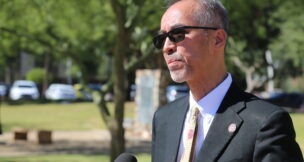
Junelle Cavero Harnal is a serving member of the Arizona House of Representatives’ 11th district.