Sign In


Upcoming Event
 Free Newsletter

Affordable housing advocates hold out for a Hail Mary
Jakob Thorington, Arizona Capitol Times//May 22, 2026//
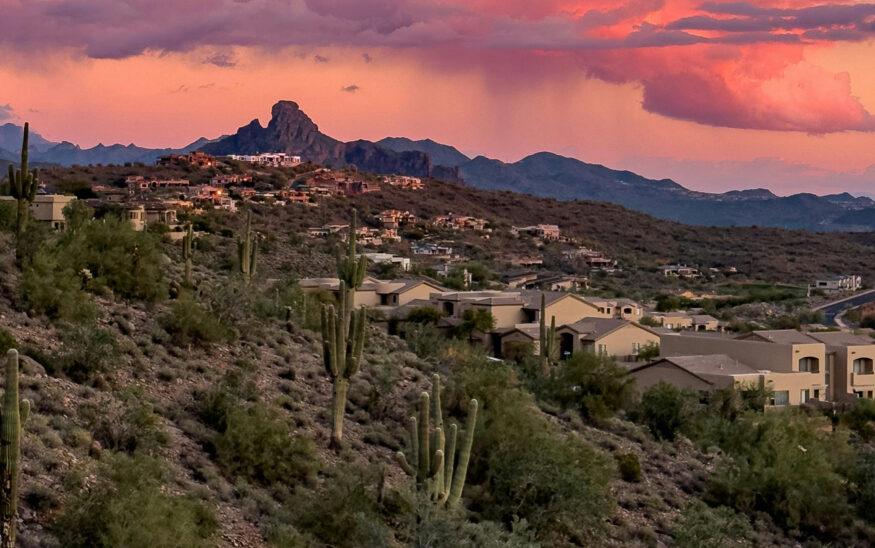
Vibrant sunset clouds overlooking the desert landscape of Fountain Hills, Arizona. (Brett Trumet / Pexels)
Affordable housing advocates hold out for a Hail Mary
Jakob Thorington, Arizona Capitol Times//May 22, 2026//


Key Points:
-
Rural housing tax credit would help local economies, backer says
-
Several bills considered as possible budget measures
-
Some advocates fear lawmakers need a break from housing issues
Arizona’s yearly legislative session is approaching its end and lawmakers still haven’t settled on a state budget — a fact housing advocates are hoping to take advantage of.
Those advocates still hold that House Bill 2804, a measure that would create a rural low income housing tax credit program for projects located in counties with a population of less than 800,000, can make it into the yet-solidified proposal. The measure proposes spending $120 million over 10 years on affordable housing projects in rural areas that mayors say will stimulate their economies, provide jobs and ensure more housing opportunities are available across the state.
On April 29, mayors from 31 rural cities wrote to lawmakers and Gov. Katie Hobbs urging for House Bill 2804 to be included with this year’s state budget.
“These credits will help close the gap in housing availability and affordability, which is essential for sustaining rural communities,” the mayors wrote in the letter.
And it’s not just mayors who are holding out for HB 2804. Nicole Newhouse, executive director of the Arizona Housing Coalition, said the at-risk tax credits are the most useful tool they have for starting housing projects in rural areas across the state.
“It’s really the difference maker, very particularly in rural Arizona, between a project getting the green light or not being able to pencil in at all,” Newhouse said.
Arizona lawmakers allowed the state’s $4 million low income housing tax credit program to expire at the end of 2025 — a first for the nation since the program’s 2021 inception.
More than 1,500 housing units were created generating $745 million in economic impact from construction activity, according to an economic impact study by Elliott D. Pollack & Company.
While HB 2804 doesn’t fully restore the state’s housing tax credit program, supporters say it’s vital to maintain housing construction in rural Arizona.
“It’s a program that essentially pays for itself in economic development,” said Arizona Multihousing Association President Courtney LeVinus.
While HB 2804, sponsored by Rep. Teresa Martinez, R-Casa Grande, passed the House with bipartisan support, it was not included in the vetoed Republican budget plan. It also did not get a hearing in the Senate after House Speaker Steve Montenegro, R-Goodyear, voted against the measure.
Still, increasing Arizona’s housing supply remains a top issue for many voters, according to a recent poll conducted by Conservatives for America in Congressional District 6.
Among Republicans, Democrats and independent voters surveyed, cost of living was the primary issue. An analysis from the group determined that messaging related to increasing housing supply, which is tied to the cost of living, is the most effective means to persuade undecided voters.
Gov. Katie Hobbs called on lawmakers to renew the state’s low income housing tax credit program, but it was left out of last year’s budget deal. Sen. Wendy Rogers, R-Flagstaff, also supports HB 2804, and called on her colleagues to get the bill passed in a recent opinion column published in the Arizona Daily Sun, saying it’s a “commonsense approach which tackles rural Arizona’s housing crisis.”
“(Lawmakers) have to do something to materially impact the people who have been Arizonans for a long time and make sure that we are incentivizing the builds for the people who live and work here,” Newhouse said. “I know that’s tough at a time of scarcity when they’re dealing with the budget, but my greatest hope is that when they sit down at the table, it’s more than political expediency.”
Lawmakers have been less vocal on housing policy than in previous years, with advocates growing increasingly frustrated at the lack of progress. A bill that would reduce building regulations for housing projects, the “Arizona Starter Homes Act,” has fallen short at the Capitol multiple years in a row before this session.
LeVinus said the Multihousing Association didn’t sponsor a bill to reduce housing regulations this session because it felt lawmakers were burnt out on the issue, adding she expects the topic to be picked back up next session.
“We felt like legislators had gotten a little bit of housing fatigue, and we felt like it was a good year to just take a little break,” LeVinus said.
Earlier this session, House Democrats unsuccessfully attempted to get a bill heard on the floor that would limit how many homes that corporations can own in Arizona, a policy supported by President Donald Trump and other Republicans. Rep. Nick Kupper, R-Buckeye, introduced a similar bill, House Bill 2325, but it wasn’t given a committee hearing this session.
Newhouse said she thinks the idea of limiting corporate home ownership could have been helpful when housing units were broadly cheaper in the state, but she doesn’t believe Arizona’s housing market is attractive for large corporations anymore with an average home value in the state of more than $420,000, according to Zillow.com.
“We just don’t have enough units, period, for people to get what they can afford,” Newhouse said.
Housing supply advocates are also hopeful for new budget appropriations for the Arizona Housing Trust Fund, which helps provide housing for low-income families. Republicans in their budget proposed cutting $14 million from the trust fund, with Senate Majority Leader John Kavanagh, R-Fountain Hills, saying during the Senate floor debate that the fund has received more than $200 million during Hobbs’ administration without a meaningful decrease in rent prices.
“Maybe we’d have lower rents if the governor wasn’t stopping home construction over large parts of the state,” Kavanagh said, referencing a 2023 moratorium enacted by Hobbs that was struck down in April by the Maricopa County Superior Court. The action by Hobbs halted new home construction in some parts of the Valley due to new assured water supply requirements from Hobbs’ Department of Water Resources. The Hobbs administration will be appealing the court’s ruling.
Aside from the proposed rural low income housing tax credit program, there are other housing proposals that could still be enacted into law this session. Senate Bill 1401 from Sen. Kevin Payne, R-Peoria, would expedite plan review and permitting timelines for workforce housing and is waiting for a House vote.
In addition, Rep. Jeff Weninger, R-Chandler, has sponsored House Bill 2999, which would allow housing developments to access tax-exempt bonds to finance infrastructure associated with the development as an attempt to lower housing costs. Since that bill was amended in the Senate, it is waiting for a final read in the House.