Sign In


 Free Newsletter

Barrett Marson: From schoolyard scoops to state spotlights
Kiera Riley, Arizona Capitol Times//June 7, 2026//
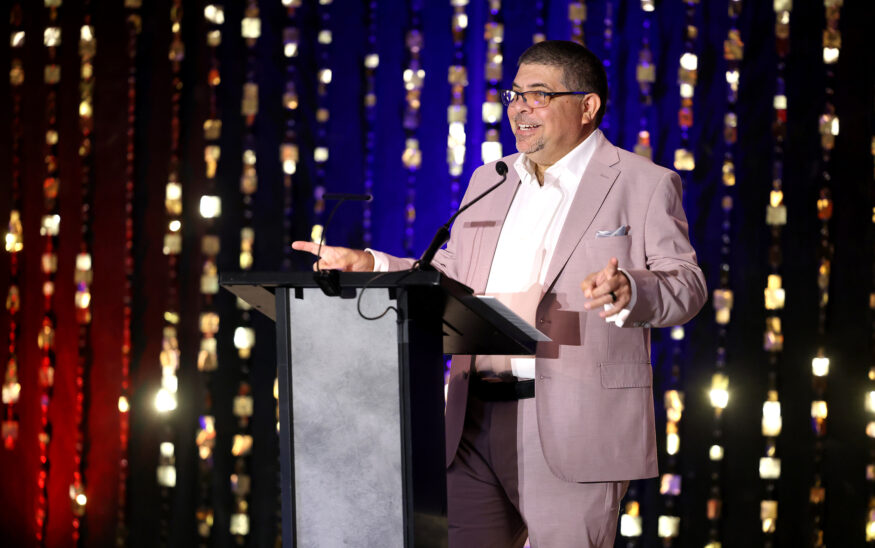
Barrett Marson emcees the Arizona Capitol Times’ Best of the Capitol award ceremony on June 3, 2026, at the Renaissance Phoenix Downtown Hotel in Phoenix. (Photo by Gage Skidmore)
Barrett Marson: From schoolyard scoops to state spotlights
Kiera Riley, Arizona Capitol Times//June 7, 2026//


Barrett Marson started with a passion for news. That passion would eventually lead him to embed himself in the ever-changing, yet somehow steady, network of Arizona politics.
Over 25 years and counting, Marson has represented clients ranging from Arizona House Republicans to the state Department of Corrections. And though he is reluctant to join the “old timers” club in state politics, Marson now reflects on his storied career turning news smarts into public relations power.
How did you get started in communications?
In sixth grade, I got hooked on the news. I was reading the paper every single day. I remember my mom, for my 12th birthday, wrapped a couple of my presents in USA Today.
I wanted to be a reporter. That’s the only thing I wanted to do.
In seventh and eighth grade, I worked on my student newspaper in junior high. I won a couple of awards. I went to junior college for a couple of years, worked on the campus newspaper and loved it, and then I was editor of the entertainment section, and I was able to write some high school football stories for the Anaheim Bulletin.
I got to see my name in the paper. It was a little bit about ego, I really enjoyed seeing “By Barrett Marson.”
Then I got a part-time reporting job, covering both La Palma and Cyprus, two small Orange County cities. It was great because it was covering the city council. I learned a lot of valuable lessons, like don’t sit in the front row of a city council. At the time, they were considering sending a referral to the ballot on horse race gambling. It was two in the morning, they were long council meetings. A lot of people were upset. My editor emailed me in the morning, “Hey I saw you sleeping at the council meeting last night, good job.” OK, from now on, sit in the back.
I got promoted to a full-time reporter. I didn’t stay there because I had applied for a job in McAllen, Texas. I covered the city of McAllen, then I went up to Illinois right outside St. Louis and spent three years there. It was a great news town, an amazing news town. I closed a community college. I covered the courts. I had night cops, courts, a couple of beats.
I applied at papers in Riverside and Orange County and here, and I got hired at the East Valley Tribune. I covered Mesa and Tempe and the Capitol. And then I went to the Daily Star.
How did you find your way into politics? What was it like to transition from journalist to spokesperson?
Jim Weiers hired me to be the spokesman for the House. I did that for four years.
As reporters, we would stand outside the caucus room waiting for Republican leaders to get out to decide what they were going to do about the budget, or whatever. Outside, you’re just thinking, like, oh man, this is the brain center of the Legislature doing the people’s work, smart people doing really incredible things.
Then you get inside. And there’s all these little petty disagreements, and really weird ideas, and things like that, and you’re like, hey, this is nothing like the way I imagined it.
What were some of the crazier moments you had to deal with?
There was almost a fistfight between Doug Quelland and one of the governor’s security detail.
Another fun thing I can always remember, and we still make fun of to this day. We’re in with leadership, and we’re talking about negotiating the budget with (Governor) Janet Napolitano. We know the media’s outside, and we have decided a course of action. And we’re like, well, the media’s out there, so you will not say anything. “We’re working with the governor, and that’s that.” So we go out there and it’s Bennett, Ken Bennett. He was the Senate president at the time. Weiers is like, yeah, we’re working, we’re working. And then Bennett starts in. “We’re ready to give $20 million here,” and $30 million there. I remember the chief of staff and I were just looking at each other. He gave away the whole battle pen. We ride at dawn.
It was like stuff like that, but there was this feeling of accomplishment.
What was it like working with reporters having been a reporter yourself?
I was jealous. Like this is a story I would want to be pitched. This is a story I would have loved to have gotten and to write.
After working at the House, what clients did you take on from there? How did you build your own brand?
I spent two years and eight months at the Department of Corrections. I went to four executions. I would like to say his last words, his last meal.
I handled the escape out of Kingman that led to murders. All kinds of crazy stuff that happened.
There was never good news, it was all crisis, every day. I did learn a lot about crisis communications and learned how to deal with that.
Then, in late summer of 2011 I’m like, you know what, I can’t deal with Chuck Ryan anymore. I’ve been to enough executions, and I think I want to create my own media firm. I started having meetings with people like Jim Norton. He gave me a lot of really good advice and stuff. I met with a couple different lobbyists. Then in December, I put in my two weeks. I started Marson Media in January 2012 and never looked back.
What’s your strategy? How do you think through communications now?
Each client is different, and each crisis is different. Let’s make it a one day story if we can. I think it’s always important to get as much out early and create your own narrative, so it’s not as bad.
There will be another scandal next week, and it’ll overshadow whatever has been written about my client. So let’s just get up. We don’t want to create four days of stories.
How do you assess who you’re going to represent?
It’s a low bar, yeah, but I have been blessed with a lot of good clients, a lot of long-term clients, even, and I’ve been very, very blessed. I’ll meet with anyone. I’ll do it, because people met with me, lobbyists met with me, and they imparted their knowledge, and so I feel like I should help pay them forward.
What lessons have you learned moving around Arizona’s political ecosystem?
When you work on House staff, governor staff, you are the funniest person, you’re the best looking person, you’re the most amazing person. The day after you leave, they don’t remember your name, they don’t think you’re that funny, they don’t, they don’t really want to talk to you anymore. It’s a lesson that every former staffer either knows going in or has to learn going out.
What other advice would you give someone headed down the same career path?
Phoenix is a small town. An enemy today is a friend tomorrow. Quite frankly, a friend today could be an enemy tomorrow.
I don’t mind blowing up a bridge when I work for a client. I think that’s what also makes me good. I go to bat for them.
Why do you love this work?
I love being quoted. I love my name in the paper. I love spouting. I believe in being pithy and witty. You do a TV interview, you have 14 seconds. You’ve got to come up with your best line to fill that 12 to 14 seconds. Why am I talking to you, or why are you talking to me?
I think about the viewer, the listener, the reader,what will make them laugh, what will make them feel more educated, what will make them more interested.
What keeps you passionate?
I have been around for 25 years. People like to think of Don Isaacson, Barry Aarons, Chuck Coughlin. Those guys have been around even longer than me. But I feel like I’m almost one of those old timers now.
I keep my ear to the ground on things. I gotta tell you, stirring the pot is what I live for.