Sign In
Upcoming Event
 Free Newsletter

Counties may soon see compensation for cleaning up abandoned properties
Jordan Gerard, Arizona Capitol Times//June 20, 2026//
(Pexels)
Counties may soon see compensation for cleaning up abandoned properties
Jordan Gerard, Arizona Capitol Times//June 20, 2026//


Key Points:
-
A new law will give Arizona counties the ability to recoup money from cleaning up abandoned properties
-
Gila County has spent about $250,000 from its own coffers in the past two years cleaning up properties
-
Counties could use those funds for more beneficial things
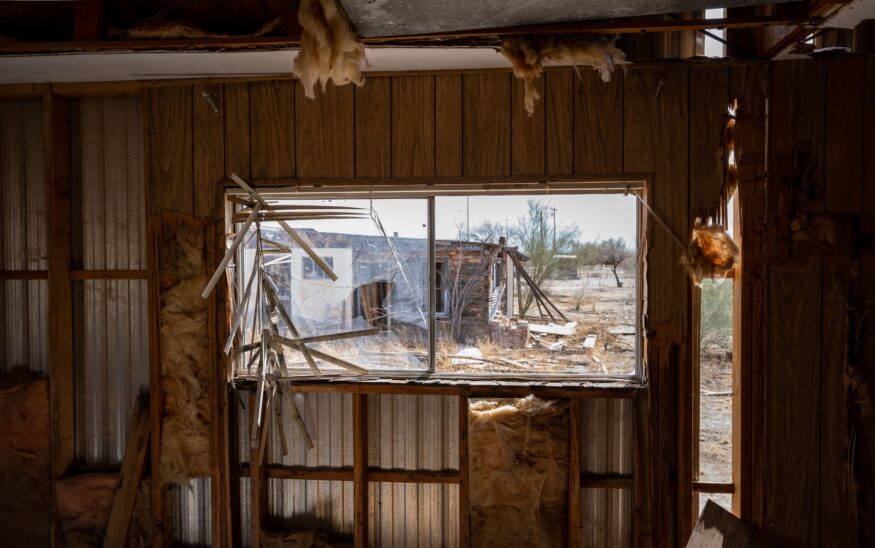
Arizona’s counties have picked up the tab on blighted property cleanup for years. Now under a new state law, they’ll have a chance to recoup and reallocate lost resources sunk into cleaning up abandoned properties.
It’s something Gila County Supervisor Tim Humphrey has wished for since he was elected a decade ago. Gila County has spent about $250,000 in the past two years and introduced a line item in its budget to address blighted properties, Humphrey said.
The funds to clean up properties come from taxpayers and the county’s budget. That means the process pulls vital resources from other potentially beneficial programs, he said.
That’s where Senate Bill 1067 steps in. Recently signed by Gov. Katie Hobbs, the law will allow counties to place liens on properties if the county has to take responsibility for cleaning them up as public health hazards. When the lien is paid, the money would go back to the county.
The law goes into effect 90 days after sine die but only lasts until Oct. 1, 2028. Humphrey said the end date got added as the bill was going through the legislative process and he would try to get it taken off in the next two years.
Sen. Wendy Rogers, R-Flagstaff, sponsored the bill, but she did not speak further on it.
A lien is a legal claim placed on an asset, like property, by a creditor to ensure repayment of debt. Counties are required by law to address public health hazards, but in the case of some abandoned properties, there may not be a responsible party to work with.
Gila County does have code enforcement officers and a hearing officer to address blighted properties and issue citations or work with property owners to clean them up, Humphrey said.
“If they’re having financial difficulties, a lot of times we will help them if they’re elderly or things of that nature to help them clean up their properties, like even deliver dumpsters and things,” he said.
The problem starts when a property ends up with no owner, often when someone dies and the property doesn’t go through probate, there’s no one to inherit it, or it ends up in a trust and no one takes responsibility to keep it up. Other times, properties can be held up in foreclosures and other liens for years, Humphrey added.
If that’s the case, there’s no one to write a citation to, he added. Blight and infrastructure were one of his biggest concerns when he was elected in 2016, he said.
The county currently has a “hit list” of properties that need to be cleaned up, but they only have so much money to work with, so once the funds are spent, there’s nowhere to get more money to address more properties, he said. Then those properties have to wait until the next budget is approved. If they wanted more money, they’d have to raise taxes — something that Humphrey would not want to do.
They are funds that could be used for other purposes, such as cleaning up after last year’s monsoons that saw floods tear through the county. While Gila County will receive about $5 million from the state budget and recently approved an $18 million bond to help clean up efforts as the monsoon season approaches, they have not received any federal aid.
“We do what we can afford,” he said. “Roads and stuff close to being washed out, things of that nature that if we don’t get on those creeks and do some repairs, then if we get a heavy monsoon, then it’s going to take roads and things out.”
It goes beyond aesthetic concerns, Gila County Public Health Director Josh Beck said. Some of the properties have conditions that create public health and safety risks such as dilapidated or fire-damaged homes, unsafe buildings, human waste, rodents, flies, maggots, open cesspools and tick infestations.
Beck said the county may not be reimbursed immediately after a cleanup and repayment is not guaranteed in every case, but the new law helps protect the county’s ability to recover those costs instead of having them disappear before there is ever a realistic opportunity for repayment.
“The purpose of SB 1067 is to make sure the cleanup cost remains attached to the property and is not simply wiped away through the tax-lien process,” he said. “That gives counties a better chance of recovering public funds when the property is eventually sold, transferred, redeemed, redeveloped or otherwise brought back into productive use.”
Beck said it gives them a better chance of recovering public money that has been spent to address serious health and safety hazards on private property. It will not solve every abandoned property case, but it improves the county’s ability to protect taxpayers and neighbors when the county has to step in, he said.
“They can improve neighboring property values, make neighborhoods safer for children and families, remove places that attract illegal activity or unauthorized occupancy, eliminate hazards such as cesspools and create clean land that can eventually be used for future development,” Beck said.
Jacob Emnett, legislative director for the County Supervisors Association, said without the new law, the person who buys the property would be able to later sell the property without the hazard and without reimbursing the county for the cleanup.
“SB 1067 provides a temporary window for these assessments to remain with the property past the sale of a tax lien or the foreclosure of the right to redeem, which is presently extended to assessments by municipal improvement, county improvement, and sanitary districts,” he said. “The aim is to facilitate the repayment in instances where the lien would otherwise be extinguished, such as when the property’s right to redeem is foreclosed and it is auctioned.”