Sign In


 Free Newsletter

As data centers grow, Arizona families pay the price
Jocelyn Anaya Galvan, Guest Commentary//June 26, 2026//

A construction worker labors from a scaffolding at a construction site in Mesa, Arizona. (Brock Blasdell / Arizona Capitol Times)
As data centers grow, Arizona families pay the price
Jocelyn Anaya Galvan, Guest Commentary//June 26, 2026//



My father called me from work, complaining of a pounding headache and a sharp pain in his right arm. As a construction worker, he was helping build a data center the size of 71 football fields in north Phoenix. For him, working all day outdoors is manageable in the winter, but my concern for him and for all the outdoor workers in my community grows once temperatures reach 100 degrees. Then 107. Soon, we know they will hit 115.
This summer, my father and his team of construction workers – mostly Latino men over the age of 50 – will risk their bodies building a project that may ultimately worsen the same heat, air quality, and utility-cost crises they already struggle to survive. Despite working on a multibillion-dollar project, my father does not receive health insurance through his employer. After his call, I had to scour the internet for low-cost Spanish-speaking doctors.
Latinos are at unique risk of heat-related illness and death. Last year, they made up 23% of heat-related deaths in Maricopa County. Heat risk is especially high for outdoor construction workers, where Latinos make up 52% of the construction industry workforce. Any Phoenix native understands heat as an inevitable part of our environment. But this feels different.
Summers last longer, nights stay hotter, and Arizona continues breaking its own heat records. 2024 was Arizona’s hottest year on record, followed by 2025 as the second-hottest. This March was also Phoenix’s warmest March ever. Families like mine are increasingly forced to choose between staying comfortable indoors or paying skyrocketing utility bills.
At the same time, energy-intensive data centers are rapidly expanding. While tech companies claim economic growth, communities across the Valley have been pushing back after experiencing associated environmental consequences. Residents in Ahwatukee, Surprise and Tucson have raised concerns over extreme water usage, air quality contamination and rising neighborhood temperatures tied to these developments.
A new ASU study found that waste heat from data centers can raise temperatures in adjacent Phoenix neighborhoods by four degrees. This adds to a crisis already hitting families’ wallets. My father’s electric bill reached $500 last summer in south Phoenix, where the urban heat island forces our family to keep air conditioning temperatures low just to stay comfortable.
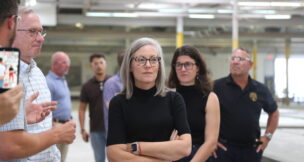
Prominent Arizona leaders are moving cautiously on data centers. Gov. Katie Hobbs has proposed ending a state tax incentive for data centers worth $38.5 million, a move backed by Phoenix Mayor Kate Gallego, who has participated in conversations highlighting the strain these projects have on energy systems. But caution alone is not enough. Leaders must recognize that climate change, extreme heat, and rising energy costs disproportionately affect communities of color and the workers building Arizona’s future.
GreenLatino’s Latino Climate Justice Framework offers a roadmap for climate solutions rooted in the lived experiences of frontline Latino communities. It calls for stronger worker protections, clean energy investments, and policies that address unequal climate burdens of higher utility bills and hotter neighborhoods. Policymakers at all levels should use this framework to guide efforts in crucial energy plans like the Arizona Energy Promise Plan.
Arizona cannot continue to welcome large development projects while ignoring the workers and neighborhoods who absorb the costs. We need enforceable heat protections for outdoor workers, stronger investments in renewable energy, and policies that prioritize public health over corporate profits. We need our senators to continue pushing for federal legislation like the Energy Bills Relief Act that helps lower energy costs for working families.
My father is back at the job site. He will be there this summer, building infrastructure for companies whose operations will raise the temperature of the neighborhood he drives home to. He is paying the price — in his body, in his electric bill, in a healthcare system he cannot access.
Our leaders should keep that image in mind the next time they weigh federal funding for the industry he is building.
Jocelyn Anaya Galvan is a south Phoenix native and outreach specialist for Menlo Spark, a California-based environmental nonprofit.