Sign In
Upcoming Event
 Free Newsletter

California, Southern states brace for strong El Niño system
Reid Wilson, Pluribus News//July 6, 2026//
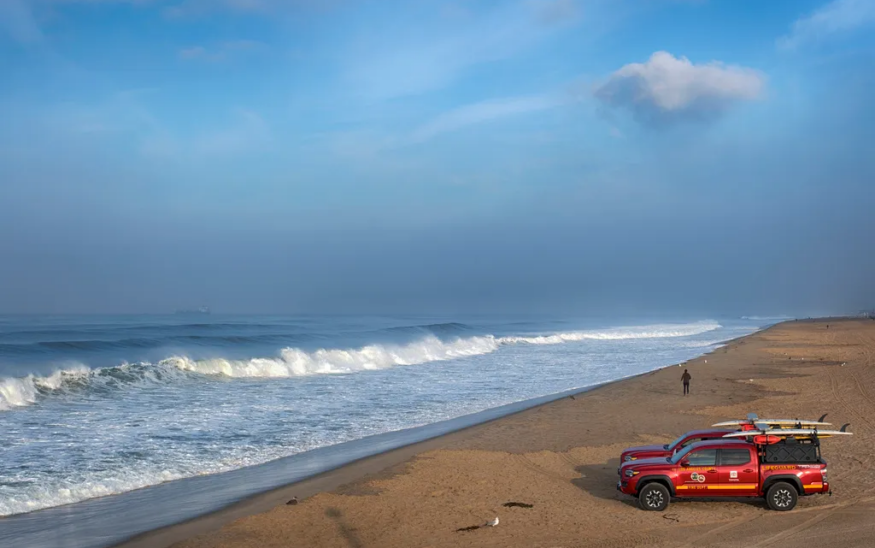
Manhattan beach lifeguards watch as a storm moves onshore at Manhattan Beach, Calif. on Thursday, Dec. 28, 2023. (AP Photo/Richard Vogel)
California, Southern states brace for strong El Niño system
Reid Wilson, Pluribus News//July 6, 2026//


Key Points:
-
Western states prepare for strong El Niño weather system
-
National Weather Service predicts 63% chance of “very strong” El Niño
-
El Niño systems could help alleviate drought conditions in the Western states like Arizona
Western states and the federal government are preparing supplies and emergency repair kits ahead of what is expected to be an unusually strong El Niño weather system this year that could bring torrential rains and strong winds.
The National Weather Service said last month that an El Niño system has developed in the tropical Pacific Ocean. Forecasters predicted a 63% chance that sea surface temperatures will exceed 2 degrees Celsius above average, a threshold past which the National Oceanic and Atmospheric Administration considers it a “very strong” system.
In a separate warning in early June, the World Meteorological Organization, a wing of the United Nations, forecast an 80% likelihood of an El Niño event between June and August, and a 90% likelihood until at least November.
“El Niño conditions will pour fuel on the fire of a warming world,” UN Secretary General Antonio Guterres warned. “Impacts will hit even harder, travel even farther, and cross borders with devastating speed.”
El Niño systems form when ocean temperatures in the eastern and central Pacific Ocean warm. Weaker than normal trade winds allow warmer water to remain close to the surface, rather than upwelling from the depths, accumulating along the coasts of North, Central and South America.
The phenomenon pushes the jet stream across the Pacific south, creating dryer and warmer conditions in the northern United States and Canada — but also creating wetter than usual conditions from California to the Dust Bowl to the Gulf Coast. Those wetter conditions can lead to flooding and stormy weather.
“Every El Niño is not the same; each one is unique with its own imprint on our weather,” Ken Graham, director of the National Weather Service, said in a statement. “Advanced monitoring and an improved understanding of El Niño patterns allow the NWS to better predict and better prepare the public and our core partners for what is to come.”
A spokesperson for the California Department of Water Resources said the state is already holding meetings with local and regional emergency response agencies.
The State-Federal Flood Operations Center, based in Sacramento, has pre-positioned 209 flood-fight material containers in 68 locations across the state, the spokesperson said. Those containers include more than 4.3 million sandbags and 55,000 “super sacks,” meant to combat flooding. The department has also stockpiled more than 400,000 tons of rock for emergency levee repairs.
“Past El Niño winters have demonstrated that California must be prepared for anything, including extreme storms and extreme drought,” the spokesperson said. “State agencies are monitoring long-term forecasts closely as the summer progresses.”
In a separate email, a spokesperson for the Federal Emergency Management Agency said it too had pre-positioned supplies for large-scale events, including the upcoming hurricane season, the ongoing World Cup and the nation’s 250th anniversary celebrations. FEMA has pre-positioned meals, water, generators and other response supplies at distribution centers in case demand exceeds state capacity to respond to disasters.
“We’re ensuring workforce stability and a strong, deployable force for upcoming national events and potential disasters, making the agency leaner, faster and laser-focused on supporting state, local, tribal and territorial partners before, during and after disasters,” the FEMA spokesperson said.
If there is a benefit to El Niño systems, it is that they tend to suppress storm and hurricane development that can threaten the other side of the United States, on the Atlantic seaboard. In May, NOAA predicted a below-normal hurricane season in the Atlantic Ocean.
The Weather Service says El Niño systems create stormier weather across the southern United States, along with the risk of high tide flooding on the West Coast.
Increased rain and snow — provided it doesn’t create flooding conditions — could also benefit Western states. The seven states along the Colorado River, which provides water and hydropower generation for some 40 million Americans, are currently fighting over a deal to divide water use rights as the river drops to near-record lows.
Data from the Central Arizona Project, which administers Colorado River water for its state, shows many reservoirs nearing dangerously low levels. The water level in Lake Powell, along the Arizona-Utah border, stands at just 24% capacity. The water level at Lake Mead, outside Las Vegas, is at 29% capacity.
One rainy, snowy winter is unlikely to satiate parts of the West that have endured an historic drought. The National Integrated Drought Information System said in a forecast in March that to relieve drought conditions, the El Niño system would have to meet or exceed levels like the exceptionally wet winter of 1957-1958, when historic floods caused fatalities and “devastating destruction.”