Sign In
Upcoming Event
 Free Newsletter

Parents as Paid Caregivers under review of Arizona auditors
Jakob Thorington, Arizona Capitol Times//August 14, 2026//
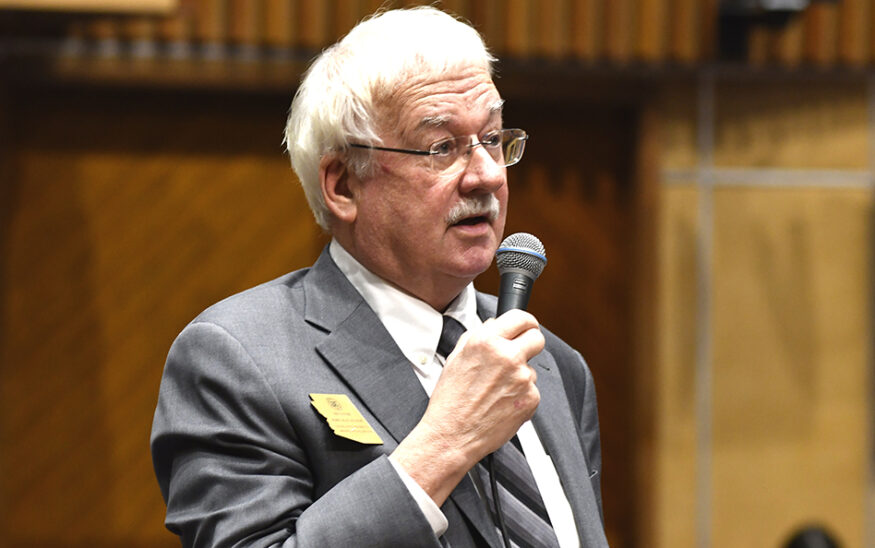
Sen. John Kavanagh (Capitol Media Services 2025 file photo by Howard Fischer)
Parents as Paid Caregivers under review of Arizona auditors
Jakob Thorington, Arizona Capitol Times//August 14, 2026//


Key Points:
-
State auditors say agencies running Arizona’s Parents as Paid Caregivers program have cost the state hundreds of millions
-
The program has experienced significant enrollment growth since its establishment during the COVID-19 pandemic
-
The Senate’s Republican majority leader says he wants to eliminate the program
Frustrated with the lack of progress following heavy scrutiny, Republican lawmakers are keeping pressure on a pandemic-era program that allows parents of children with disabilities to be paid for the care they provide.
A recent audit by the Arizona Auditor General’s Office, published on July 30, found that state agencies responsible for administering the Parents as Paid Caregivers program have not fully implemented cost-control measures. Those measures were the conditions lawmakers attached to the $83 million in funding they approved in the recent legislative session.
Enrollment in the PPCG program has grown considerably since the COVID-19 pandemic. Over about half a decade, from fiscal years 2019 to 2025, the number of enrolled members increased by 106%, from 8,756 to more than 18,000, according to data from the Arizona Department of Economic Security and the Arizona Health Care Cost Containment System.
Attendant care expenditures from the state over that same time period increased by more than $537 million.
Senate Majority Leader John Kavanagh, R-Fountain Hills, said in an interview with the Arizona Capitol Times that he supports reducing funding for the PPCG program or eliminating it entirely.
“[Arizona] should have parents do what they’re supposed to do because they’re parents, not because they’re employees,” Kavanagh said.
Federal COVID-19 funding for PPCG ended on April 1, 2025. That led the state to take on a larger share of the program’s administrative costs. Republican and Democratic lawmakers negotiated several reforms to the PPCG program during the 2025 session, when the program needed a $109 million funding bill to remain operational.
Continuing the PPCG program was one of 2025’s most contentious legislative issues, leading to a short-lived recall campaign against four House Republicans who PPCG parents accused of attempting to block funding. Campaign organizers withdrew the effort after lawmakers passed the funding bill.
House Bill 2945 enacted a 40-hour weekly cap for parents enrolled in PPCG and a new standardized assessment tool to determine the need for “extraordinary care” funding.
The state required AHCCCS and DES to implement the new assessment tool by Oct. 1, 2025, but auditors noted the new tool was halted within 16 days of its implementation through a formal rulemaking process for state agencies.
AHCCCS Interim Director Roberta Harrison wrote in a response letter to the audit that the new tool was stopped due to “imminent” litigation concerns. She cited potential legal conflicts between program service-hour limitations and federal Centers for Medicare & Medicaid Services requirements.
“If it is the position of AHCCCS that rulemaking was necessary, this could have been determined six months earlier than it was, and this delay has continued to cost the state hundreds of millions of dollars,” auditors wrote in their report.
Harrison disagreed that AHCCCS officials could have anticipated the legal issues in implementing the new tool before October, given the “extensive” procedural requirements mandated by administrative law.
“The initially projected cost savings based upon an October implementation date would likely not have been realized,” Harrison wrote in her response.
Gov. Katie Hobbs announced on Oct. 16, 2025, that she had directed the change to the standardized tool to allow exceptions for extraordinary care. The emergency rulemaking process that AHCCCS used was approved by Attorney General Kris Mayes, and Democratic leaders said the change would allow public comment to finalize the PPCG program changes.
Several Republicans initially proposed stricter requirements for PPCG than those enacted by HB2945, resulting in no Democratic support and outrage among PPCG members. Kavanagh told the Capitol Times he believes the auditor general’s report validates Republicans’ stance on the issue.
“These programs are just so tempting for abuse,” Kavanagh said. “I would certainly be firing somebody who disobeyed the law.”
House Assistant Minority Leader Nancy Gutierrez, D-Tucson, was one of the key negotiators in 2025 who got the bipartisan funding bill to Hobbs. She is concerned Republicans will attempt to end PPCG if they retain the legislative majority.
“It’s interesting that Republicans continue to go after a program that the state cannot provide itself, and yet the billion-dollar Empowerment School Account voucher program remains with no oversight and no audit,” Gutierrez said. “Republicans have a very skewed sense of who needs state funding and who doesn’t.”
During the 2026 session, Gutierrez asked the Joint Legislative Audit Committee to approve an audit of the ESA program, but Republicans declined.