Sign In




 Free Newsletter
7 govs have banned state employees from prediction market wagering
Emma Kinery, State Affairs//July 22, 2026//

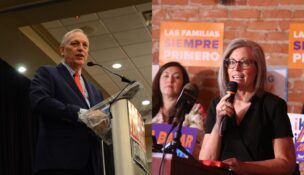
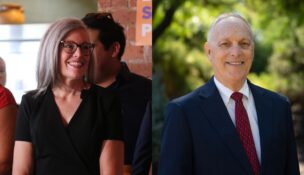
Credit: Office of the Governor of California / Gage Skidmore / Metropolitan Transportation Authority / MDGovpics / Office of the Governor of Wisconsin / NCDOT Communications / Gage Skidmore
7 govs have banned state employees from prediction market wagering
Emma Kinery, State Affairs//July 22, 2026//


Key points:
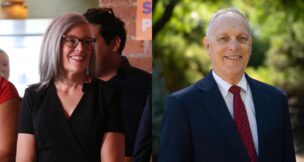
- Arizona Gov. Katie Hobbs is among seven governors to bad state employees from insider trading on prediction markets
- Trump administration employee on unpaid leave for alleged use of inside information
- Kalshi has taken action against those deemed to have been wagering with nonpublic info
At least seven governors have banned state employees from using insider information to place bets, as questions around ethics and insider trading continue to hound prediction market operators.
The governors of Arizona, California, Illinois, Maryland, New York, North Carolina and Wisconsin all signed executive orders to ensure no one uses information gleaned from performing their jobs to enrich themselves.
Arizona Gov. Katie Hobbs’s July 9 order further designates all nonpublic information as confidential.
“All Arizona State executive branch employees are strictly prohibited from disclosing or using any nonpublic information obtained due to their public service to personally profit from, avoid loss from, or assist another person or entity, in profiting or avoiding loss from participation in prediction markets,” Hobbs’s executive order reads.
The moves came before the Commodity Futures Trading Commission investigators reportedly began looking into Gabriel Perez, President Donald Trump teleprompter operator for the past decade, for allegedly using his knowledge of what the president would say to win more than $100,000 on bets on Kalshi.
White House Press Secretary Karoline Leavitt said Perez was placed on unpaid administrative leave. The White House issued a memo in March warning staff against “using nonpublic government information to place wagers.”
Suspicions over government insider trading were raised in January when a Polymarket user appeared to win more than $400,000 by betting that the United States would “invade Venezuela” by Jan. 31. The site refused to pay out the bet, ruling the special operation did not constitute an invasion.
Federal authorities in April arrested a special operations soldier involved in the capture of Venezuelan President Nicolas Maduro for being behind the account. Govs. Gavin Newsom of California, Kathy Hochul of New York, Wes Moore of Maryland, Tony Evers of Wisconsin and Hobbs all cited the incident in their executive orders as an example of why a ban was necessary.
That same month, Kalshi announced it had suspended three accounts belonging to congressional candidates that allegedly bet on their own races. They were all fined and banned from the platform for five years. The company previously fined and banned a long-shot candidate for California governor in February for allegedly wagering on his own race.
Arizona Supreme Court Chief Justice Ann Timmer on Tuesday confirmed in a press release that the policy outlined in Hobbs’s executive order is already in place for state judiciary employees.
Arizona has been in the legal throes with Kalshi, the largest CFTC-regulated prediction market in the United States, since the platform sued the state in March. The Arizona Gaming Commission had sent the company a cease-and-desist order a year prior, but the company preemptively sued after catching wind that the Arizona attorney general was planning to file criminal charges.
The state filed a 20-count criminal indictment against Kalshi on March 17 alleging it was “operating an illegal gambling business” by accepting sports wagers and betting on elections. It was the first time a state filed criminal charges against the platform for violating state gaming laws.
The CFTC later sued the state, arguing it held federal preemption over prediction markets; a federal judge in May sided with the CFTC on the issue of whether the state could bring charges and permanently blocked the state’s criminal case against Kalshi.
Newsom in March became the first governor to ban state employees from participating in insider trading on prediction markets. The order prohibited the use of non-public information for personal profit and expanded the existing statewide insider trading ban for California elected officials to also cover prediction markets.
“Public service should not be a get-rich-quick scheme,” Newsom said in a statement at the time. “At a time when Trump’s Washington is riddled with ethical failures and insider profiteering, California is drawing a bright line: If you serve the public as a political appointee, you serve the public — period. We’re not going to tolerate this kind of corruption in California.”
All but one of the states where an executive order was issued are involved in some form of prediction market litigation. In the one that isn’t, North Carolina, lawmakers passed a provision in the state budget (Senate Bill 257) to formally authorize prediction markets in the state — becoming the first state to do so.
Emma Kinery is a State Affairs national reporter covering state politics and policy out of our Washington, D.C. office. Contact Emma Kineryat ekinery@stateaffairs.comor on X @EmmaKinery.