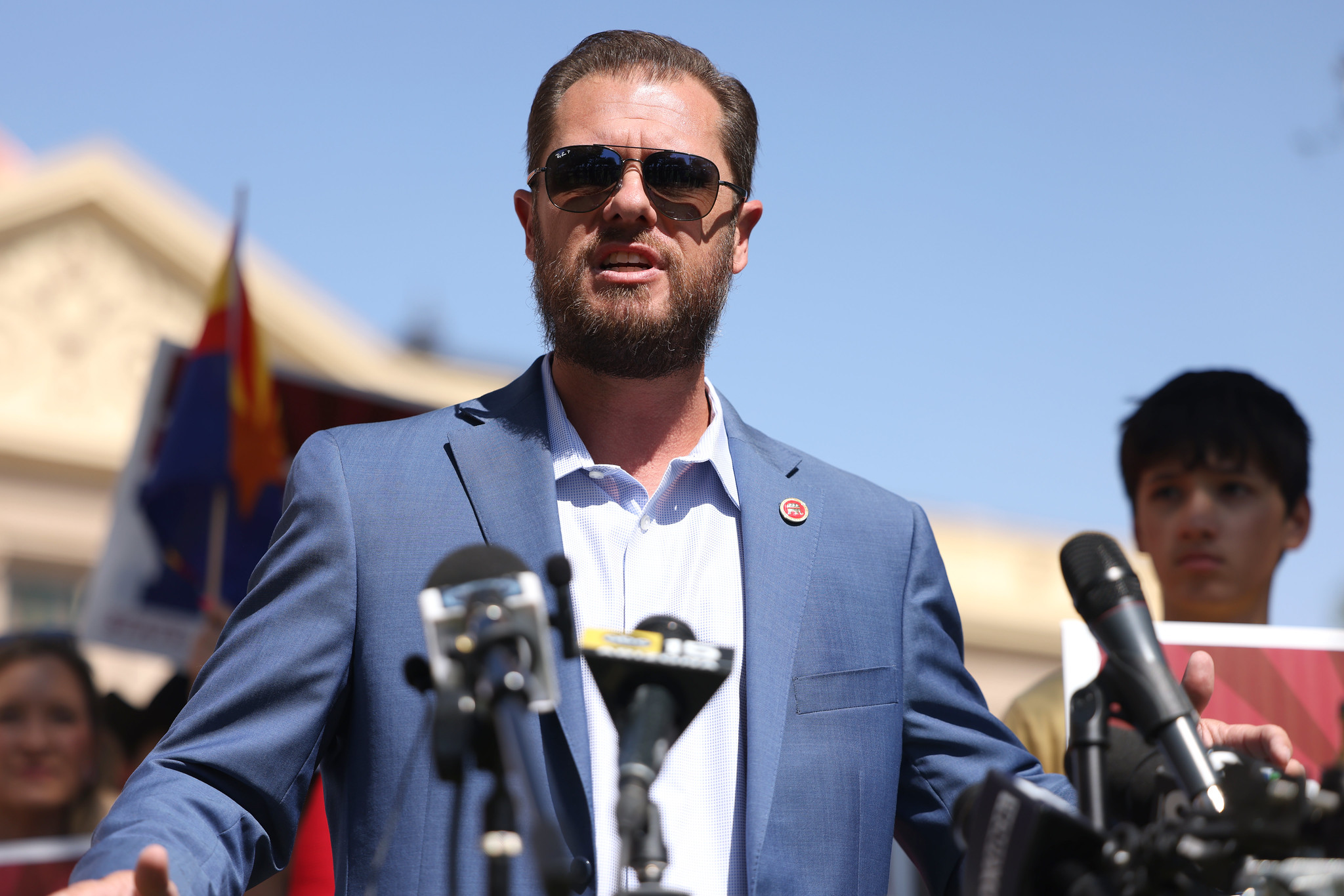
For nearly 25 years as a prosecutor, my job has been straightforward: stand up for victims, protect our community and enforce the law fairly.
But prosecutorial discretion is also paramount. To enforce the law fairly, it is essential to assess the needs and dangers posed by any given case and craft the prosecutorial response accordingly.
Serving Graham County in southeastern Arizona, I’ve witnessed that some people — unfortunately — commit acts that are truly evil and cannot be allowed to endanger our communities. I have prosecuted those who earned the life sentence they received, and I am grateful that I will never have to worry about those individuals hurting my kids, my neighbor’s kids or anyone else in the communities I serve.
However, in my role I have also seen numerous instances where good people do dumb things, and sometimes in our quest for justice, a measure of compassion is appropriate. Based on those limited but compelling situations, it is my belief that a robust diversion program is one of the most important tools to ensure that those who are deserving of compassion and a second chance are afforded that opportunity.
Diversion programs are often misunderstood, with some assuming they simply let offenders off easy. That couldn’t be further from the truth.
Diversion is not leniency. It is structured accountability, designed to hold offenders responsible while giving them a chance to correct their behavior before a criminal conviction permanently alters their lives.
In a diversion program, offenders must take ownership for what they did and meet clear objectives. Participants can be required to complete therapy or anger management classes, attend substance-abuse treatment, perform community service and pay restitution.
These requirements are not optional. Participants who fail to comply or commit new offenses are immediately removed from the program and prosecuted.
But if they do complete the program successfully, the charges are dismissed. The result is an opportunity to put their life back in order without a permanent criminal record — but only after facing fair consequences.
This approach works particularly well for first-time offenders and those who commit relatively minor offenses such as low-level drug possession or minor disturbances.
These people are not hardened criminals. They are folks who made a bad decision and are unlikely to do it again with the right guidance and strict conditions.
Without diversion as an option, the ripple effects of a criminal conviction can be devastating.
Studies show that criminal convictions increase the risk of re-offending because they make it harder to find work, qualify for housing, or support a family. Losing or being unable to find a job can trigger a downward spiral from unemployment to financial instability and sometimes deeper involvement with drugs or crime.
Diversion programs help to prevent that spiral while still requiring offenders to address the behavior that brought them into the system, so they stay out of it permanently.
Although diversion cases account for only about 3% of our workload in Graham County, it still makes a difference. Every person who successfully completes the program is someone who avoids becoming a repeat offender and returns as a productive member of society.
These programs also save an enormous amount of taxpayer money. Criminal prosecutions lead to costs for judges, court staff, defense attorneys, probation officers, jail beds and prison stays. Diversion cuts those costs dramatically. In addition, participants are responsible for fees that pay a portion of our staff costs and must cover their own counseling or treatment.
Diversion allows our already strained justice system to focus resources where they’re needed most: prosecuting the most dangerous criminals who truly threaten our community.
Even though diversion programs help us save money, small counties like Graham still need assistance to fund them. A few years ago, the Arizona Legislature provided grant funding that helped communities like ours to operate diversion programs. That support made a real impact.
Unfortunately, the Legislature did not renew that funding.
If Arizona is serious about reducing crime, protecting victims, and using taxpayer dollars wisely, lawmakers should get back to providing financial support for diversion programs, particularly for rural county attorney offices.
Diversion is not soft on crime. It’s smart on crime. Diversion allows us to seek justice for victims while enabling people to choose a better path forward.
As prosecutors, our goal should always be the same: fewer victims, safer communities, and a justice system that works for everyone. Diversion programs help us achieve that.
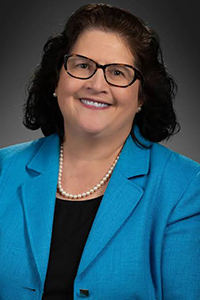
Graham County Attorney Scott Bennett was elected in 2020 and oversees 15 prosecutors and staff and averages 500+ felony prosecutions annually. He currently serves as chair of the Arizona Prosecuting Attorneys’ Advisory Council and is the State of Arizona’s delegate and board member to the National District Attorneys Association.
Mayes urges statewide reforms, clashes with ACC on oversight failures
Attorney General Kris Mayes is calling on the Arizona Corporation Commission and the Legislature to make utility disconnection policies permanent after announcing a settlement with Arizona Public Service following a customer’s heat-related death.
Mayes accused the commission of not doing enough to investigate Katherine Korman’s 2024 death and APS’ disconnection policies. Both the commission and APS took issue with the attorney general’s claims about the May 13, 2024, disconnection of service that allegedly contributed to Korman’s death.
The settlement announced by Mayes on April 15 ensures APS abides by both a temperature and seasonal shut-off system, improves customer notification and safety net programs and pays $800,000 to cover costs for customers facing service termination this year.
“Utilities have an obligation to, at a minimum, keep their customers alive,” Mayes said.
Under ACC rules, utility companies in Arizona cannot disconnect electric service during periods of extreme weather.
The ACC gives companies two options for complying with those rules. Companies can either impose a disconnection moratorium between June 1 through October 15 or they can forgo disconnections if the temperature is above 95 degrees or below 32 degrees.
At the time of Korman’s death, APS had opted for the disconnection moratorium option and had recently ended its voluntary participation in the temperature-based disconnection moratorium. Under the settlement agreement, APS will now implement both disconnection holds to ensure customers do not lose power when extreme temperatures occur outside of the typical summer months.
APS will also be charged with updating its notification process for informing customers of past-due bills or potential disconnections. In a statement, APS disputed Mayes’ characterization of its policies and denied any wrongdoing.
“While we have chosen to resolve this matter by adopting enhancements that benefit our customers, APS rejects the Attorney General’s assertions regarding our existing disconnection policies and customer communications, which already meet or exceed all applicable state laws and regulations,” the statement read.
Now, Mayes is urging the ACC to update its disconnection rules to subject the rest of the state’s public power utilities, like Tucson Electric Power and UNS Electric, to the higher disconnection standards APS has agreed to. She’s also urging the Legislature to codify those standards, since the current disconnection rules could be repealed by the commission at any time.
“This is a gap in oversight that should not exist, and it should not persist,” Mayes said. “The Commission has the authority to make temperature based disconnection protections permanent and universal across every utility in this state, the legislature has the authority to write them into law.”
In a statement, the commission’s Executive Director Doug Clark disagreed with Mayes’ claim that commissioners did not investigate the disconnection that led to Korman’s death.
“It is notable that nothing in the consent agreement contradicts the Commission’s own findings. We have investigated this matter and found no rule violation,” Clark said. “If APS wants to spend additional shareholder funds, it is free to do so. The consent agreement makes it clear that this payment is outside the regulatory framework and will not be passed on to ratepayers.”
Additionally, the all-Republican members of the commission seemed uninterested in revisiting the disconnection rules when Korman’s death made headlines last year. Commission Chair Nick Myers went so far as to get into an online spat with Korman’s sons, telling them they “failed to protect your own mother.”
“I refuse to tell utilities that they have to provide power to people that do not pay their bills,” Myers wrote in one post in April 2025. “To be honest, I’m not even happy about many of the programs that they have in place to help, but I understand the need for them.”
Still, Mayes sees a failure to act.
“Protecting Arizonans from having their power cut off in life-threatening heat is not a novel or complicated idea,” Mayes said. “It is a basic obligation of utility regulation, and yet here we are with my office having to step in through a consumer fraud investigation to secure protections that the Commission and the Legislature could have mandated years ago.”
On May 10, 2024, APS discontinued its policy to keep services on for customers when temperatures eclipsed 95 degrees.
On May 13, APS disconnected services to Korman’s residence due to nonpayment. Temperatures reached a high of 99 degrees. Six days later, with electricity still disconnected, Korman was found dead.
Mayes alleged APS’s decision to discontinue its 95-degree policy and its failure to inform Korman and customers like her of more economical utility rate plans violated the Arizona Consumer Fraud Act.
In a resulting settlement, APS admitted no wrongdoing or liability for Korman’s death.
But the utility agreed to a list of monetary and policy stipulations.
APS is now required to reinstate the voluntary 95-degree hold on power disconnections and agree not to disconnect services when temperatures fall below 32 degrees due to nonpayment. The company must also encourage other utilities to do the same.
And APS must expand upon its Safety Net Program, in which a friend or family member receives alerts for any bills due. The settlement directs APS to make sure its program functions as an emergency notification system to third parties on past-due notices, disconnection warnings and outage notifications.
As far as financials, APS pledged to funnel $1 million into the Arizona Consumer Assistance and Education Program, with at least $800,000 applied directly to bill credits for customers facing service shut-offs before September 1.
The company must pay $3.4 million to improve consumer outreach, with a requirement for customer notification by text messages.
And, finally, APS owes the Attorney General’s Office $2.75 million in shareholder funds to be put to the state’s Consumer Protection Consumer Fraud Revolving Fund and to cover up to $250,000 in attorneys’ fees.
The settlement announcement comes amid a period of tension between Mayes and the commissioners. The Attorney General’s Office is challenging several recent commission decisions, either in court or at the commission itself.
Mayes’ office is also participating as an intervenor in APS’s ongoing rate case, in which she argues the company’s request for a 14% rate increase for customers could be whittled down to a 3% increase.
Arizona hits triple-digit temperatures more than 100 days each year. That kind of intense heat puts a real strain on the electricity grid, especially during summer months when keeping the A/C on is a matter of public safety. But that’s not the only thing causing stress on the power grid these days. With the population in Arizona rising, and new large energy users (think manufacturing and data centers) coming online, there is more pressure on Arizona’s energy system than ever before.
Arizona energy regulators are concerned about what all these pressures could do to consumers, and warned last year that new large energy users, including data centers, must be managed in a way that doesn’t undermine power grid reliability or leave the average household paying for a particular business’s grid infrastructure. In short, the state is facing a supply and demand issue. Demand for energy is going up, but our energy supply isn’t keeping up. It can take many years to build new power generation and the electric transmission wires needed to move and deliver that power to where it’s needed. APS, for example, is advancing major transmission projects to support growth and reliability, but some aren’t expected to be in service until 2032.
The state Legislature can and should make it easier to build more energy supply. Unfortunately, instead of making it easier to deliver the power generation and energy infrastructure Arizona needs, the Legislature has spent much of this ongoing legislative session advancing a slate of bills that would do the opposite. HB 2975, for example, would require the Arizona State Land Department to stop using a tool that helps developers identify the best locations for solar projects to be responsibly built on state lands. And this is just an example of the kinds of unhelpful obstacles being proposed.
Thoughtful oversight is welcome, but unnecessary obstruction only serves to raise project costs, discourage investment, and make it harder to get the next round of energy infrastructure built on time, meaning utilities will need to rely on more expensive short-term solutions. When families and businesses are counting on reliable, affordable power, we can’t afford these kinds of political games.
But Arizona doesn’t have to choose between reliable, affordable energy and growing the state’s economy. We do have a better path forward. The Arizona Energy Promise Task Force just published a report, developed by stakeholders across the state, that offers a practical roadmap for meeting rising demand while keeping costs in check. The report emphasizes faster permitting, expanded transmission, improved planning for large energy users, and the integration of a wider range of energy resources. These steps will allow the state to meet growing demand, update the grid, and stay competitive in a rapidly evolving landscape, without politicizing energy policy.
Meeting the state’s energy needs will require faster timelines, better coordination, and clear protections for ratepayers. So far, our grid has held up, and we’ve been fortunate, but good fortune isn’t strategy, and Arizona shouldn’t use that as a cushion for bad policy. As demand grows, making it harder to build and connect new energy infrastructure only increases the risks of higher costs and reliability issues.
Arizona lawmakers have a choice. They can keep advancing bills that add delay, uncertainty, and cost at exactly the moment the state needs more power and more infrastructure, or they can take a more pragmatic approach: reject and stop advancing proposals that make projects harder to build and focus instead on solutions that improve reliability, expand transmission, and help energy get where it’s needed faster.
Michael Barrio is a Senior Principal at Advanced Energy United, where he leads the organization’s political advocacy work in Arizona
State leaders debate whether the governor or Legislature can lower gas prices
Gov. Katie Hobbs open to temporary suspension of state gas tax
One Republican says Arizona is “a victim of our geography”
The perennial quest to lower gas prices in Arizona is sparking debate at the Legislature and in the governor’s race as pain at the pump impacts consumers nationwide.
Gas prices in Arizona fluctuate at the whims of a dizzying array of factors. Everything from state and federal regulations governed by the Clean Air Act to reliance on out-of-state fuel suppliers and unforeseen supply shortages caused by severe weather or conflict in the Middle East can raise costs.
And while some Republican lawmakers have introduced bills this session aiming to clawback some of those regulations, one is arguing there’s nothing he or his colleagues at the Legislature can do to make fuel cheaper.
Just the same, the debate has spilled over into Arizona’s upcoming gubernatorial race, with Gov. Katie Hobbs and her potential Republican challenger Congressman Andy Biggs sparring over the state’s role in controlling gas prices.
“I, as I have been all year, am focused on lowering costs for Arizonans,” Hobbs told reporters on March 27. “They are continuing to be pinched by higher prices on everything, and now we’re seeing big increases in gas. I think we can’t take anything off the table.”
That includes reconsidering the state’s 18-cent-per-gallon gas tax, which generates revenue for the Highway User Revenue Fund that in turn bankrolls road improvement projects throughout Arizona. Hobbs noted that the HURF is already seeing declining revenues as electric vehicles become more popular, so a federal gas tax holiday may be more beneficial for the state.
There are currently several Republican proposals at the Legislature that would create an annual fuel tax holiday, or a temporary suspension of state taxes, between May 1 to Oct 1. Hobbs said she would prefer to address a gas tax holiday through budget negotiations, which are currently on hold, in order to mitigate impacts to the HURF.
Maricopa County and parts of Pinal County also tend to see higher gas prices in the summer months due to the Clean Air Act, which requires certain areas to use a cleaner-burning gasoline blend to reduce emissions. The state can request a waiver to use an alternative fuel in the event of shortages or supply chain issues, which Hobbs did on March 18 and has done twice before.
The EPA issued a nationwide fuel waiver on March 25 in response to rising fuel prices as a result of the war in Iran. The waiver will be in effect from May 1 to May 20, which won’t help Arizonans at the pump today, but will prevent prices from increasing further once summer hits.
While the waiver will provide temporary relief for Arizonans, Republican lawmakers have long been eager to eliminate the EPA’s cleaner-burning gasoline requirements to provide a more permanent solution.
An out of service gas pump in the Phoenix metropolitan area. (Kiera Riley / Arizona Capitol Times)
With a Trump administration EPA, Rep. Julie Willoughby and other Republican lawmakers are urging Hobbs and local county governments in Maricopa County to take steps to secure approval for less expensive fuel blends in the state. Willoughby met with officials from the Maricopa Association of Governments on March 30 to discuss a revised plan that would meet the EPA’s environmental standards while using less expensive blends of fuel.
“The modeling is favorable. The facts are lining up in Arizona’s favor. We should seize this opportunity and make the case for lasting gas affordability now,” Willoughby said in a statement.
Biggs has criticized the governor for not doing enough during her tenure to push for EPA approval of a less expensive fuel blend and for supporting a proposed increase in the state’s gas tax while serving in the state Senate.
But not every Republican is convinced state leaders have sway over gas prices. Rep. Justin Wilmeth, R-Phoenix, said most of the incremental actions the state can take would only lead to a minimal reduction in prices.
“There’s nothing out there that we as a Legislature, or Governor Hobbs, or (former Governor Doug) Ducey or governor anybody could do to bring down gas prices by less than $2, which is what everybody wants,” Wilmeth said. “We’re a victim of our geography.”
Biggs also told reporters on March 13 that if elected governor he would pursue opportunities to bring more fuel to the state, like building new pipelines, adding more fuel storage facilities or even constructing an oil refinery.
“One of our problems is, because we don’t have any resources inherent in Arizona for oil and gas, everything’s piped in,” Biggs said. “But when you go to a refinery … you’re actually able to bring in the crude (oil), refine it, and then you can store it to offset what is a natural scarcity.”
Wilmeth has been speaking about the need for nearby oil refineries for years. He traveled to the California state Senate in 2024 to urge lawmakers to consider how legislation designed to prevent gas price spikes by regulating refinery inventory supplies would affect neighboring states, including Arizona and Nevada.
While Wilmeth said he’d love to have another refinery in Arizona, the state doesn’t have the petroleum reserves like Texas or California does to warrant building one.
“Nobody in their right mind is going to invest billions in a refinery in Arizona to truck crude oil to Arizona to be refined,” Wilmeth said.
What could help bring down gas prices in the future is a planned Texas gas pipeline from energy companies Phillips 66 and Kinder Morgan, which aims to address California’s refinery capacity, but that project isn’t expected to be complete until 2029.
Democratic legislative leaders told the Arizona Capitol Times that higher gas prices are ultimately a direct result of the war with Iran and are unlikely to come down without a resolution to the conflict.
“These are ideas that might impact gas prices by a couple of cents here or there, but nowhere near the amount of gas prices that are squarely due to Trump taking us to war with Iran,” said Senate Minority Leader Priya Sundareshan, D-Tucson. “If Andy Biggs is trying to message around it, he is deflecting from his own responsibility and failing to hold Trump accountable for having taken us to war without Congress’s authorization.”
Federal appeals court says Republican leaders have no standing to sue
Lawsuit claims national monument designation will hurt state economically
GOP could ask President Trump to intervene
A federal appeals court has tossed out a bid by Republican state lawmakers to overturn the designation of nearly a million acres of federal land near the Grand Canyon that the Biden administration had dedicated as a national monument.
In a new ruling April 1, the three judge panel concluded GOP legislative leaders lack the legal standing to even bring a claim in federal court over creation in 2023 of the Baaj Nwaavjo I’tah Kukveni Ancestral Footprints of the Grand Canyon National Monument. Ditto, they said, of Republican state Treasurer Kimberly Yee.
That’s right, they said, it belongs to Democratic Attorney General Kris Mayes.
She – along with Gov. Katie Hobbs, also a Democrat – actually intervened in the case against the challengers and in support of then-President Joe Biden’s designation. That, said the court, leaves no one with the right to sue.
“Neither the legislature nor the treasurer points to any law designating them as agents to represent the state, so neither has standing to assert the state’s injury,” they wrote in the unsigned opinion.
And even if they had the right to sue, the judges wrote, their claims would fail, with any claims about damages to legislative interests being speculative at best.
This case stems from a 2024 lawsuit filed by the Republicans last year who called Biden’s actions an illegal “land grab.”
In their lawsuit, the challenges acknowledged that the 1906 federal Antiquities Act does allow a president to set aside parcels of federal land – which is solely what is involved here – for protection.
But they say such a proclamation has to be limited to historic landmarks, historic and prehistoric structures and other objects of historic or scientific interest. More to the point, they argue that such designations must be confined to the “smallest area compatible” with the care and management of the items to be protected.
And they contend the Baaj Nwaavjo I’tah Kukveni Ancestral Footprints of the Grand Canyon National Monument – the formal name for 1,462 square miles of the site which the White House says translates in part in the Havasupai language to “where indigenous peoples roam” and in Hopi to “our ancestral footprints” – meets neither requirement.
“Congress passed the Antiquities Act to protect just that: antiquities,” the lawsuit says. “It did not pass the law to allow the Biden administration to declare every inch of federal land a federal forest, cut off from all but those it selects.”
They also argued that there is damage to the state from everything from the inability to manage adjacent state trust lands to the loss of jobs and revenue because the monument designation would reduce the value of nearby state lands, depriving the state of tax revenues it could collect from companies that would develop those properties.
The appellate judges were unimpressed.
“Contrary to the legislature’s assertion, the proclamation does not strip the legislature of any of its powers,” they wrote. “The legislature may continue to manage and dispose of state land as it sees fit.”
The court also rejected parallel arguments made by Mohave County, Colorado City and the town of Fredonia.
The local governments did not dispute that no new uranium mining has been allowed in the area since at least 2012 when the secretary of interior withdrew pretty much the same federal lands from mining through 2032 – if not beyond – a decision that a different federal judge upheld.
But they argued that designating the monument takes future mining off the table, something they claim would result in lost revenues.
“Their alleged loss of future tax revenues depends on uranium prices being sufficiently high in 2032 (or whenever the 2012 withdrawal lapses) such that third-party companies would choose to begin mining,” the appellate judges wrote.
“But it is speculative whether the right economic conditions and incentives for uranium mining will exist so far into the future,” they said. And that, the judges said, makes the allegations only a “possible future injury” which does not provide standing for the communities to sue.
The court also rejected a separate argument by Colorado City that the monument’s designation threatens its water supply because some of its water comes from an aquifer under the monument, a claim the city said could lead federal officials to restrict its water supply in the future.
“The proclamation by its plain terms does not ‘alter the valid existing water rights of any party, including the United States,’ ” the court noted. “And there is no other reason to speculate that the federal government will reduce Colorado City’s water supply.”
“The House is currently reviewing the ruling,” said House GOP spokesman Andrew Wilder.
There is potentially another avenue for GOP lawmakers and others to pursue: seek intervention by President Trump.
The president, in his first term in office, announced he was cutting the size of the Grand Staircase-Escalante National Monument in Utah in half. And he also trimmed the Bears Ears National Monument by 85%.
Those cuts were restored when Biden took office in 2021.
The state of Utah and others challenged that move, saying the Biden administration exceeded its authority by creating a vast, multi-million-acre reserve rather than limiting it to the smallest compatible area. But that lawsuit was dismissed by a federal judge there, though the case remains on appeal.
Less clear – and yet to be fully litigated – is whether Trump or any other subsequent president has the power to modify or revoke the decision of a predecessor to designate a specific area as a national monument.
Growing up in South Vietnam during the 1970s, Rep. Quang Nguyen recognized the threat his country’s neighbor — North Vietnam — presented to his home.
Six days before the April 30, 1975, fall of Saigon, Nguyen’s father, who served in the South Vietnamese army, packed up Nguyen and his older brother and drove them to an airfield in a jeep gifted to their family by troops Nguyen’s father had served with.
Had he stayed in the country a week longer, Nguyen isn’t sure if he would have survived.
“I was born before the war and I left six days before the end of the war. I lived through that whole, entire war,” the Prescott Valley Republican said. “It builds character. If you survive, you just have to understand that, number one, God loves you. Number two: There’s some luck along the way.”
As chairman of the House Judiciary Committee, Nguyen holds a powerful position in the Arizona Legislature. His committee handles criminal justice, gun policy and constitutional issues. In his leadership role, he decides which bills get hearings and move forward, carrying more influence than rank-and-file legislators. He is also visible in gun rights advocacy and in legislation on law and order, border security and fentanyl, making him influential within the state’s Republican policy agenda.
Nguyen is running for reelection in Arizona’s first legislative district. If elected, the upcoming term would be the last he could serve in the House consecutively because of the state’s term limit law. He said he isn’t considering switching chambers to the Senate.
“Hopefully by the end of my eighth year, which is the end of 2028, I can walk away and say that’s all I could do,” Nguyen said. “I can’t do any more.”
A new life and passion
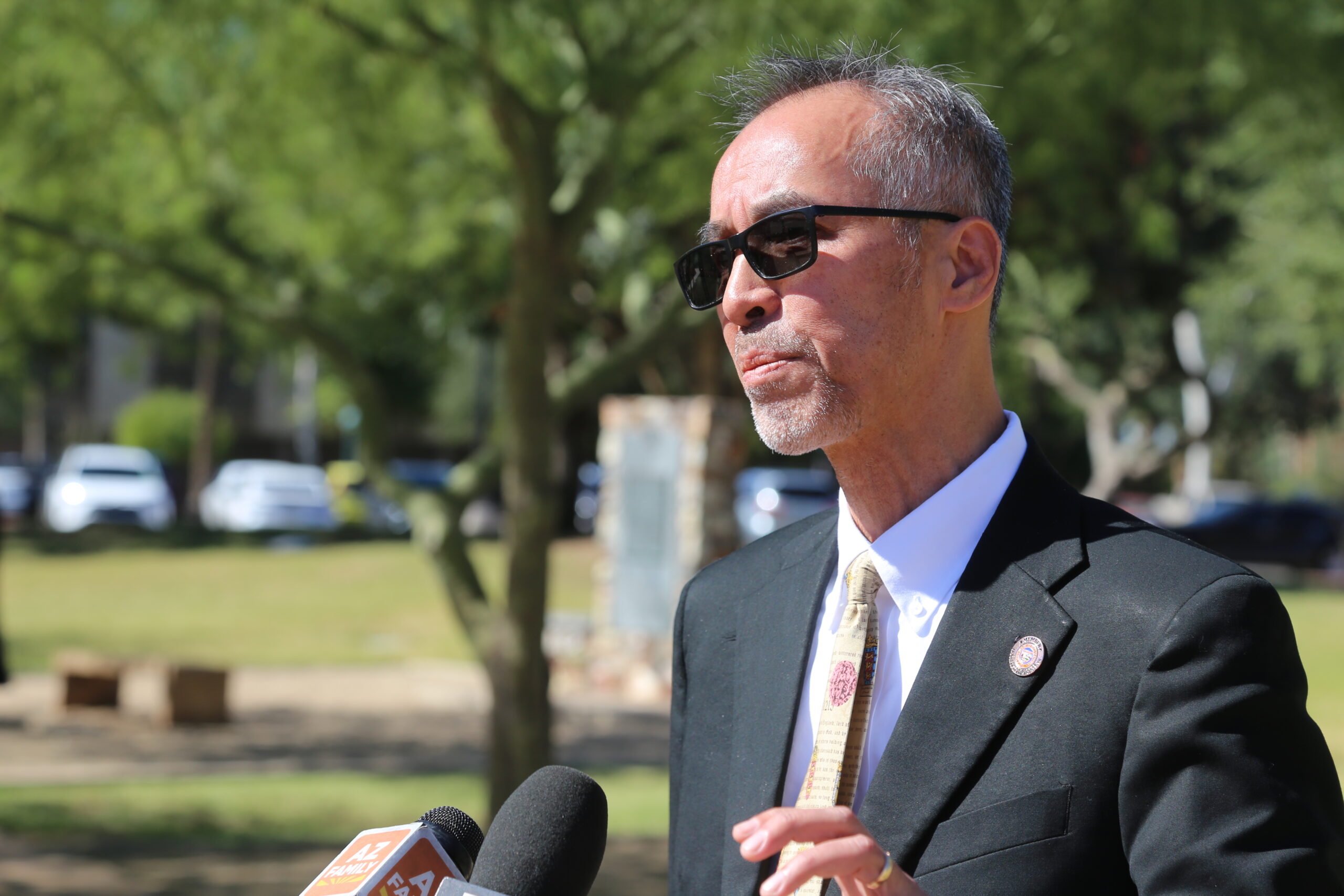
Rep. Quang Nguyen, R-Prescott Valley, takes questions from reporters during an October 2025 press conference. (Jakob Thorington / Arizona Capitol Times)
As a 12-year-old, Nguyen, now 63, had no idea what was about to happen to his home country or where he was going. It was a normal morning for him when he left for school, but that afternoon was anything but ordinarywhen he got to that airfield with his brother.
“From a distance, you could see a C-130 waiting with a lot of people lining up to go, and he [my father] said, ‘You’re getting on that C-130 and you may or may not ever see us again,’” Nguyen recalled. “He handed each of us a bag of clothes and that was it. I never got to say goodbye to my siblings at home, never got the chance to say goodbye to my mom. My mom kept a pretty straight face because when I walked to school that morning, there was no indication from either my mom or dad, especially my mom, that I wouldn’t see her again.”
Nguyen eventually reunited with his parents after they fled South Vietnam on a barge the day before the fall of Saigon. His parents experienced a similar journey to the United States. But in 1975, without modern communication devices, he and his brother were left not knowing what happened to those back home while U.S. officials worked — using written communications — to reconnect family members who had been split apart.
“By God’s grace, somehow we reconnected, but it wasn’t an amazing journey. It taught me that a lot of people died for my freedom. On both sides, the South Vietnamese people fought and died, and unfortunately, 58,000 Americans also died for that,” Nguyen said.
The aircraft Nguyen boarded eventually took him to Guam and then Travis Air Force Base in California. Nguyen, who couldn’t speak a word of English, found himself in a strange environment. He had never seen a school bus before and he remained quiet in the classroom because of the language barrier.
School would help him learn English and he became a U.S. citizen in 1983, two years before he graduated from high school and headed to California State University, Long Beach, to study electrical engineering. He later discovered a passion for art — something he proudly shows off on social media through his sketches and paintings.
Despite his love for art, he realized that Vincent van Gogh died a pauper and that he should pursue a more financially secure career. After college, he worked as a contractor at the American aerospace company Northrop Grumman, where he helped engineer military planes.
He credits his creative side with helping him work successfully with a Democratic governor. “As an artist, you think outside the box all the time,” Nguyen said of his attempts to persuade Gov. Katie Hobbs to sign his bills.
It wasn’t until Nguyen moved from California to Prescott in the late 2000s that he got involved with local politics. He attended GOP events where he bumped shoulders with key Republican officials, including former state Senate President Karen Fann and former House Speaker Andy Tobin.
In 2019, former Speaker Rusty Bowers and Fann encouraged Nguyen to run for office — a recommendation he regarded as a high honor.
In an email to the Arizona Capitol Times sent from Brussels, where Bowers is doing missionary work for the Church of Jesus Christ of Latter-day Saints, the former lawmaker said he and his wife, Donetta, feel blessed that he lost his 2010 congressional race to U.S. Rep. Paul Gosar because it allowed Bowers to win the “prize” of meeting Nguyen in the back room of a western clothing store in Prescott’s town square.
The Bowers and the Nguyens have formed a familial bond. “Our children also became their fast friends, and now my kids compete saying that Quang loves them best,” Bowers wrote.
From biker to lawmaker
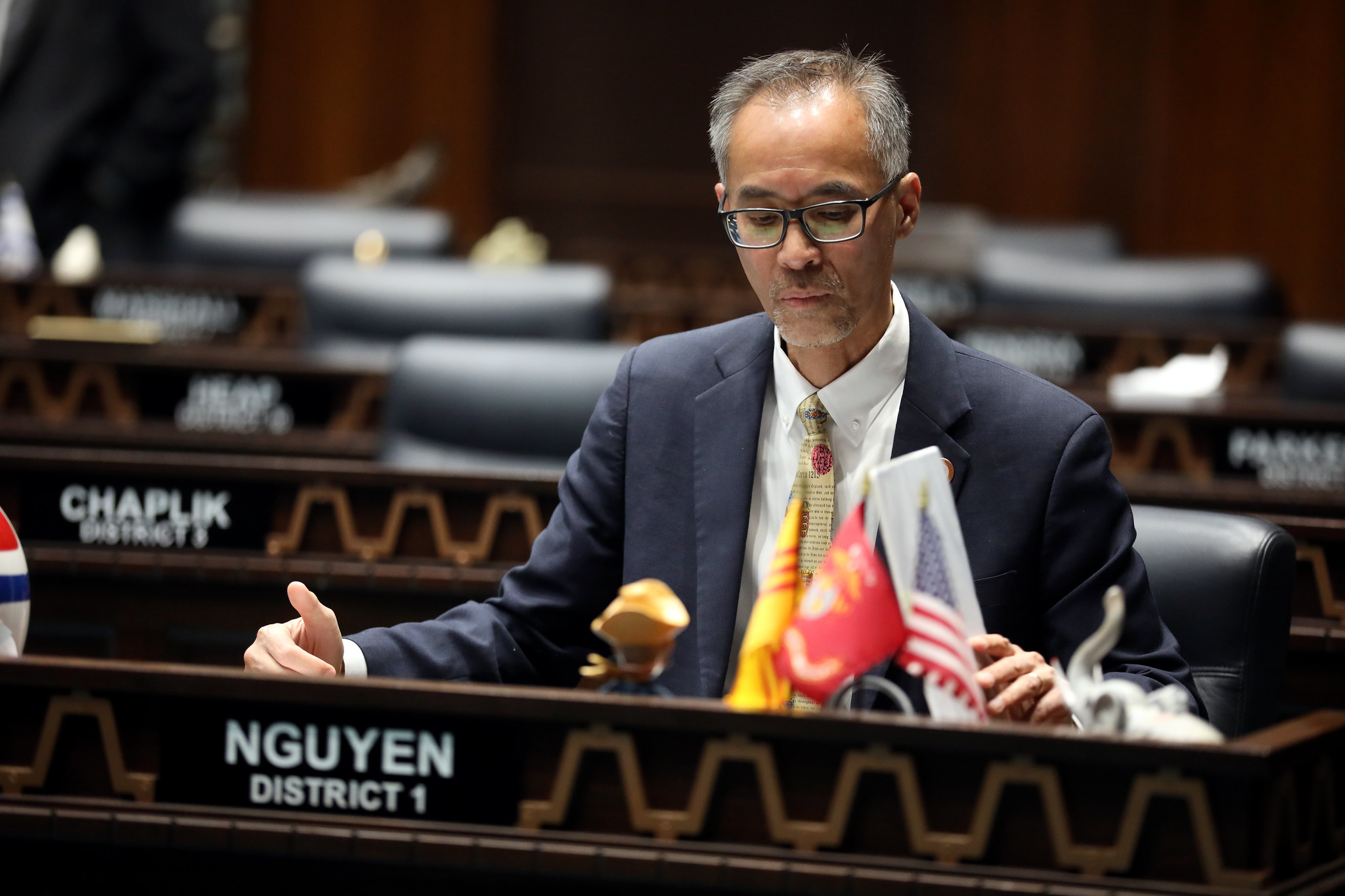
State Rep. Quang Nguyen speaking on the floor of the Arizona House of Representatives at the Arizona State Capitol building in Phoenix, Arizona. (Gage Skidmore / Flickr)
Nguyen met his wife, Mai, in 1987 after his girlfriend dumped him. The new couple did a lot of motorcycle riding together — a passion he’s carried throughout his adult life.
Nguyen often rides his 2001 Honda CBR929RR sportbike the 90 miles from his Prescott Valley home to the state Capitol. With all the miles he’s put on the bike, he relaxes by tinkering on it in his garage when he gets a break from his legislative duties. The father of two gave up riding after his children were born but his wife, a nurse for the Prescott Unified School District, agreed to let him ride again when the kids became adults.
Nguyen’s secret to a happy marriage? Laughter.
“I found out that in a relationship you should laugh a lot,” Nguyen said. “My wife laughs all the time and I try to make her laugh every day.”
A former Baptist, Nguyen says his wife introduced him to Catholicism, the faith he now practices.
Nguyen’s son is a graduate of the University of Portland and works as a representative for Cigna clients; his daughter serves in the U.S. Navy.
It was Fann, Bowers said, who thought of the idea to persuade Nguyen to run for office. They knew it could be a tough race for him — an immigrant in Yavapai County with no previous political experience — but they had faith.
Even as an established House member who has won reelection three times, Nguyen has faced racist attacks. In July 2025, a Prescott news website run by former Republican lawmaker David Stringer published an AI-generated image depicting Nguyen stealing and eating pets, titled “Going to the Dogs.”
Other cartoon-like images posted on Stringer’s website, Prescott eNews, intentionally misspelled Nguyen’s first name, suggested he couldn’t read English and accused him of lying about his citizenship. Stringer did not respond to a request for comment.
Overcoming the insults
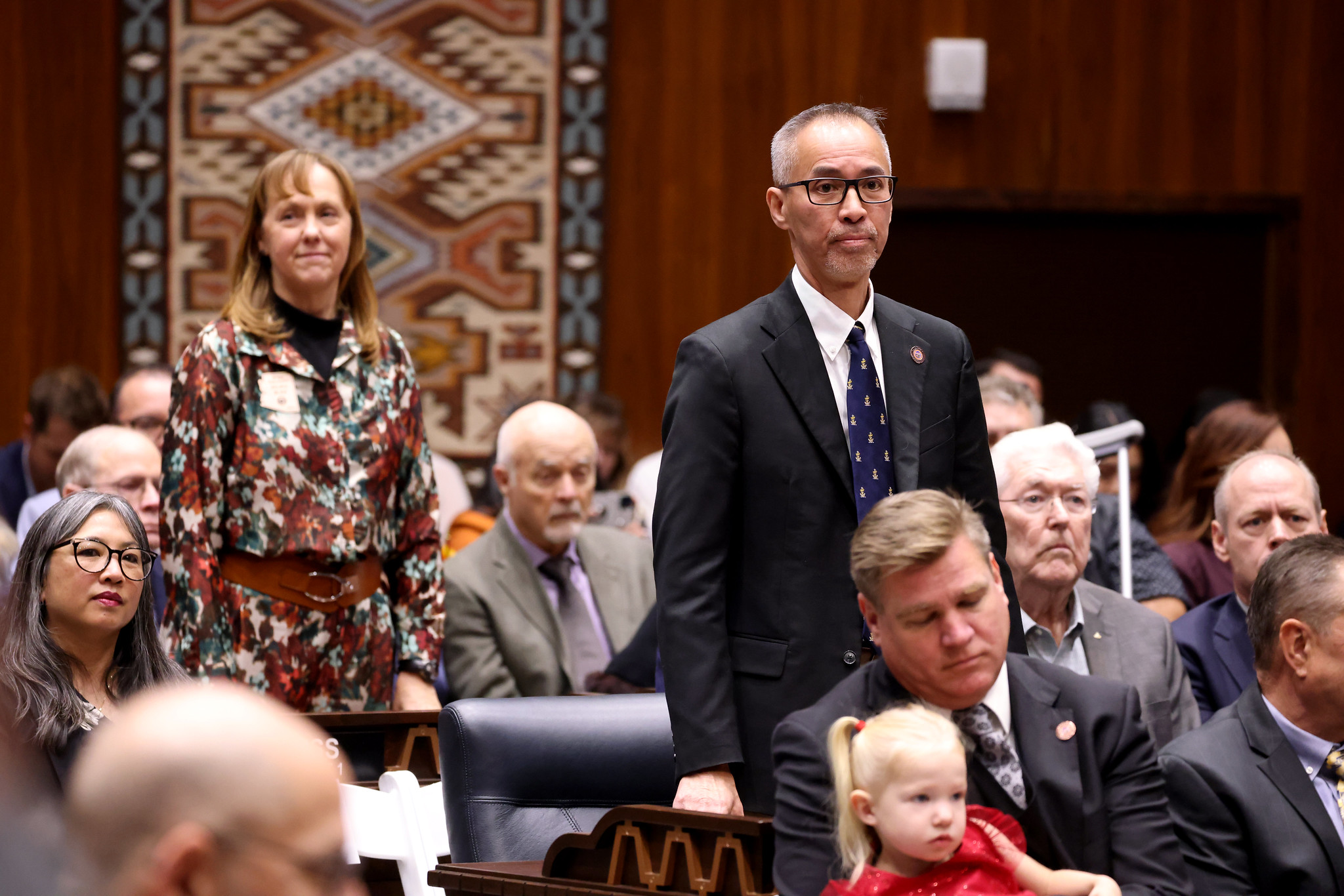
State Reps. Selina Bliss and Quang Nguyen speaking with attendees on the floor of the Arizona House of Representatives on opening day of the 57th legislature in Phoenix, Arizona. (Gage Skidmore / Flickr)
In 2022, Republican then-Gov. Doug Ducey signed a bill sponsored by Nguyen that requires high school students to learn about political ideologies that conflict with the United States’ founding principles of freedom and democracy — a measure that targeted communism.
“I’m not offended by it,” Nguyen said of accusations that he himself is a communist. The lawmaker, who has also been called a far-right extremist, among other things, said what’s offensive is that the insults could extend to his children.
“I am offended that you’re calling my daughter, a naval officer, born to a communist member,” he said. “Sometimes people don’t sit down and analyze before they yap.”
Nguyen said he’s faced criticism ranging from accusations of being a communist to claims he is a “far-right extremist,” as well as allegations that he is a member of the Oath Keepers — a group of former military and law enforcement members described as “anti-government” and “extremist” by the Southern Poverty Law Center.
Following the Jan. 6, 2021, Capitol attack, in which some Oath Keepers members participated, the FBI called the group a paramilitary organization. In a phone interview, Nguyen denied membership in the organization and said he once had “Oath Keepers: Back the Blue” stickers on the back of his pickup truck, but only to signal to police officers that he was their ally if they needed help.
Nguyen has also never served in the military or with law enforcement, so he said he can’t be a member of the organization.
“That being said, I’ve raised my hand multiple times to be sworn in as an oath keeper, in terms of defending the oath of office and defending the U.S. and Arizona constitutions. I don’t belong to the organization at all,” Nguyen said.
Bowers said he and Fann never doubted Nguyen could handle the hardships that sometimes come with being a lawmaker.
“We felt Quang had enough guts to take the beatings,” Bowers wrote in his email. “We knew it would be a great sacrifice for their family, but it was important to keep someone who was truly a thoughtful conservative in place, but also not a fake.”
Their belief in him paid off. In 2020, he won a 10-way primary race by a wide margin of about 7% of votes in his Legislative District 1, which covers Yavapai and Coconino counties. He’d go on to a comfortable general election win in his Republican-friendly district.
“Nobody knew my name. Nobody knew how to pronounce my name. There were a lot of unknowns about me as a candidate, but I would go speak and I would tell people exactly who I am,” said Nguyen (pronounced as “nu-win” or “win”). When he was first elected he tried to balance his job as the founder of the marketing and branding agency Caddis Advertising with his new, $24,000-a-year job as a lawmaker. But he quickly found the challenge too difficult.
“Eventually, I went from 15 clients down to three and then eventually down to one,” Nguyen said. “Then I had to give it up because the Legislature is so demanding.”
A quiet presence
Rep. Quang Nguyen, R-Prescott Valley, concentrates on his computer during a vote on the Arizona budget at the Arizona Capitol Thursday, June 24, 2021, in Phoenix. (AP Photo/Ross D. Franklin)
Much like in his school days, Nguyen thought it was important to maintain a quiet presence in the Legislature and learn through observation. Although he didn’t vote with Bowers on every single bill, Bowers said Nguyen outworked his colleagues and remained his own man, true to his values and district.
“He sat behind me on the floor and took lots of trash from the so-called Patriot Party. He is 10 times the patriot that any of those guys were, and he learned quickly that lips move fast, but truth takes it slow,” Bowers said in his email from Brussels. “He reads all the bills. He puts them through his filters and if they don’t make it, too bad. He says to your face what he thinks, not behind your back. … He has been in the streets to see people machine-gunned. He has been through the fire — literally. To me, that is an invaluable experience.”
During Nguyen’s second term in the House, Republican then-Speaker Ben Toma assigned him to chair the powerful House Judiciary Committee — a role he still holds.
Nguyen has successfully advanced several measures into law, including a ban on sex dolls resembling minors, a five-year mandatory sentence for fentanyl dealers handling at least 200 grams and expanded access to national criminal records for the Department of Public Safety. He has also emphasized his role in blocking numerous gun control proposals introduced by Democratic lawmakers.
The Legislature’s most important duty — and its only constitutionally required one — is to pass the state budget. Nguyen has had a significant influence on that, too. Throughout his tenure, he’s helped secure more than $70 million for law enforcement, veterans and public roads.
This session, he’s sponsoring a $20 million spending bill to support local law enforcement efforts at the U.S.-Mexico border. Arizona Sheriffs’ Association President David Clouse said the bill is a high priority for sheriffs, many of whom backed a similar bill last year that appropriated $17 million.
Clouse said the increased funding helped dismantle a covert money laundering operation at a barbecue joint in Yavapai County — Nguyen’s district. “We know all things come down to the budget and dollars, and there’s all these competing priorities, but your $20 million did this in one little county, or parts of that $20 million,” Clouse said he tells lawmakers.
One of the more controversial appropriations Nguyen secured came in 2023, when the state budget allocated $15 million for the organization behind the Prescott Frontier Days rodeo. The funding was later struck down in court as unconstitutional, with a judge finding it violated the state’s gift clause. But the money didn’t disappear for long — in 2025, Republicans revived the effort, this time routing the funds to the City of Prescott for rodeo grounds maintenance and repairs, a workaround designed to pass legal muster.
For Nguyen, finding ways to get past the hurdles comes from a life of observing before acting.
“I still am an introvert. That’s why you don’t see me standing up on the floor, yapping 17 times a day,” Nguyen said. “I came to the Legislature, same thing: Just shut up and listen — you’ll pick up something.”
ABOUT QUANG NGUYEN
Age: 63
Hometown: Prescott Valley, Arizona
Education: California State University, Long Beach (BA)
Career highlights: He sponsored House Bill 2607, a 2025 measure that imposes enhanced sentencing for fentanyl dealers and traffickers. Also, high schools in Arizona must include an “anti-communism” curriculum in social studies classes as a result of House Bill 2008, signed into law during the 2022 legislative session.
Known for: His gun rights advocacy, riding a motorcycle to the Capitol and creating artwork.
Influence factor: He serves as chairman of the House Judiciary Committee.
Lawmakers are considering a ballot referral to add 30 new House seats
If approved, the measure would take effect in 2043
Proposal aims to address legislators’ concern about district size and representation
A Republican lawmaker wants to ask voters this November if 30 more members should be added to the Arizona House of Representatives.
The House Government Committee on March 25 passed Senate Concurrent Resolution 1022 5-2, from Sen. J.D. Mesnard, R-Chandler.
SCR 1022 would increase the number of House seats by 30, increasing the total number of seats to 90 members and giving each of the state’s 30 legislative districts three House seats.
The measure passed 5-2, although it wouldn’t take effect until 2043 if it makes it to the ballot and voters pass it.
Arizona formerly had 80 House members and 28 Senate members, but a 1964 U.S. Supreme Court ruling that state legislative districts must have roughly an equal population made the state’s legislative district map unconstitutional. The state went to 60 House members for the following election and it’s been unchanged since.
The average state House size in the country is 110 members.
“Smaller constituencies are more manageable,” Mesnard said. “The smaller your constituency, the less money influence comes into play — even party influence comes into play.”
Arizona has one of the smallest House rosters in the country. Only Alaska, Delaware, Hawaii and Nevada have fewer state House members. In Arizona, each House member represents the second-most people in the country at about 250,000 each, while California state lawmakers represent more people in their districts.
As a legislator in the swing Chandler district of Legislative District 13, Mesnard said it’s more useful for him to raise money for digital advertising to reach more people than it is for him to knock on doors and let residents get to know him face-to-face.
Many rural districts in the state are also very large. Rep. Walt Blackman, R-Snowflake, pointed out that his Legislative District 7 is larger than several U.S. states in the eastern part of the country. LD7 covers Coconino, Gila, Navajo and Pinal counties and is about 35,000 square miles. It is the largest district in Arizona and the second-largest in the U.S.
Many legislators in large Arizona districts find themselves with long drives to get from one end of their district to the other. Rep. John Gillette, R-Kingman, said it takes him four hours to get to the northern part of Legislative District 30 of northwest Arizona from his home and three hours to get to the southern part of the district. LD30 covers La Paz County and parts of Mohave County, Yavapai County and Mohave County.
“I bought a new truck about five years ago. I have over 200,000 miles on that truck and I’m looking for a buyer,” Blackman said.
Rep. Aaron Marquez, D-Phoenix, said he prefers dividing each House district to keep the 60 members of the House, but decreasing the number of people each member represents. Under that approach, “single-shotting” strategies in competitive legislative districts would end, since members wouldn’t share districts.
“I think that’s also better for democracy,” Marquez said.
More members would require more desks on the House floor and more offices in the building. Mesnard, a former speaker of the House, said he believes the current building could fit 30 more members, although it would be a little “cozier.”
With an effective date in 2043, lawmakers would have nearly two decades to determine whether the buildings need renovations and how to accommodate 30 additional members. Lawmakers also receive a base salary of $24,000 annually, so it would cost the state $720,000 to pay 30 additional member salaries, not including travel expenses and per diem payments or anticipated increases in staff sizes.
The Government Committee also passed another Mesnard measure that would move the Legislature’s opening day from the second Monday of January to the fourth Monday of January. That measure, Senate Concurrent Resolution 1025, also passed 5-2.
Mesnard said he thinks a later start date would be better for staff after the holiday break. He also believes it would give lawmakers more time to file bills and actually spend time in initial committee meetings hearing bills.
Currently, most committees spend the first week of session either not meeting or listening to presentations from state agencies or other groups.
“There’s like not a whole lot that’s happening down here, if we’re going to be honest. Lots of presentations in committees that may or may not be interesting to just occupy time,” Mesnard said.
Rep. Stephanie Stahl Hamilton, D-Tucson, said she preferred the earlier start because it helps lawmakers outside of Maricopa County get more time to gather signatures and cosponsors on their bills before the bill filing deadline.
“It is hard to get here and to get signatures in the offseason,” Stahl Hamilton said.
Rep. Justin Wilmeth is sponsoring House Concurrent Resolution 2025, which would force the Legislature to end their yearly session by April 30. Lawmakers haven’t adjourned sine die in April since the 2015 legislative session.
Mesnard said his and Wilmeth’s measures should be consolidated into a single measure if they both have enough lawmaker support to get to the ballot. He was not aware of Wilmeth’s measure when he introduced his measure.
Marquez said he would be concerned about consolidating the measures. It would only give lawmakers 14 weeks to do the people’s business and pass a state budget, unless the governor calls a special session.
“We actually need more time, and maybe more breaks built around holidays,” Marquez said.
Mesnard said he thinks lawmakers could do their business if there was a deadline of April 30, with the session starting two weeks later. He said that even if the session were longer or had a firm end date, he still thinks lawmakers should start the session in late January.
We’re back again with cowboy hats, and Sen. Mark Finchem, R-Prescott, happily obliged our passion for fashion.
We’re still having a bit of fun during a tense legislative session, though we have noticed the spice level has decreased lately, and we’re OK with that.
Arizona is part of the American Southwest, and there’s no shortage of Western history and culture. It’s spilled over into the Legislature and seeing anyone donning a cowboy hat on any given day is not uncommon. Here are the stories under the hats.
PS: Sens. Shope and Gowan, throw your hat in our ring!
Tell me about your cowboy hat. What brand? Where did you buy it? Is it custom made?
Stetson. It was a gift. Not custom-made, but limited edition.
What did it cost?
I am told it was around $900, but a gentleman doesn’t ask the price of a gift.
What’s the story behind your hat? Why wear it?
I’ve worn such a hat most of my life. In the winter months, especially in the northern states, it keeps your head warm; in the summer months, it’s your portable shade. So, I suppose it is as much utility as it is fashion.
Do you have a hard and fast rule about when you wear your hat to the Senate?
While I will wear it when entering the Senate building and down the halls, I very seldom wear it on the floor, only on special occasions when I am asked to. It’s a matter of decorum and respect for the chamber.
Which of your fellow legislators should wear a hat (of the ones that do not currently wear a hat)?
I would not presume to tell a colleague to wear a hat if it is not fitting for them to do so. Some men and women look like they belong under a hat, others, not so much.
Have you ever lost your hat? What happened and how did you find it?
The only hat I have ever lost was at the Grand Canyon, a straw hat that blew off with a gust of wind. While I could see where it landed, I judged my life was worth more than a $30 straw hat, so I let it be.
How do you know when a cowboy hat is “earned”?
I don’t know that hats are “earned,” they’re not like prize buckles. They are a choice, just like a style, once one chooses to wear one. The hat is fitting of the man, or woman, as the case may be. The classic Stetson can say a lot about one’s personality. The gaucho style, for instance, probably would not look good on me, except for maybe a formal occasion.
Have you ever been called out for wearing your hat in the “wrong” place?
Nope. My Mom raised me with manners; take it off for prayer, the pledge and for supper.
Strike-everything amendments replace the original language of a bill
Striker amendments should be related to the bill topic, but not always, due to lawmakers running out of time to file bills
A committee member has to carry the strike-everything amendment
The legislation filing deadline is long gone, and if lawmakers want to squeeze something in, they’ll have to resort to a striker amendment.
A strike-everything amendment barges in and wipes out the original text of the bill and substitutes new language. But not all the time. Occasionally, the amendment makes technical and conforming changes that were not included in the original bill language.
Technically, strikers are supposed to be related to the bill’s topic, though that’s not always the case. Fun fact: In a few other states like Oklahoma, they’re called a “woolly-booger.”
Beyond introducing new legislation after the deadline, striker amendments can be used to bypass committees that didn’t hear a bill, or introduce copycat legislation if a bill stalls in a chamber.
In Arizona’s Legislature, lawmakers have to get a committee member to carry the striker. For the 2026 legislative session so far, 58 strikers have been adopted and 72 have been proposed, according to the Arizona legislative website, but that number changes throughout the session. Last year, more than 300 strike-everything amendments were proposed.
Here’s a short list of the most prominent strikers that have come through the Senate thus far. The link to a full list of strike-everything amendments can be found on the Legislature’s website.
Senate Bill 1570 would have allowed federal immigration authorities to be present at polling places during elections. Sen. Jake Hoffman, R-Queen Creek, filed the bill. Originally, it would have prohibited state agencies from using diversity, equity and inclusion programs for hiring, training or promotion purposes.
Sen. Wendy Rogers, R-Flagstaff, carried the striker in the Senate Judiciary and Elections Committee, which she chairs. The bill died in committee in February because it was not heard in that committee before the deadline for legislation to be heard in its chamber of origin.
The striker drew harsh criticism from opponents and attracted many people to the committee hearing who were expecting to speak on the bill. But seven hours later, Rogers said the bill wouldn’t be heard because Hoffman wasn’t there to present it.
Another striker, Senate Bill 1111, would outline when law enforcement agencies can use automated license plate readers. Sen. Kevin Payne, R-Peoria, sponsored the bill, saying it would outline how law enforcement agencies can use automated license plate readers and set requirements related to use, training and data management.
Payne’s floor amendment, which passed, further stipulated that the data is restricted to law enforcement agencies and is accessible only when a trackable criminal case or incident number is provided.
“Today, under license plate readers for the state and cities and counties throughout the state, there is no guidance. There is no guardrail. They can do whatever they want with this data, with these cameras,” Payne said during a Committee of the Whole hearing last week.
Opponents argued it would create a surveillance state, with Hoffman saying, “Our founders did not flee tyranny only to build a surveillance state of their own. They understood that a government that watches everything controls everything.”
Hoffman’s floor amendment would have limited the bill to allow only government vehicles on government property surrounded by a barrier to monitor for data. Significantly, it would have also prohibited the observation of vehicles on public roads.
Sen. Lauren Kuby, D-Tempe, voiced her concerns about the possibility that data or images would not be subject to a public records request. Payne cited the need for privacy in cases of domestic disputes, but said he wants to work on that aspect.The bill hasn’t received a third read yet.
One of the only strike-everything amendments filed by a Democrat and adopted is Senate Bill 1798. The bill would require high schools to develop and implement a Free Application for Federal Student Aid awareness strategy, which includes designating a school employee as the school’s point of contact for the financial aid, known as FAFSA.
The program would be established within the Arizona Department of Education, and that agency is directed to collaborate with the Arizona Board of Regents to administer it.
If passed, the bill would take effect for the 2027-2028 school year. The bill, sponsored by Sen. Kiana Sears, D-Mesa, passed the Senate Committee of the Whole, but has not gotten a third read in the Senate yet.
The bill aims to raise awareness about student resources and financial aid options. The reason? A huge disparity in the information school districts receive, Sears said.
“We have a ton of students slipping through the cracks and they don’t even know this exists,” Sears said. “So I think it’s so important that students know that they’re taught the possibilities are there if they fill out the FAFSA and then they are assured to get money after college to pursue their dreams.”
About 90% of students who fill out the Federal Application For Student Aid form go on to some type of post secondary education, according to theNational College Attainment Network. Sears said this is the first bill of its kind.
“I’m proud to champion it because I’m proud of public school and pro-public school, all schools,” she said. “We have agreement with traditional public schools and charters alike to get this done.”
While mostly agreeing with the bill, Sen. J.D. Mesnard, R-Chandler, said he would prefer to see the effort limited to district schools and not include charter schools. He voted no at the time, but said his vote might change, depending on any amendments.
“I totally respect that you want this to be across the board because you want all parents and students to have the information,” he said. “When it comes to charter schools … no one has to go to them, I’m willing to give them a little more leeway rather than sort of micromanaging how they tackle this issue.”
Funding for education and roads in Arizona is always under threat, and now Republicans in Congress have made revenue problems even worse for states like Arizona by passing the federal budget bill, HR1. Congress gave big unfair tax cuts to big corporations and individuals making millions per year while adding $4.5 trillion to the national debt. At the state level it is also wreaking havoc: a big loss of state revenue. Because Arizona’s state income tax starts with the federal adjusted gross income, this federal welfare for the wealthy flowed through to our state’s general fund, hurting our state’s bottom line.
Every year the AZ Legislature must make a choice to conform to Congressional tax changes or not, and we almost always do! But this year, it would cause the loss of hundreds of millions of dollars. The AZ Legislature is likely not to agree to add all those tax cuts for billionaires to our income tax code this year, just as past Legislatures have chosen to do on some of these exact same corporate tax cuts — due to their high cost and unfair treatment of non-corporate taxpayers.
In November, Gov. Katie Hobbs issued an executive order for the Arizona Department of Revenue to publish tax forms with the Arizona standard deduction to be increased to match the federal deduction. It will give a small tax cut to 90% of Arizona taxpayers who do not itemize their deductions. The forms are published, and tax filing season is underway.
Current law (ARS 43-107) protects taxpayers from penalties or interest who rely on and file the tax forms as written, even if the Legislature changes tax law due to this conformity issue. Do not fall for the Republican false narrative of tax filing chaos. This is just an excuse to justify their desire to enshrine the federal corporate tax cuts into state law.
If the state Legislature added all the tax carve-outs from HR1 into our state tax code, we would have to make $438 million in cuts to vital things like education and roads to balance the budget. Nonetheless, Republicans in the Legislature have tried not once, but twice to pass a tax-cut bill this year without planning how to pay for it.
After accounting for all of the spending needs the state is required to fund, Arizona has a deficit in the ballpark of $1 billion, on a total budget of $18 billion. We do not have spare change to provide more welfare for the wealthy. Arizona Democrats side with the taxpayers of Arizona, not corporate interests and their failed theory that more tax cuts will “trickle down” to everyone else.
This essay is not tax advice in any form. It is an explanation to dispel any worries that state Republicans may have caused while crying, “wolf!” when there is no wolf in the tax forms. Republicans in Congress caused the tax problems with giveaways to Wall Street, and Gov. Hobbs took action to help the working people of Main Street.
Mitzi Epstein is the Senate representative of Arizona’s 12th Legislative District.
Democrats struggle to get Republican committee chairs to hear their bills
As crossover week approaches, a handful of Democratic and bipartisan bills have passed committees
Of the bipartisan bills, many would benefit certain Arizonans, especially in health care
Throughout the session and up until the last minute, Democrats have begged Republican committee chairs to hear their bills, and finally, some pleas have been heard.
At least 14 Democratic bills have passed committee or are awaiting a hearing, but none would address the affordability crisis that Democrats have used as a rallying cry for much of their work.
Crossover week starts Feb. 23, and successful Senate bills and House bills will cross the great divide and be assigned to the opposite chamber’s committees. Although nothing ever truly dies at the Legislature, if the bills don’t make it through the next committees, they’ll be stopped and only a bill, never a law.
There are at least five bills in which the Democrat is the prime sponsor, with at least one Republican lawmaker signing on as a co-sponsor, and all but two of those bills passed. There are at least seven bills with Republicans as the prime sponsors, but a Democrat signed on as a co-sponsor and all but two passed committees.
Sen. Theresa Hatathlie, D-Tuba City, passed three bills out of committee so far, which is the most of any Senate Democrat, according to Senate research staff.
None of the Democrats’ bills heard focused on their unified message of “An Arizona We Can Afford,” a message they have pushed all session. Caucus members said their bills would address housing issues, education and myriad rising costs in health care, child care and utilities.
They’re going for quality over quantity, Senate Minority Leader Priya Sundareshan said.
“I’m certain that we have not held back,” she said. “We, continually, are finding new issues that crop up that we want to address with new bills, and then, of course, there is the backlog of Democratic bills that Republicans never hear.”
Meanwhile, Republicans have introduced their own bills they say would address affordability, though it’s likely some of those bills could meet Gov. Katie Hobbs’ veto pen.
Sen. John Kavanagh previously told the Arizona Capitol Times that the parties just have too different philosophical ideologies to find bipartisan support on affordability.
“Republicans want to grow the economy by cutting taxes so people have more money and businesses can grow. Democrats want to deal with the needs by increasing taxes so the government can run programs,” he said.
Republicans have also introduced a number of bills relating to culture wars and ones that wouldn’t seem to address affordability. A news release from Opportunity Arizona, a nonpartisan organization, said the bills would make Arizona unaffordable and unsafe, while legislation that could actually help is being dismissed.
Some of the bills mentioned are Senate Bill 1638, one of the tax conformity bills proposed by Sen. J.D. Mesnard, R-Chandler. Another is Senate Bill 1051, which would require hospitals to collect immigration status, filed by Sen. Wendy Rogers, R-Flagstaff. And a third, Senate Bill 1333, would propose to fix the state’s 8.84% error rate on the Supplemental Nutritional Assistance Program (SNAP) or penalize the Department of Economic Security if it’s not below 3% by 2030, filed by Kavanagh, R-Fountain Hills, but Democrats argued it would further strain the department.
“The legislation that Arizona MAGA extremists at the Legislature are prioritizing is doing the opposite of lowering costs,” Executive Director Ben Scheel of Opportunity Arizona said. “Their corporate welfare agenda is handing out billions to multinational corporations — all on the backs of working Arizonans’ tax dollars so the rich can hoard more wealth and ICE can terrorize mothers and children.”
So what do Democrats and bipartisan bills focus on?
Despite the affordability topic seemingly being pushed aside for now, the Democrats’ bills and the bipartisan bills are aimed at benefiting certain groups of Arizonans – if signed into law. Here’s a handful of examples.
Senate Bill 1295, filed by Sen. Brian Fernandez, D-Yuma, and co-sponsored by four Republicans, would allow eligible inmates who have a debilitating illness, including ones that are terminal, life-threatening, functional or cognitive impairment or inability to independently live daily life, to receive care at a contracted facility. Written confirmation from the Arizona Health Care Cost Containment System (Medicaid) would be required that the inmate qualifies for enrollment in the Arizona Long-Term Care System.
Senate Bill 1630, filed by Sen. Hildy Angius, R-Bullhead City, and co-sponsored by a mix of Republicans and Democrats, would establish a home and community-based service program for adults who are seriously mentally ill under the state’s Medicaid program.
Senate Bill 1803, filed by Sen. David Gowan, R-Sierra Vista, and co-sponsored by Sen. Kiana Sears, D-Mesa, would establish prohibitions, requirements and procedures for people who assist veterans with their benefits and limit any compensation received for providing assistance. Though this bill did receive pushback from the Arizona VFW and the American Legion Department of Arizona, Gowan said it’s a step in the right direction.
Another bill relating to health care is Senate Bill 1776, which would allow traditional healing services covered by Medicaid to be delivered through an urban Indian organization. Sen. Sally Ann Gonzales, D-Tucson, filed the bill, along with other Democratic co-sponsors.
Senate Bill 1740, filed by Sen. Theresa Hatathlie, would require each law enforcement agency to develop and conduct employee training on the Turquoise Alert System and the issuance of a Turquoise Alert. Along with four more Democratic senators signing on, Sen. TJ Shope also co-sponsored the bill.
Rising tensions have led to contentious legislative committee meetings
Lawmakers’ schedules, increased legislation make it harder for constituents to be heard
Many hope legislators will promote more respectful discourse in future state government
“Your House.”
“Your Senate.”
It’s an all too common sentiment invoked by lawmakers when welcoming constituents into the Legislature. Their Legislature.
But the welcome only extends so far.
Members of the public who muster up the courage to stand at the dais in the first place, take time off and get to the Capitol, fight to be one of the three, or two slotted speakers and patiently wait in the wings, sometimes late into the night, to be heard.
A speaker can field hostile, pointed questions and cater to the changing whims of committee chairs. They can have their testimony clipped, shared, spread online and endure the harassment that can follow.
The Legislature is not held to any internal rule or state law requiring public comment, but the practice of allowing constituents and lobbyists to weigh in on legislation has always been seen as a necessary part of a functioning government.
But past legislative sessions have shown a decline in the number of speakers allowed to state their piece, limits on how long someone can engage with lawmakers and growing instances of selective antagonism, all of which work to chill public testimony.
Public comment is not required by the state’s open meeting law. And if it were, it wouldn’t matter to the Legislature.
In the 2022 case, Puente v. Arizona State Legislature, the Arizona Supreme Court declined to wade into an alleged open meeting law dispute, finding it a non-justifiable question and leaving the Legislature to police itself.
That leaves sole discretion over public comment and committee operations with committee chairs, chosen by majority leadership.
Gregg Leslie, a First Amendment law professor at Arizona State University’s Sandra Day O’Connor College of Law, said state legislatures across the country have been battling issues with public testimony since the birth of the country about 250 years ago.
Leslie pointed out that lawmakers have often found alternative solutions, such as allowing majority and minority members to select who speaks or allowing members of the public to submit written comments, but he cautioned against giving a single committee chair discretion over how meetings are conducted.
“That’s been a never-ending question. What do you do when there are more speakers who want to speak than there is time to allow them,” Leslie said. “One person in control of it all is just not a good solution. You always need to try to accommodate as many interests as possible.”
In many committee hearings, chairs limit testimony to two to three minutes per person on each bill. Some committee chairs limit the number of speakers, usually asking those who have signed up to speak to choose three to speak for a bill and three to speak against it.
Jodi Brackett presents photos of what she says are chemtrails of chemicals being injected into the air in an effort to modify the climate during a 2025 House Committee on Regulatory Oversight. (Screen capture of recorded session)
Long-time lobbyists say the limitations on speakers are a relatively new development, attributable to an increased number of bills introduced by lawmakers, a lack of communication behind the scenes, and worsening political tensions.
This year, lawmakers introduced a record-breaking 2,116 bills, resolutions and memorials.
Barry Aarons, owner of the Aarons Company and a long-time Capitol lobbyist, said the limitations can serve a practical purpose particularly when committee agendas are filled with legislation that keeps lawmakers at the Capitol into the late evening.
“Some of the members justifiably try to reduce the numbers because they know everybody is going to get up and say the same thing,” Aarons said. “They have added so many bills for consideration and they have added the fact that they’re not willing to just put bills in a drawer.”
Aarons also said the Legislature’s schedule of hosting several afternoon committees after floor sessions contributes to the need for urgency from lawmakers. Afternoon committees usually start following a floor session, which can vary greatly in duration depending on how many bills are discussed on the floor.
A seven-hour House Education Committee hearing on Feb. 17 didn’t end until 10 p.m., and several lawmakers on that committee were back at the Capitol for 9 a.m. committees the next day.
Sandy Bahr, executive director of the Sierra Club’s Grand Canyon chapter, has decades of experience testifying on environmental issues at the Legislature. She said the increase in legislation makes it nearly impossible for lawmakers to hear all perspectives on a bill before voting.
“There’s no way the legislators can be informed on that many bills,” Bahr said.
She said lawmakers are no longer holding the kind of robust, closed-door stakeholder meetings seen in sessions past, meaning lobbyists have no choice but to raise issues with bills during committee hearings. That leaves less time and opportunity for members of the public, who are less likely to get such an audience with lawmakers to voice their opinions.
Occasionally, lawmakers on both sides of the aisle will use their authority to ask questions to allow speakers to finish their testimony if they have been cut off at the two- or three-minute mark.
But not all committee chairs take kindly to granting time extensions or to speakers expressing opinions they disagree with. For lobbyists paid to represent varying interests at the Capitol, it’s a familiar occupational hazard that some say has extended to average Arizonans looking to share their thoughts with elected officials.
Lobbyists, Capitol observers and even some lawmakers told the Arizona Capitol Times that the past few sessions have seen an increase in committee chairs badgering, cutting off and even removing members of the public.
The trend is not necessarily new, but lobbyists and public advocates have noticed tempers continuing to rise.
Cathy Sigmon, co-founder and co-director of Civic Engagement Beyond Voting, an organization dedicated to encouraging public participation in local and state government, trains people to navigate the request-to-speak system and testify before state legislators.
Sigmon said the group previously housed a program to walk those who wanted to testify through every step of the process.
But the organization cut the program short in 2023, when a high school student left a hearing room in tears after her time sparring with a lawmaker at the dais.
“We consulted among ourselves and just said we can’t, in all honesty, continue to ask people to go down to the Legislature and speak if they’re going to be treated so badly,” Sigmon said.
Sigmon said the group still coaches people on how to testify, with forays into how not to be “baited,” what to say if thrown a question a person can’t answer, and how to generally prepare for the full scope of what legislative testimony could entail.
Though she still encourages people to testify, Sigmon said, now, it always comes with a caveat.
“You need to have thick skin,” Sigmon said.
Ben Scheel, executive director of the progressive organization Opportunity Arizona, said he has observed several lawmakers shut down a member of the public speaking after a lawmaker has accused someone of impugning their motives, but he said that rule, which lawmakers cite, applies to themselves, not to members of the public.
“They will allow people they like to impugn the hell out of the governor,” Scheel said. “They’ll let that run rampant but then when another member of the public says something they don’t like, they erroneously pull out this rule about impugning.”
On Jan. 28, Albert Levenshon attempted to provide public comment against a ballot referral aimed at restricting bathroom access to transgender students and prohibiting teachers from using a student’s preferred pronouns without parental consent.
Levenshon told lawmakers on the Senate Government Committee that the bill they were considering and others like it are “nothing more than further actions by your party attempting to carry out a genocide of transgender and intersex queer people.”
Sen. Jake Hoffman, R-Queen Creek, speaking with the media at a press conference at the Arizona State Capitol in Phoenix, Arizona, in May 2025. (Gage Skidmore / Flickr)
Sen. Jake Hoffman, the committee’s chair, interrupted Levenshon’s testimony with several bangs of his gavel and when Levenshon protested, Hoffman and Sen. John Kavanagh had him removed from the committee.
Two Arizona State University students, Leah Silverman and Aaron Lige, who were shadowing Sen. Lauren Kuby, D-Tempe, were nearly removed from the same committee a few weeks later for laughing during a bizarre discussion over banned library books.
During a debate, Kuby and Hoffman got into a heated exchange. Eventually, Kuby declined to answer questions from Hoffman, saying she was “tired of the badgering.”
Hoffman responded, saying “this is exactly what the left does.”
Silverman, sitting in the audience during the exchange, started laughing. Hoffman immediately scolded them.
“You will be quiet or you will leave this room,” Hoffman said.
Silverman told the Arizona Capitol Times that they had been laughing throughout the hearing because Hoffman kept reading excerpts from books he deemed inappropriate for children, throwing out phrases like “strap-on dildo” and “lube.” Silverman said the committee hearing was their first experience at the Legislature, and the conversation struck them as unprofessional.
“They’re not even there to listen to their constituents, they’re just there to yell at them about dildos,” Silverman said.
After Silverman testified on the bills, Lige got up to tell the lawmakers how disappointed he was in the conversation. Hoffman attempted to interrupt Lige’s comments, saying “when we speak, you stop. That’s the way this works.”
Lawmakers often interrupt members of the public who attempt to give comments that are not “germane” to the bill being discussed, another rule imposed by the Legislature on lawmakers that does not necessarily extend to testifiers.
Silverman and Lige said the experience left them feeling discouraged about the efficacy of state government.
“I don’t feel like I am able to make much of a difference by going and testifying,” Lige said. “I think that I would recommend it to friends, but I would recommend it to them in the sense that I think it’s important for people to see how, in my opinion, useless it is.”
Later in that same committee hearing, Noah James Markham testified against the bill. His comments were later clipped and shared on social media by the Senate Republican Caucus’ official account with a meme mocking Markham.
Senate Democrats called on Republicans to delete the post, noting that Markham has autism and comes to the Capitol to advocate on behalf of individuals with disabilities.
“Noah should feel safe walking into a committee. He shouldn’t be targeted for his testimony,” Senate Democrats said in a post on X.
Accessibility at the Legislature has been a consistent issue for several members of the public and lobbyists, too.
Ruthee Goldkorn, a disability access consultant and advocate, was nearly removed from a Jan. 14 joint House Ways and Means Committee and Senate Finance Committee hearing when she was unable to reach the podium in her wheelchair and told lawmakers the only way she could speak was if other people got up and left the room.
Sen. J.D. Mesnard, R-Chandler, was co-chairing that committee and told Goldkorn that she could either thank a legislative staffer who held a microphone for her or leave, but Goldkorn took exception to the staffer holding the microphone toward her face.
In a Feb. 16 interview, Goldkorn said her accessibility complaints have often gone ignored, and that committee rooms often lack accessible seating, accessible podiums, and enough space for clear paths of travel.
She said she has been frustrated with the Legislature because she wants to speak about other topics, but feels she’s become a “one-trick pony” on accessibility issues.
“This place is an abomination. It totally violates our civil rights,” Goldkorn said.
Lawmakers have also attempted to limit photography and videography at committee hearings. Rep. Teresa Martinez, R-Casa Grande, has twice called out people sitting in the audience of committee hearings for taking photos and filming.
All committee hearings and floor sessions in the Legislature are filmed, livestreamed and posted online. But on Feb. 2, Martinez attempted to have a woman removed from the House Land, Agriculture and Rural Affairs Committee for filming, not realizing the woman was actually a communications staff member for the Democratic caucus.
Over a week later, Martinez called out reporter Joe Duhownik from Courthouse News for taking photos during a Feb. 12 House Natural Resources, Energy and Water Committee.
Rep. Gail Griffin, R-Hereford, chair of the committee, had Duhownik removed from the hearing after he continued taking photos and asked lawmakers to cite the rule prohibiting photography during committee hearings.
In both instances, Martinez maintained that it is against committee rules to film during hearings and that the Democratic staffer and Duhownik were disrupting the committee’s work. However, a review of committee rules shows no provision banning photography or filming in committee rooms.
A spokesperson for the House Republican Caucus did not respond to a Feb. 12 request for clarification regarding rules for journalists taking photos or filming during committee hearings.
Additionally, House Minority Leader Oscar De Los Santos said the Democratic caucus has not received a response from House Speaker Steve Montenegro regarding “the majority’s policy on cameras in public hearings.”
Arizona House Democratic Minority Leader Oscar De Los Santos speaks during a House session, Wednesday, April 23, 2025, at the state Capitol in Phoenix. (AP Photo/Samantha Chow)
“It is clear Republicans are berating Arizonans who provide comment during committee, kicking the press out of open committee hearings, and attacking House staff for simply doing their jobs,” De Los Santos said in a statement. “That’s not what ‘The People’s House’ is supposed to mean.”
Spokespeople for the Senate Republican and Democratic caucuses and the House Republican Caucus did not immediately respond to a request for comment on the instances outlined in this story.
While tensions at the Legislature are rising, some are optimistic that lawmakers can turn down the temperature and set an example for civil discourse and polite disagreement.
Jane Andersen, the Arizona state director for Mormon Women for Ethical Government, says her group is dedicated to promoting more respectful discourse in state government and is confident that goal is achievable.
“We want this next generation to understand what it looks like to be a citizen … that citizenship looks like being vulnerable and willing to step into that committee room and share your opinion, citizenship looks like an elected official meeting with someone who maybe didn’t vote for them,” Andersen said.
She encourages those interested in testifying at the Legislature to humanize all parties involved, respect the committee process, and show up as their full selves, not just as members of one political party or the other.
But Andersen also has a few pointers she hopes lawmakers will consider, such as modeling bipartisanship in public rather than behind closed doors, making committee hearings open and welcoming spaces, and expressing gratitude to members of the public who take the time to speak.
“What could be avoided is (the idea) that the purpose of the committee is to show the party that’s in the majority that they have domination over the committee experience,” Andersen said. “I have so respected chairmen and chairwomen who take the time to create a culture in their committee that they would like to hear from the public, not that they would only like to present things that they agree with.”
You don't have credit card details available. You will be redirected to update payment method page. Click OK to continue.

 Sign In
 Free Newsletter