Sign In


Upcoming Event
 Free Newsletter

Short-term rental regulation rejected for Sedona mobile home parks
Howard Fischer, Capitol Media Services//November 28, 2025//
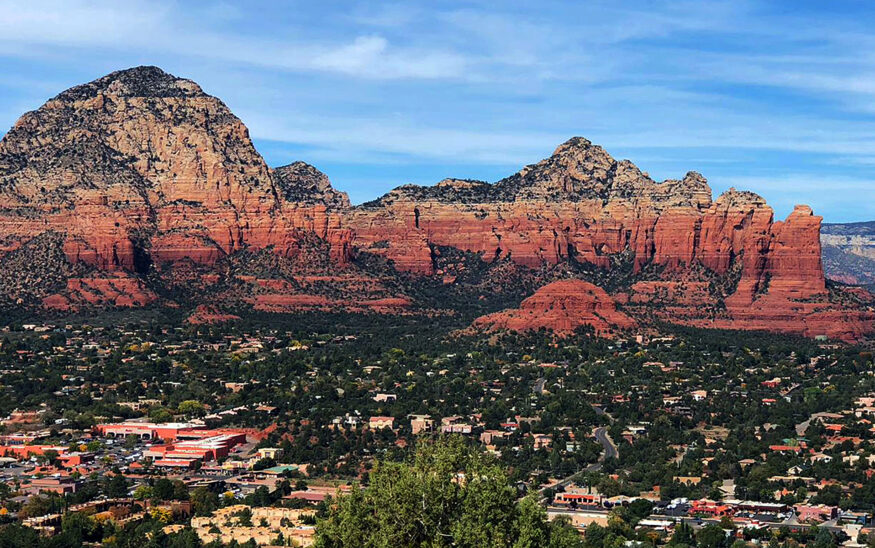
This 2018 photo shows the town of Sedona, Ariz., seen from the Airport Mesa Loop Trail. From left to right are Thunder Mountain, Sugar Loaf and Coffee Pot Rock. The sleepy Arizona town of Sedona has long been a refuge for hikers, romantics and soul searchers. There’s picturesque beauty in its earth-toned buildings and also in the glowing red rocks that surround town. And many visitors come looking for something besides this beauty: the so-called vortex where some say the earth’s energy crackles and creates sensations of healing and spiritual awakening. (AP Photo/Joseph Gedeon)
Short-term rental regulation rejected for Sedona mobile home parks
Howard Fischer, Capitol Media Services//November 28, 2025//


Key Points:
-
State lawmakers’ 2016 law bars cities from regulating vacation rentals
-
Court of Appeals rejects Sedona’s bid to regulate mobile home park rentals
-
State lawmakers’ original intent was to allow homeowners to earn extra cash
State lawmakers were serious when they barred cities from regulating vacation rentals, the Arizona Court of Appeals has concluded.
In a unanimous decision, the court rejected arguments by the city of Sedona that it was free to prohibit a 59-acre mobile home park from renting out its units for short-term rentals.
The judges said the clear language of the laws, dating back to 2016, leave that decision up to individual homeowners. And in this case, Oak Creek Mobilodge has the same rights.
The Nov. 26 ruling is the latest setback for communities who have fought the law, arguing that the explosion in the number of these short-term rentals has made it difficult for local residents to find affordable housing.
According to court records, Oak Creek Hospitality, a limited liability company, purchased the park with the intent of renting out the mobile homes for short-term rentals. But when it inquired about getting a license, the city responded that the use is not permitted.
Yavapai County Superior Court Judge Linda Wallace tossed out the lawsuit filed by the park owner. But appellate Judge Jennifer Perkins, writing for the three-judge panel, said that was wrong.
It starts, she said, with definitions of “vacation rentals” and “short-term rentals” to include “any individually or collectively owned single family or one-to-four house or dwelling unit.”
City officials argued that excludes mobile home parks which have different zoning. Perkins, however, said the key is whether the property is residential.
She cited laws which define “residential rental property” to include a mobile home in a space rental mobile home park if the mobile home is “owned … by the owner of the rental space.” And in this case, the appellate judge said, Oak Creek Hospitality says it owns most of the individual units in the park.
“Those mobile homes are part of the residential rental property, to which the statute appears to apply,” Perkins said, adding that there were also additional laws to back the claim.
One, for example, defines a residential dwelling unit as any building or structure used by people who maintain a household. And she said that law states it “also means a mobile home regardless of the ownership of the land.”
“The city may require a mobile home owner to apply for a permit or license,” Perkins said. But a license can be denied only for reasons stated in the law, a list that includes providing false information, failing to pay a fee, or if the owner is a sex offender or has been convicted of certain felonies, she said.
Not only did the appellate court rule that the trial judge was wrong, it also ordered her to issue a ruling that the city cannot prohibit the company from using its property for short-term rentals on the basis that it contains mobile homes in a mobile home park.
Wednesday’s ruling, however, may not be the last word.
“I expect there to be an appeal,” said Sedona Mayor Holli Ploog. She said her council interprets the law to allow the city to regulate short-term rentals in mobile home parks.
“Nothing in the legislative history of SB 1350 (the 2016 short-term rental law) indicted at the Legislature intended to allow the wholesale eviction of residents through conversion of mobile home parks into de facto hotels,” added Lauren Brown, the city’s communications director in a prepared statement. “Such conversions bypass local zoning processes and are disastrous for the availability of affordable long-term housing for Arizona’s most vulnerable residents.”
But Jonathan Riches, an attorney for the Goldwater Institute that represented the park owner, said the appellate court decision is legally sound. He said the judges correctly concluded that the laws on short-term rentals — and the preemption from local regulations — are built around the idea of protecting the private property rights of owners of dwelling units.
“A mobile home is clearly a dwelling unit,” he said, no more or less so than a traditional house. And Riches chastised city officials for claiming that somehow mobile homes are not covered by that preemption.
“Anybody who wants to say a mobile home is not a home is not on terribly solid legal footing,” he said.
“But oftentimes, municipalities just don’t care what the law says,” Riches continued. “And they’re going to do what they want to do, regardless of what the Legislature has said.”
And he said if cities are unhappy, they can ask that the laws be changed.
There have been efforts to do that, including proposals to limit the number of short-term rentals that can go in any one area and requirements for minimum distances between them. Sedona has been at the forefront of many of these, with city officials estimating that close to one in five residential units are now vacation rentals, making them unavailable for housing local residents.
So far, none of these restrictions have been approved.
Additionally, the original 2016 measure was sold to lawmakers as something else entirely: allowing individuals to rent out a spare room to make a bit of extra cash. In fact, that’s how Airbnb got its name, the idea being an air mattress set up for a guest.
“For thousands of hardworking citizens, opening up their homes to out-of-state guests provides the financial breathing room they need to provide for the family or enjoy an extra expense that they otherwise couldn’t afford,” said then-Gov. Doug Ducey in signing the bill.
The reality, however, turned out to be something quite different.
In some communities, homes and apartments in entire areas have been bought up by investors solely to create short-term rentals, drying up affordable housing and converting whole area into vacation rental zones — possibilities that Ducey dismissed in 2016 as “hypotheticals.”
Lawmakers eventually agreed to allow cities to issue some public safety regulations, like requiring owners to provide a contact for who could respond to complaints and prohibiting rentals from being used for special events like weddings.