Sign In




 Free Newsletter
Arizona must protect its healthcare workforce
Keith Frey, Guest Commentary//June 15, 2026//
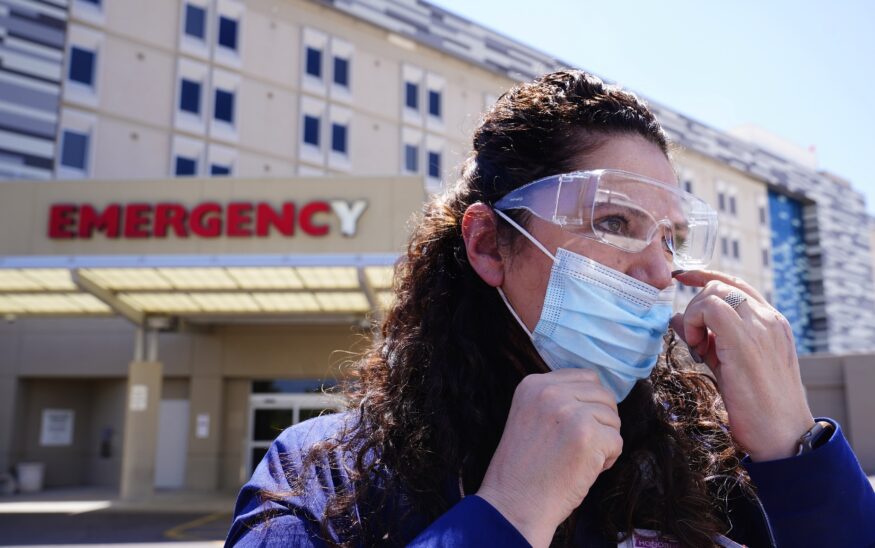
Caroline Maloney, an ICU nurse at Scottsdale Osborne Medical Center who treated COVID-19 patients throughout the entire pandemic, is shown Thursday, Aug. 26, 2021, in Scottsdale, Ariz. (AP Photo/Ross D. Franklin)
Arizona must protect its healthcare workforce
Keith Frey, Guest Commentary//June 15, 2026//


When I came to Arizona in 1999 as a leader to enhance Mayo Clinic’s family medicine program, the state’s healthcare system was already under pressure from rapid growth. Twenty-seven years later, the challenge has only intensified.
Growth has changed the state, and technology has changed the practice of medicine. Those forces will continue. The question now is whether Arizona’s healthcare workforce can keep pace.
After more than 40 years in medicine, academic leadership and healthcare administration, I believe the answer is increasingly uncertain unless Arizona makes sustained investments in its healthcare talent pipeline.
The physician shortage facing Arizona is real. Current projections suggest the state could be thousands of physicians short in the years ahead due to population growth, increasing demand for care and physician retirements. Just as importantly, many experienced healthcare professionals are leaving the workforce earlier than expected because of burnout and mounting workplace pressures.
The Health Resources and Services Administration estimates Arizona needs 558 more primary care physicians to meet its current need. Arizona will also need nearly 2,000 more primary care physicians by 2030. While Arizona is the 14th most populous state in the nation, the state is 42nd in the nation for provider-to-population ratio.
Physician well-being and workforce sustainability are issues I have studied closely for much of my career. The causes of burnout are varied, but physicians consistently point to increasing patient loads, staffing shortages, administrative burdens and the growing complexity of care delivery as major contributors. When experienced clinicians leave the profession prematurely, the strain on the rest of the system only intensifies.
These workforce shortages affect more than convenience. Delayed care often means patients present with more advanced diseases that could have been prevented or treated earlier. The challenge is especially acute in rural communities, where patients may face long travel distances or limited access to providers altogether.
Healthcare workforce challenges are not unique to Arizona, but our state’s rapid growth and large rural footprint make them especially fragile here.
That is why it is important for Arizona’s healthcare, academic and business leaders to remain focused on long-term workforce solutions. ASU Health and the new John Shufeldt School of Medicine and Medical Engineering represent an important example of the kind of statewide, collaborative approach Arizona will need in the years to come.
The first cohort of 36 students will begin their medical education at the Shufeldt School this August. Through a powerful blend of clinical education, engineering, artificial intelligence, interprofessional collaboration, humanities and systems thinking, graduates will be equipped to solve real-world problems and drive meaningful change in care.
The conversation is not simply about adding another medical school. Arizona’s healthcare challenges extend beyond physician production alone. The state must strengthen career pathways, expand training opportunities, improve access to care in underserved communities, support research and innovation, and create systems that allow healthcare professionals to sustain long careers.
Technology will be essential to easing some of these pressures, making the jobs of our healthcare professionals easier and more patient friendly. That is why ASU’s decision to integrate engineering principles into medical education through the Shufeldt School is so significant. It reflects the kind of innovation, adaptability and long-term thinking Arizona’s healthcare system will require in the decades ahead.
The discussion around healthcare workforce development often begins with medical schools, and appropriately so. But Arizona requires more than additional physicians. As part of the larger ASU Health initiative, the School of Technology for Public Health, the College of Health Solutions, and the Edson College of Nursing and Health Innovation will play important roles in expanding training opportunities, improving access to care in underserved communities, supporting research and innovation, and creating systems that allow healthcare professionals to sustain long careers.
Initiatives of this scale and importance require sustained public support. This is not a challenge any one institution can solve alone. Arizona’s universities, health systems, policymakers, healthcare providers and business leaders all have a role to play in strengthening the state’s long-term healthcare workforce capacity.
Healthcare workforce development operates on a long timeline. The decisions made today will shape the availability of high-quality care for Arizonans 10, 15 and 20 years from now.
Arizona has an opportunity to act now before workforce shortages place even greater strain on patients, healthcare professionals and communities across the state.
This is not yet an emergency, but the warning signs are clear. In healthcare, waiting for conditions to worsen is rarely wise.
Dr. Keith Frey is a longtime Arizona physician leader with more than 40 years of experience in medicine, healthcare administration and medical education.