Sign In
Upcoming Event
 Free Newsletter

Dana Kennedy: A caregiver advocating for Arizona’s aging population
Reagan Priest, Arizona Capitol Times//June 21, 2026//
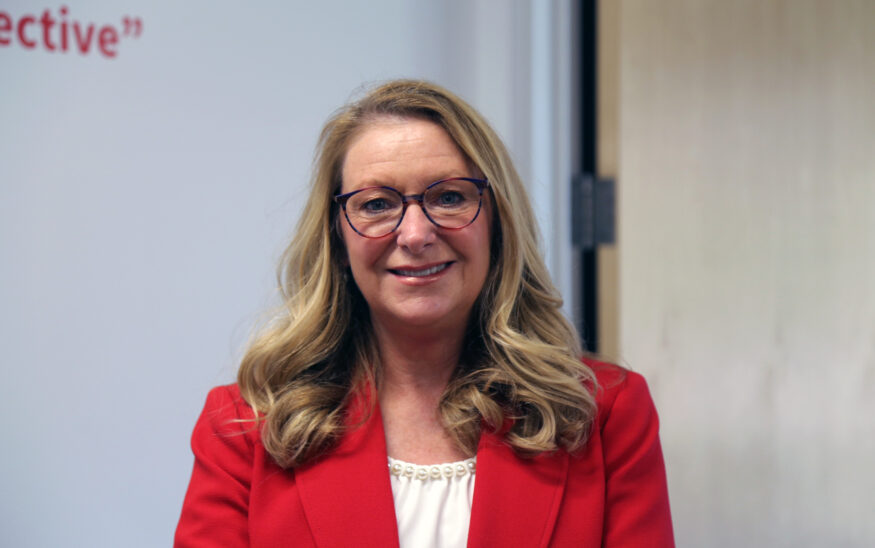
Dana Kennedy, the state director for Arizona's branch of the American Association of Retired Persons, poses for a photo at her office in Phoenix on June 17, 2026. (Reagan Priest / Arizona Capitol Times)
Dana Kennedy: A caregiver advocating for Arizona’s aging population
Reagan Priest, Arizona Capitol Times//June 21, 2026//


For Dana Kennedy, the state director at AARP Arizona, aging is not only a political issue, but a personal one. A social worker by profession, Kennedy brings her own experience of caring for aging family members and clients to her work advocating for Arizona seniors at the state Capitol and beyond.
Kennedy sat down with the Arizona Capitol Times to discuss the biggest issues impacting aging Arizonans and her personal connections to her advocacy work.
The questions and answers have been edited lightly for style and clarity.
Can you tell me a bit about your career trajectory?
I became a social worker in Orange County, California, during the Orange County bankruptcy. I did home health and hospice, so I basically connected family members to the services to help keep them in their own home. With the county going bankrupt, people were going to have to pay for (services), so I made the tough decisions (about whether) they were able to stay safe in their own home or not. That’s when I realized our long-term care system was broken. With a bachelor’s degree in social work, you really need to get your master’s, but I wanted to focus on macro policy and help solve our long-term care policy problem. So I ended up going to Boston University, and I got my master’s in social work. In both undergrad and grad school, I got certificates in gerontology, the study of aging. I’ve always been an aging nerd. I became an AARP member when I was 20. After graduate school, I went to (Washington) D.C., and that’s a very broken system as well. I wanted to work on long-term care policy, and people are like, that’s not a sexy issue, that’s never going to happen. Fast forward to being the state director at AARP, it’s my dream job.
What do the day-to-day responsibilities look like in your role?
It changes all the time. Within one week I have been at the Capitol doing a press conference regarding a bill that we were trying to get unstuck, then the following weekend I was in Long Beach representing AARP at the National Conference for Mayors. Then the following week I was down at the Corporation Commission because we’re intervening in the rate case. So I can go anywhere from working with mayors to working with state legislators to working on utility issues. At the same time, I’m also a caregiver. I just lost my dad, but I was flying back and forth to California to help my dad transition to hospice and then pass away, and I’m bringing my mom out next week for a clinical trial at Banner Alzheimer’s Institute. So I work on all these really important issues, but at the same time I’m helping myself as well as our staff navigate aging issues, because we’re all going through it. And if we’re not going through it, we will one day. So it’s really a fascinating job, and it’s everything that I ever wanted to do.
What initially drew you to issues affecting seniors?
I’m the first person in my family to go to college … and I worked my way through college. I was a paid caregiver, and I took care of a person who became disabled giving birth to her first child. She was in a wheelchair, and then her mom had a stroke, so I took care of both of them. It was such a hands-on experience. At the same time, my great-grandfather came to live with me and my mom when I was in high school. I watched the role reversal of what my family went through, (where the children) act like the parent, even though they’re not the parent. It didn’t really work out with my great-grandfather living with my grandparents, so he came to live with my mom and myself. So I always had this desire to work with aging, and I really wanted to work with families to help them deal with the transition of dealing with aging parents, that role reversal.
Can you talk a bit about how your personal experiences with aging family members inform the work you do?
It’s so important. (My great-grandfather) lived to be 99 years old, and he was completely cognitively intact until his last day. But I helped my family navigate him being able to make his own decisions. I know what’s best for my family. It doesn’t mean that my family is going to take my advice. That’s where it gets really hard with parents and the aging population because they still have autonomy until they’re not able to make decisions. When you go from mild cognitive impairment to all the sudden moderate cognitive impairment to severe cognitive impairment, then it’s that slippery slope of wondering, how do I take their keys away? They need somebody to come into the home to help with transferring, but they don’t want anybody to come into the home. And they get to make that decision until they’re not able to. I think (my experience) allows me to understand that everybody gets to make their own decisions, but at the end of the day, we need to make sure that they have the tools to be able to make that decision.
What is the most pressing issue impacting Arizona’s aging population?
It’s a national issue, and it’s Social Security. The Social Security solvency issue is front and center. We’ve all heard that Social Security is always going to be there. But Congress has kicked the ball down the road all these years, and all of a sudden we’re at a critical point. What’s going to happen if Congress doesn’t act? There’s going to be an automatic cut to Social Security. We have a population issue. People pay into Social Security, it’s a pay as you go system, and people aren’t having as many babies and we’re also not allowing immigrants into this country right now. So we need people to continue to pay into Social Security.
What has been your biggest accomplishment in this role?
There’s a few things that I’m really proud of. During COVID, we were the very first state in the nation to get visitation policies for people in long-term care facilities, and I’m really proud of that. We worked with Governor (Doug) Ducey on that. Families were locked out and residents were locked in and it was really hard. I’m also really proud that you know we got the (Medicare Drug Price Negotiation Program), which lowers the cost of prescription drugs for everybody. We also supported Proposition 104. That was a city tax issue, and it was when I first started at AARP, but that provided $31.5 billion in transportation infrastructure over 30 years. People don’t realize that transportation is such an important issue as you age. Most likely you’re going to lose your keys one day. What happens when you lose your keys and you can no longer drive? You become socially isolated. Social isolation is like smoking a pack of cigarettes every single day, it’s really damaging.
What has been the most challenging part of this role?
I don’t understand why I have such a hard time getting some bills passed. (This session) we wanted to allow cameras in a long-term care facility and (that bill) died. Three years in a row it died. That for me is a really hard pill to swallow. I’ve done three full distance Iron Men, so I don’t give up. I’m persistent. I have a very, very strong mental game and giving up is just not in my DNA. If there’s a will, there’s a way, and I’m going to find it. As long as I have to read another report of somebody being abused and neglected in a long-term care facility, I will continue to advocate to be able to provide tools to stop that abuse and neglect.