Sign In


 Free Newsletter

Arizona high court revives ‘dark money’ free speech fight
Bob Christie, Capitol Media Services//June 30, 2026//
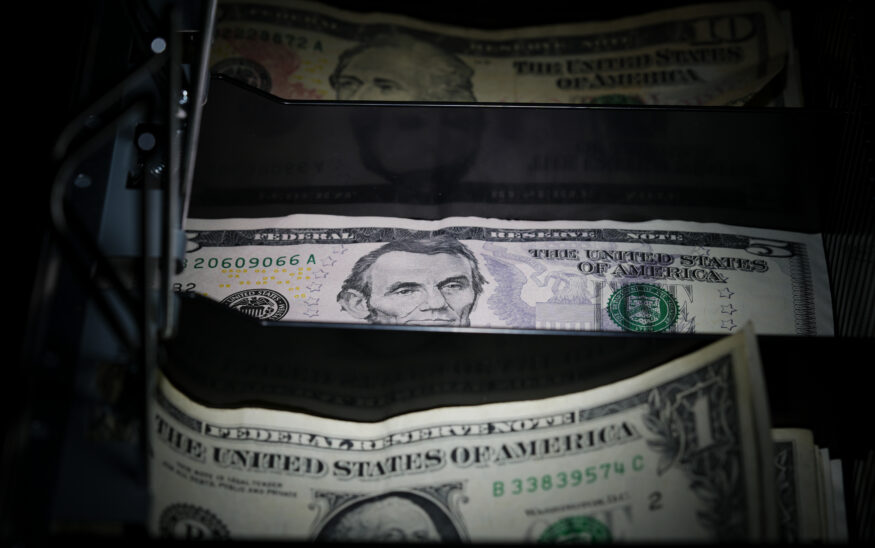
The likeness of Abraham Lincoln is seen on a U.S. $5 bill, Tuesday, March 5, 2024, in Havertown, Pa. (AP Photo / Matt Slocum)
Arizona high court revives ‘dark money’ free speech fight
Bob Christie, Capitol Media Services//June 30, 2026//


Key Points:
-
Arizona Supreme Court rejects constitutional challenge to 2022 voter-approved law
-
Law requires groups to disclose donors for election influence
-
The law includes an “opt-out” option for donors who want to remain anonymous
Arizona’s Supreme Court has largely upheld the state’s voter-approved crackdown on “dark money,” keeping in place one of the nation’s most sweeping donor-disclosure laws while sending a narrow free-speech challenge back to a lower court.
The court dismissed most of the claims against the 2022 donor-disclosure law but allowed one as-applied free-speech claim to move forward in trial court. In a divided 4-3 opinion written by Chief Justice Ann Scott Timmer, the court rejected arguments that the “dark money” law is unconstitutional on its face or that it violates privacy rights in the state constitution. The “Voters Right to Know” Act, approved by more than 70% of voters in 2022, is aimed at ending anonymous big-money spending in Arizona elections and is widely described as one of the most comprehensive transparency laws in the country.
The law requires any organization that spends more than $50,000 on a statewide race – or half that on other contests – to publicly disclose anyone who has given at least $5,000 to their cause. It also says those groups have to trace the money back to the original source, a requirement aimed at preventing wealthy ‘dark money’ donors from obscuring their identities through intermediary nonprofits.
All claims in the case, including the one the Supreme Court has now revived, had previously been rejected by a trial court judge and by the Arizona Court of Appeals.
The Center for Arizona Policy and the Arizona Free Enterprise Club brought the case, along with two unnamed donors who say they could face harassment or retaliation if their identities are disclosed.
They first argued that it was unconstitutional for the state to impose a blanket requirement for political groups to publicly disclose what they are spending and where the money is coming from. Timmer said that argument fails, citing provisions in the state’s original constitution directing legislators to enact laws requiring “general publicity” for campaign contributions and laws to secure the purity of elections and guard against abuses of the elective franchise.
That leaves a narrower question: whether the donor-disclosure requirements in Proposition 211 burden the state constitutional right to “speak freely” for these specific groups and donors, who say their supporters could be deterred out of fear of harassment and retaliation. Taken as true at this early stage, Timmer wrote, those allegations are “minimally sufficient” to make a threshold showing that the Act’s disclosure provisions impose a concrete, non-speculative burden on their expressive activities, and the groups are entitled to try to prove that in trial court.
A statement issued by the Goldwater Institute, whose lawyers argued just that, called the revival of the challenge a victory for free speech rights. It said that the court recognized that nonprofit and donor plaintiffs do not surrender their privacy rights simply because they contribute money to causes they believe in.
“This is an important victory for every Arizonan who believes people should be free to support the causes they care about without fear of government-compelled disclosure,” Goldwater senior attorney Scott Freeman said. “The Arizona Supreme Court recognized that our state constitution independently protects free speech and that citizens are entitled to prove that compelled donor disclosure violates those protections.”
The challenge is far from over. The plaintiffs now have to persuade a trial court judge that the harms they say disclosure causes to their donors’ speech and association are significant enough to overcome Arizona’s long-standing interest in giving voters the right to know who is trying to influence an election.
That concept has been part of state law since before Arizona became a state in 1912, Timmer pointed out in a detailed 50-page opinion that delved into the history and reach of the constitution’s “Speak Freely Clause,” “Privacy Clause” and those laws requiring election funding disclosure in Arizona.
Those disclosure requirements included pre-statehood laws requiring political parties to disclose all funding and funding sources within 30 days of an election and the constitution itself, approved by state voters in 1911, which contained directives about disclosure, she wrote in rejecting free speech claims generally in the context of disclosure laws.
“Arizonans at statehood also understood that the Arizona Constitution itself required the Legislature to enact certain laws, even when doing so might incidentally restrain or compel expression,” Timmer wrote. “Most notably, the Constitution directs the Legislature to enact laws ‘providing for a general publicity’ of contributions to campaign committees and candidates, and ‘to secure the purity of elections and guard against abuses of the elective franchise.’ ”
In reviving the once-rejected challenge, Timmer wrote that funding campaigns is not a private matter as a matter of law. But she said that at this early stage of the litigation the two groups and two unnamed donors who joined their lawsuit have a right to have those claims heard.
“Taken as true at this early stage, these allegations are minimally sufficient to make a threshold showing that the Act’s disclosure provisions impose a concrete, non-speculative burden on CAP’s and FEC’s expressive activities,” Timmer’s opinion said.
Terry Goddard, the former Arizona attorney general who was one of the main backers of Proposition 211, said the high court rejected almost all of the challengers’ constitutional arguments.
“Any kind of thought that this was somehow automatically unconstitutional is completely resolved in our favor,” Goddard told Capitol Media Services. And he contends that the groups that sued will have a hard time proving that donors’ speech will actually be affected by pressure from opponents, considering that a century of disclosure laws hadn’t led to that result.
“It’s a fact that in Arizona, for 114 years, we’ve had disclosure requirements for people who make campaign contributions,” Goddard said. “And in that 114 years, there hasn’t been a single recorded incident of anybody being harassed or intimidated or somehow deferred in their action because of their contribution that was disclosed.”
In effect, Proposition 211 closes gaps that have opened in the past couple of decades when wealthy “dark money” donors took advantage of disclosure loopholes to hide their backing of candidates or issues.
“Prop 211 is not new in the area of disclosure,” Goddard added.
“What it did do was it went after those very small groups of very wealthy people who wanted to stay anonymous, wanted to hide their identity,” Goddard said. “So I think we’ve made a big step here against giving them special privileges through this decision.”
In addition to the case decided Monday, two other challenges to Proposition 211 are ongoing in the courts.
One is a challenge brought by Republican House Speaker Steve Montenegro and GOP Senate President Warren Petersen.
In February, Maricopa County Superior Court Judge Greg Como ruled that a provision of Proposition 211 that says the Legislature does not have the right to interfere with the Citizens Clean Election Commission’s administration and enforcement of the Voters Right to Know Act was unconstitutional because it violated the separation of powers.
But Como rejected efforts by Petersen and Montenegro to get the whole law gutted because of that and said it remains in effect without that provision.
The second is a federal constitutional challenge brought by Americans for Prosperity, a libertarian leaning conservative group founded by the wealthy industrialists Charles and David Koch in 2004, that is heavily involved in funding conservative causes and candidates.
In that case, U.S. District Judge Roslyn Silver ruled that there’s nothing inherently unconstitutional about requiring the disclosure of donors to groups that spend money to influence elections.