Sign In




 Free Newsletter
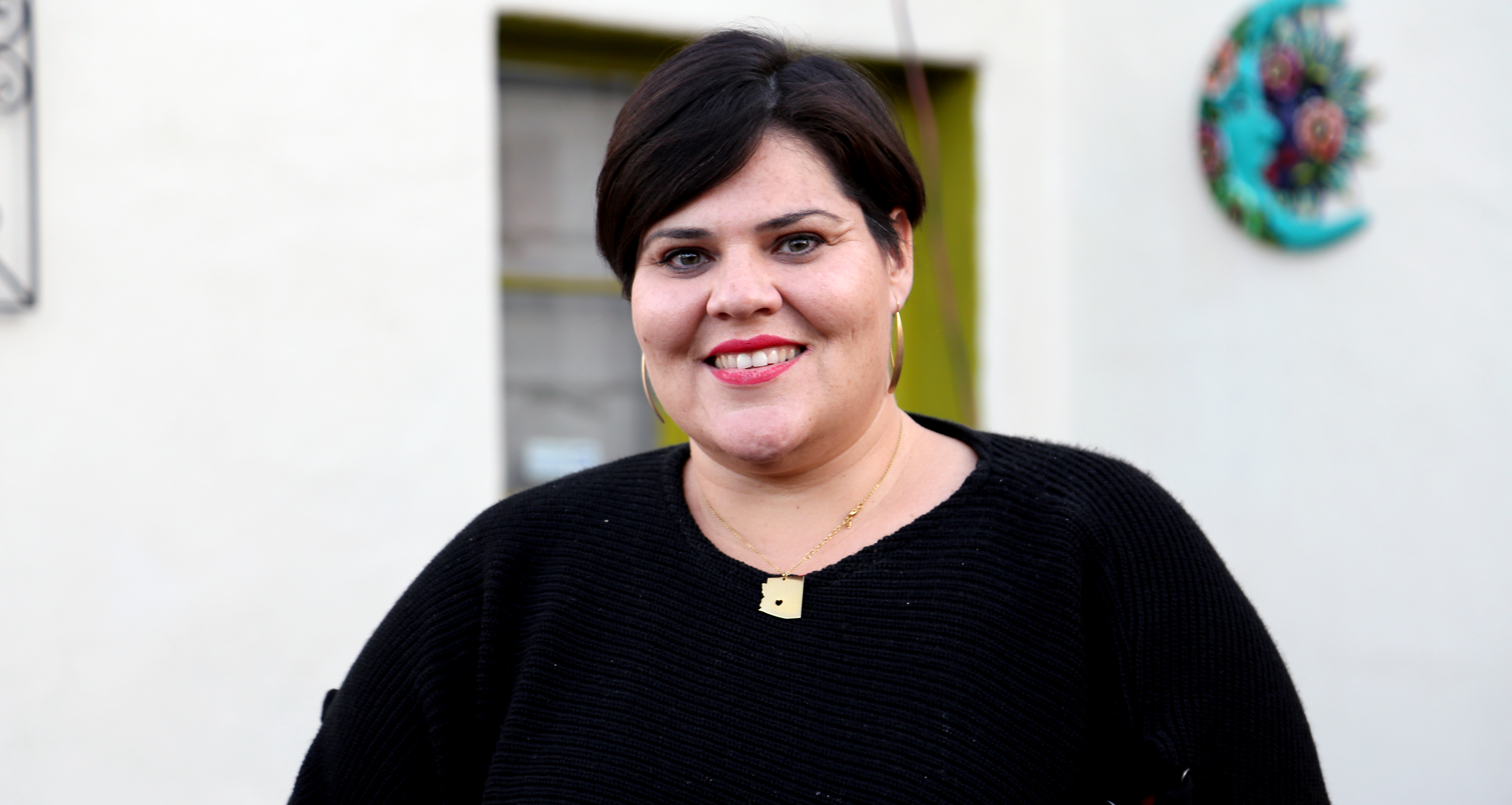
Donna Hamm, executive director and founder of Middle Ground Prison Reform, reflects on more than 40 years spent in pursuit of constitutional protections and conditions for people incarcerated in the state's prisons and jails. (Kiera Riley)
Donna Hamm: A force for prison reform
Kiera Riley, Arizona Capitol Times//July 21, 2026//


Donna Hamm became the voice for Arizona prisoners when they had none.
After four decades of advocacy, she has cemented herself as the foremost advocate for the incarcerated and thorn in the side of carceral agencies across the state.
Hamm’s work began shortly after she met her husband, James, who spent 18 years behind bars before he received a rare commutation of sentence, and then a law degree.
Together, the two founded Middle Ground Prison Reform. Donna has since devoted countless hours lobbying and litigating for prisoners’ constitutional rights.
The questions and answers have been lightly edited for style and clarity:
What led you to prison advocacy work?
In the 1980s, I was elected as a justice of peace in Flagstaff. That was my entry into politics.
I wanted to go to jail and spend the weekend in jail, and they told me no. You won’t get a real experience. Everybody will know who you are. So at that time, NAU (Northern Arizona University) was doing a very unique program down at the Florence prison. They were teaching a bachelor’s degree in sociology to guards and inmates in the same classroom, which was unique, so far as I know, in all the United States. One of the professors said to myself and to my mentor, “Come on a tour with me. I’ll let you talk to the class and go on a tour of the prison.” And on that tour I met James.
When I visited the prison, it just became evident to me that some of these guys were there but for the grace of god. It just became evident to me that these were not all bad people. Some of them were good people who made very stupid decisions.
Why did you want to see jails and prisons firsthand?
I had so little experience with the justice system growing up, so I wanted to see. I wasn’t sending people to prison; I was sending people to jail. But I understood that even if I send somebody to jail for two weeks or a month, it has an impact.
How did you get to know James?
I began writing to James just to offer him books, access to academic stuff that he might not have had, and we became friends through mail, and I began visiting him. And then it became more than that, where I recognized that this was somebody that was really special. He was very centered. He was kind. He was this Kansas farm boy that got in over his head and had some psychological problems. His mother had died; he came from kind of an abusive family.
We began visiting. And after six and a half years, a leap of faith.
What led you to advocacy?
Through that time, what struck me was, first of all, the minute my status changed from being a visiting judge to being a visitor, the treatment that I got was very different. And then anytime you asked a question (of the Arizona Department of Corrections, Rehabilitation and Reentry), you got a different answer depending on who you spoke to. It was just clear there was no real consistency to anything.
I was involved in politics because of my work in Flagstaff. So I came up with the idea that there needed to be a voice at the legislature.
A couple of people met in my living room, and we decided to call it Middle Ground because we wanted to make sure that we weren’t advocating for the abolition of prisons. We understood there are people who need to be in prison who are dangerous. But we also felt that even the worst of the worst had constitutional rights that had to be protected.
There was no voice for prisoners. Even the ACLU at that time wasn’t very active on prisoner rights at the Legislature. We decided to do that. We decided to do litigation, when necessary, and public education.
What did you accomplish through litigation?
James wanted to go into psychology, and I talked him into going into law. We did our first lawsuit and won in federal court.
It was over the mail. If you sent a letter to an inmate and didn’t put its number on it, they would send the letter back to you. They would not tell you what was wrong with the letter, and they wouldn’t tell the inmate that he had missed a letter. He never even knew. So we sued them and said we did a test.
We found out the names of 25 inmates who had weird last names. They were the only ones in the Department of Corrections. We sent them mail without their DOC number, and there was no way that the DOC could say, “Well, we didn’t know who that was” because they were the only person there. All the letters, of course, came back. So we used those as exhibits.
We won, and they ordered that they had to put a rubber stamp on the envelope saying who you called to get the DOC number.
We sued them a second time on property. They used to allow inmates to go to prison with a lot more property than they do now, and if they decided that he couldn’t keep it with him in a cell, they had to store it. Or if they allowed a prisoner to buy a bunch of stuff, and later decided, no, you can’t have it, they would confiscate it and throw it away. This was property they had approved of.
So, we sued them. The statute said if you lawfully have property that’s been admitted, they have to store it for you until you get out of prison. We sued them and won.
Then they started paying a little more attention. They made a rule, and we called it the Hamm Rule. They made a rule that you could no longer bring pencils, paper, pens into visitation because we were writing the lawsuits in visitation.
So what we did was – and I don’t know why the guard agreed to do it – but I would borrow a pen from the guard at the visitation desk, and I went into the restroom and got brown paper towels. James would dictate, and we would write out the lawsuit on paper towels, and I would go home and type it.
How has Middle Ground grown since its start?
Middle Ground has always been a volunteer organization, and we relied finally on donations in kind. We never wanted to get any grant money because we were attacking sacred cows like Joe Arpaio, and we were afraid that our funding would be yanked.
We’ve had wins, we’ve had losses, but we basically have tried to protect the rights of prisoners when we can. We used to get sometimes as many as 300 letters a month. We used to have volunteers sort through it every Friday. But since the internet has taken over and since inmates have tablets, most of all correspondence is now through email, or they send us emails through their family. The vast majority of issues are medical, time computation, property, visitation, disability.
We have right now a little over 9,000 email addresses. So we publish a newsletter by email, and we ask them to forward it to their bunkmate. And that circulation is amazing. One prisoner gets it and shows it to five others.
How did you grow the network of prisoners? What’s the impact?
Inmates talk to each other. They talk to each other about lawyers that they trust or don’t trust, people that they trust and don’t trust. So we have always relied on word of mouth.
Not everybody knows who we are, and of course, the department doesn’t want them to know who we are. We are limited in how many people we can help anyway. We have more than we can handle. That’s what I’ve learned – I can’t help everybody. If I can help five people – and I’m talking about sometimes saving their life, getting them medical care that’s critical – then I’m OK with that. I can feel good.
Why is this work important to you?
I recognized early that maybe not the majority but a vast number of people in the criminal justice system are there in a one-down position to begin with. They come from poverty, they come from ethnic minorities, they come from low education levels.
I feel like I had lived a pretty protected, blessed life and paying it forward was the right thing to do.
That’s what really kept James and I going. When he did get out, I think a lot of people thought that he and I would ride off into the sunset. We felt like we had really gone through a window that was closing. We felt like we needed to pay it forward because we were really fortunate, very fortunate.
What is your approach to reform now?
I have essentially told every director that I’ve ever met to put me out of business, make it so there isn’t a need for a prisoner rights group. But of course, that hasn’t occurred on anyone’s watch.