Sign In
Upcoming Event
 Free Newsletter

The Salt River Horse Act meant protection — not population reduction
By Doreen Falzon//August 7, 2026//
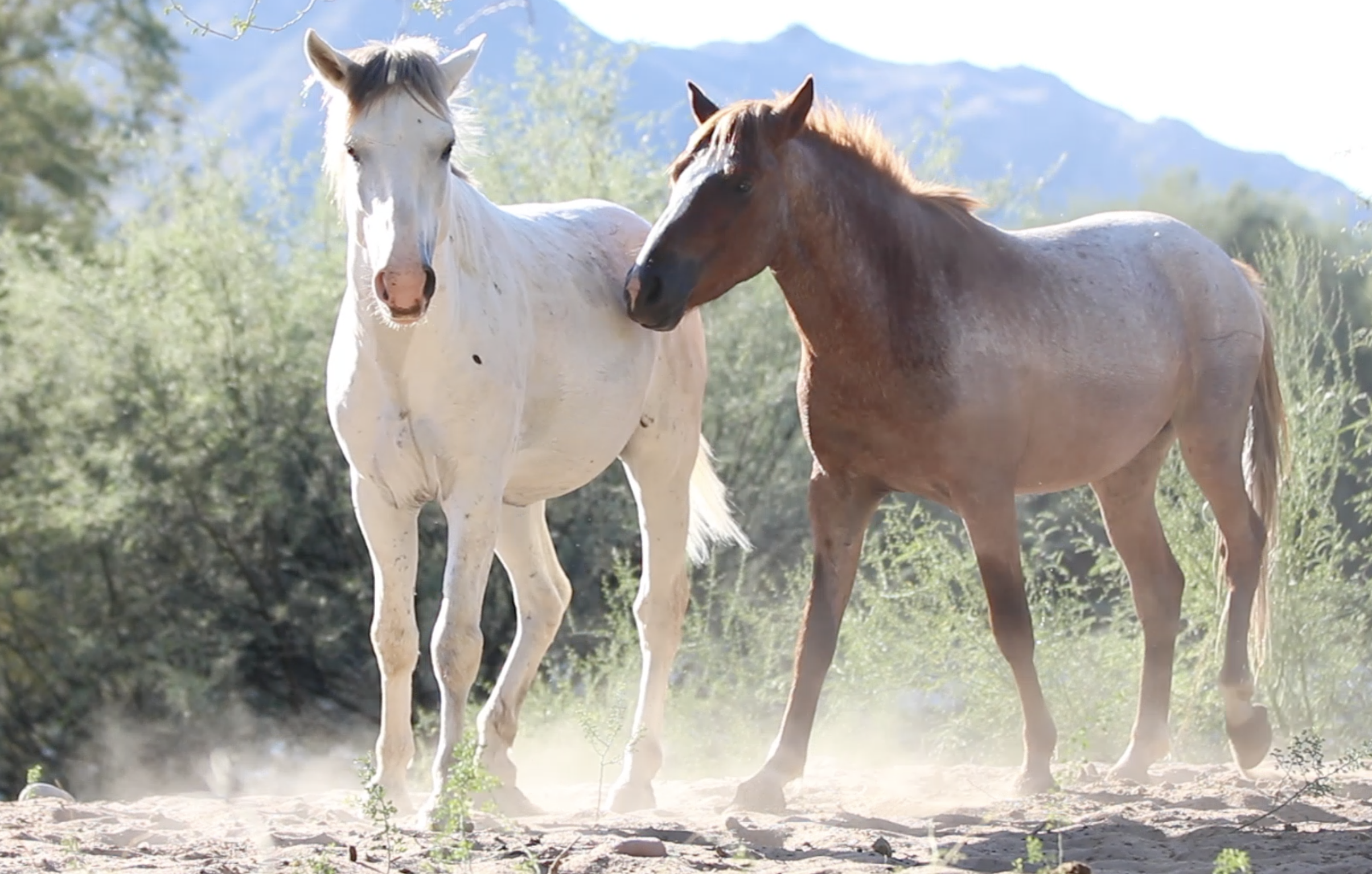
Authorities are investigating the slaughter of dozens of horses in the Apache-Sitgreaves National Forests in October. The Forest Service makes a distinction between wild horses, which are protected by law, and feral horses, which are not. (Photo by Megan Newsham/Cronkite News)
The Salt River Horse Act meant protection — not population reduction
By Doreen Falzon//August 7, 2026//



I am not an attorney, but I sure would like Arizona’s legal community to take a closer look at the Salt River Horse Act.
When the Arizona Legislature overwhelmingly passed the Salt River Horse Act in 2016, lawmakers were responding to a very real threat. The U.S. Forest Service had announced plans to remove the Salt River horses, and Arizonans across the political spectrum demanded that these historic free-roaming horses be protected.
The Legislature answered by enacting specific legal protections for the Salt River horses.
The law did several important things. It declared that the Salt River horses are not stray livestock. It prohibited anyone from harassing, capturing, chasing or euthanizing them without written authorization. Most importantly, it limited that authorization to humane purposes. It also required the State of Arizona to enter into an agreement with the U.S. Forest Service to implement the law or address issues relating to the herd.
That language matters.
The statute does not expressly authorize routine population reduction. It does not expressly direct the Arizona Department of Agriculture (AZDA) to reduce the herd to a predetermined target. It does not expressly state that healthy horses may be removed solely to achieve a population target established through a management agreement. Instead, lawmakers chose a much narrower standard: horses could be removed only for humane purposes.
Today, however, Arizona finds itself in an unusual position. AZDA approved a management agreement containing a goal of reducing the herd from roughly 274 horses to approximately 120 over five years.
Whether that goal is wise is certainly open to debate.
But there is an even more fundamental question that deserves public attention:
Is reducing healthy horses to reach a negotiated population target consistent with the legal protections the Legislature enacted?
That question has never received the public legal examination it deserves.
The Salt River Horse Act is written as a protection statute. Throughout the law, the Legislature repeatedly restricts actions against the horses rather than granting broad management authority. The statute even specifies that these horses are not stray animals and therefore are not subject to Arizona’s ordinary livestock laws.
If lawmakers intended specifically to authorize long-term population reductions based on negotiated numerical objectives, they could have stated that authority expressly. The statute contains no such express language.
Instead, the Legislature used the much narrower phrase “only for humane purposes.”
Words matter in law.
The statute does not define ‘humane purposes.’ That omission makes the legal basis for population-based removals especially important. Does the phrase permit only case-specific intervention for the welfare or safety of horses and the public, or does it also encompass removing healthy horses to meet a long-term population objective? Arizona deserves a clear explanation of how AZDA interprets that limitation.
This distinction is not merely academic. It goes to the heart of whether agencies are faithfully executing the law passed by elected representatives or expanding their authority beyond what the Legislature intended.
Arizona’s citizens deserve clarity.
Does the 2017 intergovernmental agreement merely implement authority granted by the statute, or does AZDA believe the agreement independently permits population-based removals?
These are not anti-management questions. Every wildlife or free-roaming animal program requires management.
They are rule-of-law questions.
When government exercises power over a protected public resource, that authority should be explicit, transparent, and traceable to the statute. Contracts and administrative agreements may implement legislative authority, but the public deserves an explanation of how the actions they authorize remain within the boundaries established by law.
The Salt River horses belong to all Arizonans.
The Legislature recognized their historical and cultural significance and enacted legal protections that received overwhelming bipartisan support. Members voted to prevent the horses from disappearing—not to create uncertainty about the scope of their protection.
Before healthy horses are permanently removed from this iconic herd, Arizona owes its citizens one thing: a clear legal explanation showing exactly where that authority exists.
If the authority is clearly established in law, the public deserves to see it.
If it is not, then the Legislature—not administrative agencies—should decide the future of the Salt River horses.
Doreen Falzon is a retired radiologic technologist.