Sign In


Upcoming Event
 Free Newsletter

Train better — Don’t let cops’ “Green Labs” experiment replace evidence
Marc Lamber, Guest Commentary//October 7, 2025//
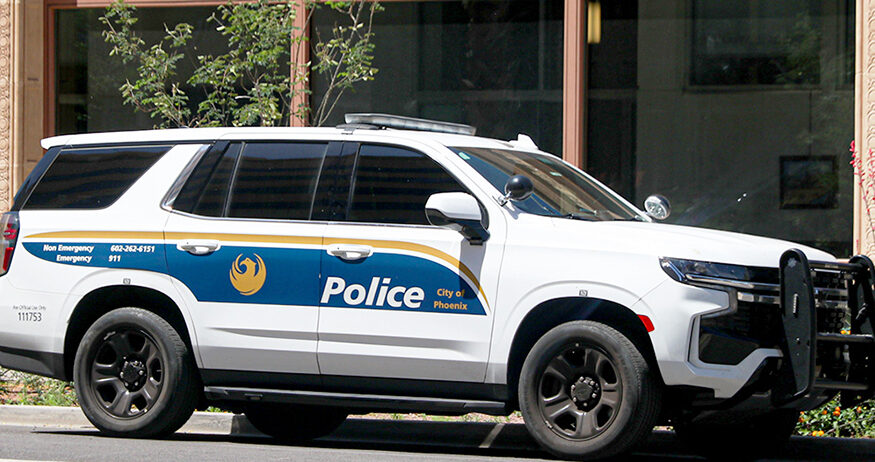
A Phoenix police vehicle is parked on a city street. (Photo by Gianna Abdallah/Cronkite News)
Train better — Don’t let cops’ “Green Labs” experiment replace evidence
Marc Lamber, Guest Commentary//October 7, 2025//



Arizona knows how to measure alcohol‑impaired driving. DUI law gives us a hard 0.08 Blood Alcohol Level (BAC) and decades of validation behind it. Cannabis is different. We still lack a widely adopted roadside test that reliably establishes impairment. Into that vacuum comes a tempting idea: “green labs”—training sessions where officers watch volunteers consume cannabis to “learn what impairment looks like.”
I appreciate the intent. As a trial lawyer who has spent 34 years in Arizona courtrooms, I’ve seen the devastation impaired driving can cause. Officers need better tools and better training. Experience matters, and structured exposure can help calibrate judgment and reduce both false positives and false negatives.
Observation is not a standard:
But good intentions don’t change the core problem; observation is not a standard. Field sobriety tests were built and validated for alcohol, not THC. Translating alcohol‑derived cues into cannabis conclusions risks turning anecdote into policy. And when informal training morphs into a de facto checklist for probable cause, the result can be wrongful arrests, contested cases, and erosion of public trust—without actually making our roads safer.
Arizona’s legal history teaches caution here. Our courts have long insisted that enforcement rest on evidence, not hunches. That’s the right instinct. Cannabis pharmacology is complex: onset and duration vary with dose, product, and individual physiology; THC presence doesn’t line up neatly with real‑time psychomotor impairment. If “green labs” are rolled out without clear limits and evaluation, we risk creating a two‑track reality—one where alcohol remains science‑anchored and cannabis enforcement leans on educated guesswork.
Let’s invest in validated benchmarks:
There’s a better path. If the state wants to invest, let’s invest in validated methods. Federal and academic researchers are probing breath and other biomarkers, cognitive and psychomotor tasks, and improved roadside protocols. Some employer‑market breath tests have emerged, but adoption by law enforcement and impairment standards remains unsettled. Until the science is there, we should resist the urge to fill uncertainty with optics.
If agencies move ahead with “green labs,” they must be guard-railed:
- Put it in writing that the exercises are training aids only, not probable‑cause templates.
- Build in controls (including placebo/low‑dose participants) and track accuracy and inter‑rater reliability, so we learn something more than impressions.
- Pair training with evidence‑based tools and require periodic, transparent reporting about outcomes after training—Did arrests become more accurate? Did contested cases drop? Did safety improve?
Arizona can lead—but we should lead by raising standards, not by lowering evidentiary expectations. Real science takes time, and public safety demands patience as well as rigor.
Marc Lamber is a trial attorney and chair of the Lamber Goodnow personal injury group at Fennemore in Phoenix. He has practiced law in Arizona for more than three decades and frequently writes on access to justice and legal innovation.