Sign In


Upcoming Event
 Free Newsletter

Judge rejects government shutdown delay in border wall lawsuit
Howard Fischer, Capitol Media Services//November 6, 2025//
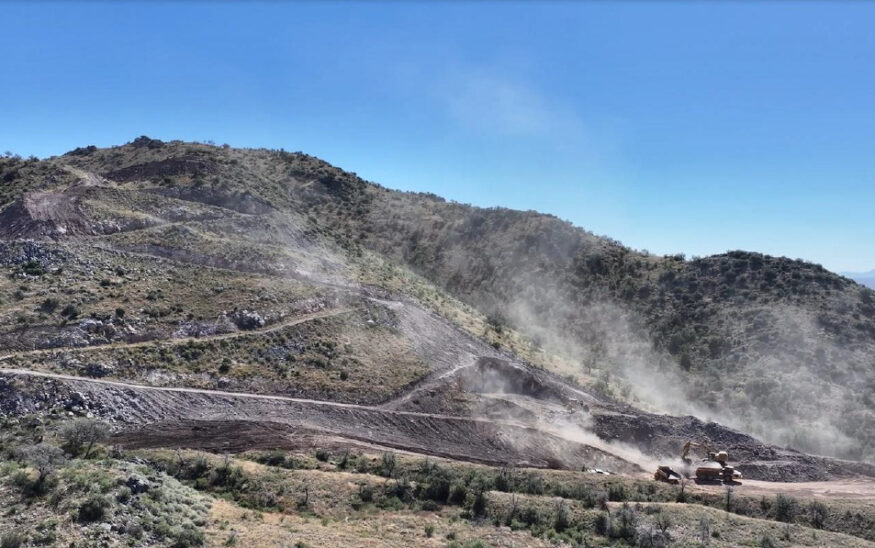
Construction activities related to a border wall in the San Rafael Valley. This photo was submitted to a federal magistrate who is considering whether the project is illegal and should be halted. (Photo by Russell McSpadded)
Judge rejects government shutdown delay in border wall lawsuit
Howard Fischer, Capitol Media Services//November 6, 2025//


Key Points:
-
Federal magistrate denies delay of lawsuit on border wall construction
-
Magistrate cites ongoing construction despite government shutdown
-
Magistrate sets Nov. 14 deadline for legal briefs on lawsuit’s merits
A federal magistrate is no longer accepting the excuse that the federal government shutdown should delay a lawsuit to stop construction of new walls along the southern border.
James Marner acknowledged he had granted an earlier request by attorneys for Homeland Security Secretary Kristi Noem to put off the challenge by the Center for Biological Diversity. He said at the time that he had to respect her arguments that lawyers from the Department of Justice, which is representing Noem, are legally prohibited from working while they are not being paid.
But Marner said none of that apparently has halted construction along a 27-mile stretch through the grasslands of the San Rafael Valley. And he specifically cited a declaration of Russell McSpadden, southwest conservation advocate for the organization that sued, citing work in a specific “ecologically sensitive” area where the wall is going up.
The magistrate also said it is likely that federal lawyers already have done much of the legal work to respond to the lawsuit.
All of that, Marner said, convinces him that Noem can no longer delay the case. So he gave her attorneys until Nov. 14 to file their legal briefs explaining to him why they should deny the request to halt construction.
“This is an encouraging step forward,” McSpadden said. “It means the Department of Homeland Security cannot use the shutdown as a pretext to continue walling off one of the most vital wildlife corridors in the Sky Islands while our case sits idle.”
The lawsuit filed in July centers around a provision in the 1996 Immigration Reform and Immigrant Responsibility Act which authorizes Homeland Security to construct barriers and roads along the border.
But attorneys for the Department of Justice say it also allows Noem to “waive any legal requirements (that) such secretary, in the secretary’s sole discretion, determines necessary to ensure expeditious construction of the barriers and roads.”
The lawsuit does not allege Noem herself broke the law. Instead, it contends that Congress acted illegally when it amended the 1996 law in 2005, delegating that authority to waive laws to the secretary.
More to the point, it seeks a summary judgment, without trial, requiring that work be halted unless and until Homeland Security complies with environmental laws.
In August, Noem’s attorneys asked Marner to toss the case, also without a trial.
The magistrate, however, said he wanted more legal briefs. But all that got interrupted Oct. 1 after Congress failed to approve a spending plan and Noem asked for the delay.
Marner did grant one — through the end of October. But he told Noem’s attorneys that if they want more time they need to come back and make a new request.
They did a week ago, promising to notify the magistrate “as soon as Congress has appropriated funds.”
“We greatly regret any disruption caused to the court and the other litigants,” the government lawyers said, asking Marner to extend the case until they “are permitted to resume their usual civil litigation functions.”
Marner, however, was unwilling to grant that open-ended request.
He cited McSpadden’s sworn statement to the court detailing what he had seen in three separate trips to the area, including the latest about a week ago where he reported that more than a quarter mile of new border wall had been built since the middle of September, months after the lawsuit was filed.
That, McSpadden said, was on top of the damages he saw in earlier trips, including “two large areas of grassland within the Coronado National Forest had been scraped bare for a staging yard and what had been called a ‘man camp’ for worker housing.” And he said it appeared that a construction crew had created a gravel quarry on the slope of a mountain at the eastern edge of the San Rafael Valley “within federally designated jaguar critical habitat, even submitting a photo he had taken.
Marner, in his order, said it is the obligation of the side that wants to delay proceedings — in this case, the Department of Homeland Security — to demonstrate that it is legally warranted.
What he said he has to consider are things like the possible damage which may result from granting a stay. And Marner said he also has to weigh what hardship might be suffered if someone is forced to go ahead with a case.
In this case, the magistrate said, the balance is with the Center for Biological Diversity. And he dismissed the idea of a hardship on the government, pointing out that Noem’s lawyers already had been required to file their arguments by Oct. 3 — just three days after they first asked him to delay the case.
“Given this time frame, the court expects that much of the work necessary to prepare defendants’ reply is already complete,” Marner wrote, directing them to get that filed by Nov. 14.